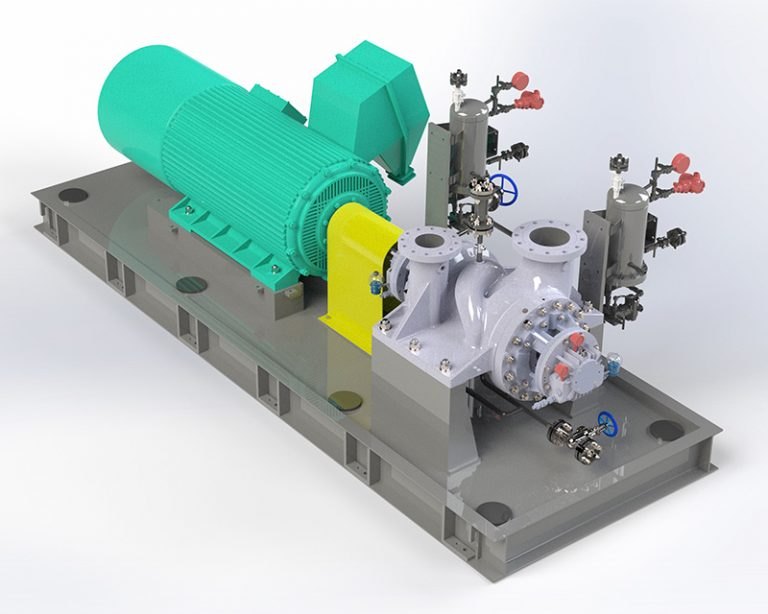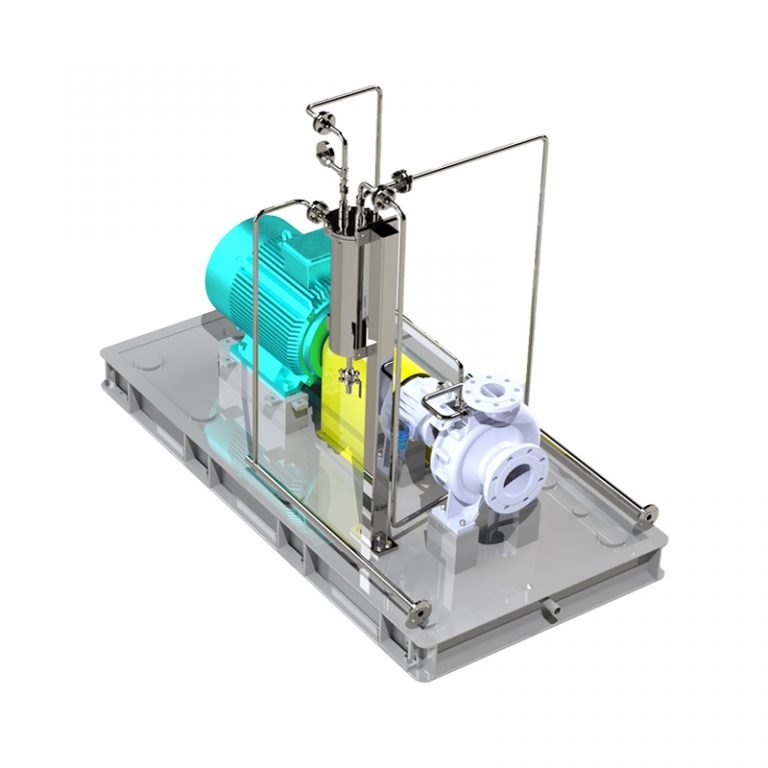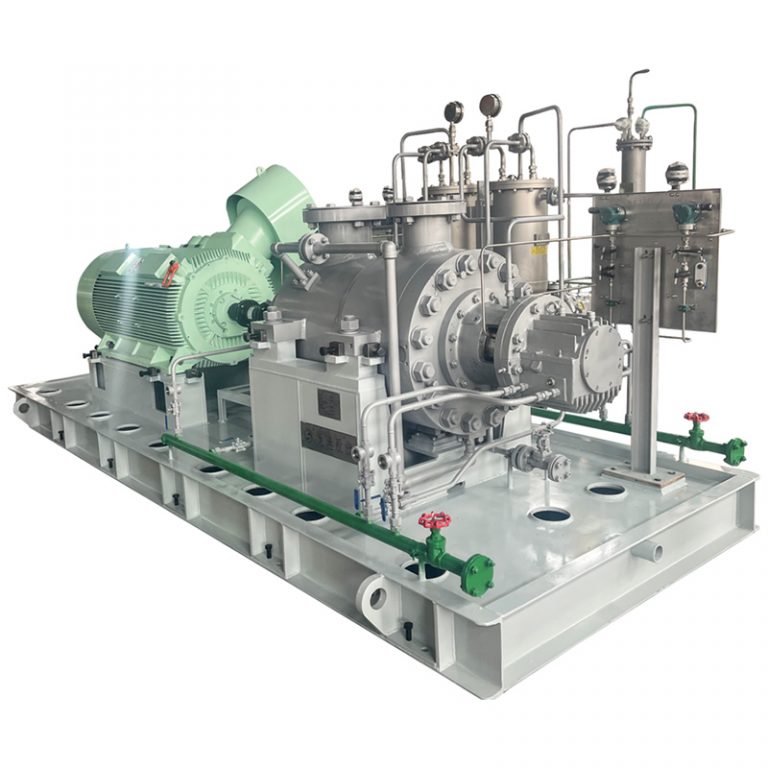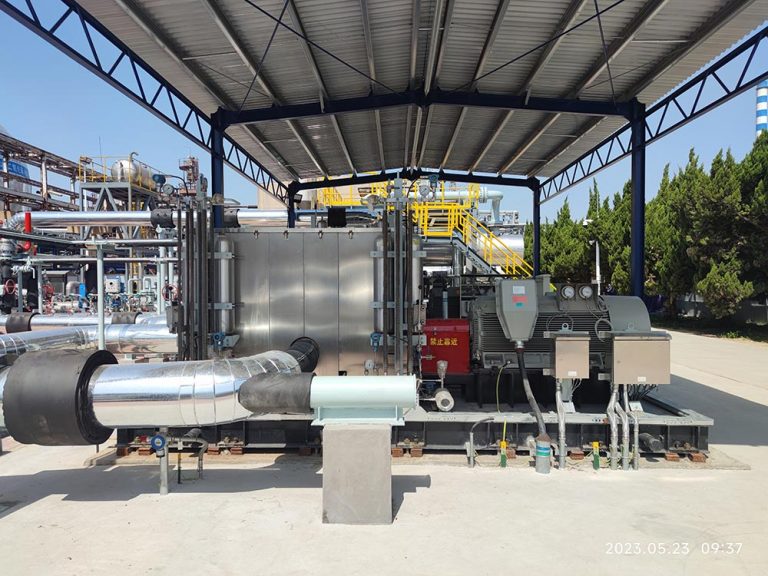
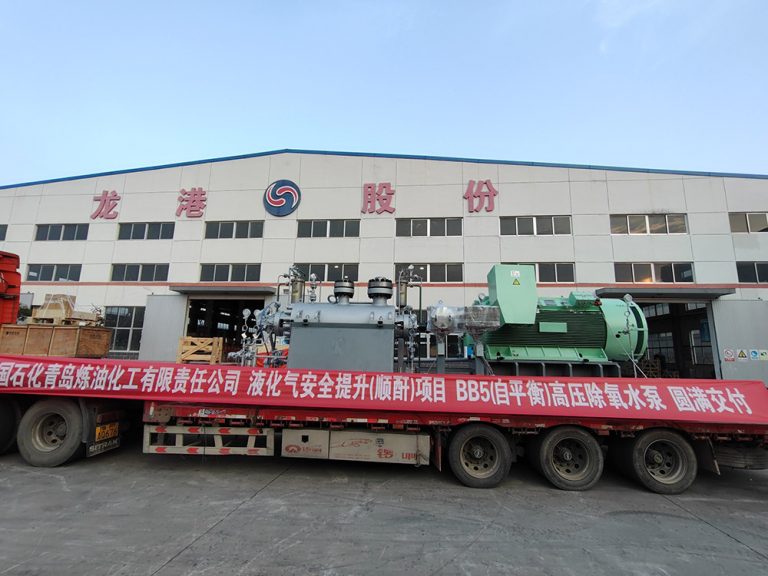

A centrifugal pump for corrosive chemical service must be specified based on the fluid, temperature, pressure, flow, materials, sealing arrangement, and operating environment. Selecting by flow and head alone can create problems with corrosion, cavitation, mechanical seal life, or maintenance access. Longgang Pump produces BB, OH, and VS chemical centrifugal pumps for petrochemical, coal chemical, environmental-protection, and water-treatment applications.

Define the Fluid Before the Pump Model
Fluid Conditions
An aggressive fluid specification should have details regarding the type of fluid, concentration, temperature range, density, viscosity, vapor pressure, solids, gases involved, and changes expected during start-up or shutdown. Materials used for sulfuric acid, hydrochloric acid, caustic soda, hydrocarbons, and coal-chemical services could be quite different from each other.
Also state whether the pump handles a clean liquid, a liquid with particles, a flashing stream, or a liquid that can release gas. The physical state at the pump inlet matters because a pump that is suitable on paper may struggle if the suction condition changes during normal operation.

Select the Pump Architecture Around the Duty
Pump Architecture
BB pumps are often considered when a horizontal split arrangement supports access, flow, and maintenance needs. OH pumps can fit many chemical-process duties, while VS pumps are useful for vertical suspended arrangements and certain tank or vessel services. The correct choice depends on the installation, suction condition, shaft arrangement, maintenance route, and hydraulic duty.
Don’t just pick a model simply because the name of the company is familiar. Make sure that all the parameters, such as flow, head, speed, temperature, pressure, orientation of nozzle, shaft seal type, bearing type, and material selection, conform to the process parameters.

Treat Material Selection as a Process Decision
Material Selection
The material that will be used should be able to take into consideration the corrosion rates, temperature, concentration, contamination, erosion, and the consequences of any leakage. The pumps can use conventional corrosion-resistant materials in addition to special alloy materials for dilute sulfuric acid, hydrochloric acid, concentrated sulfuric acid, caustic soda, etc.
The buyer should request the material list for the casing, impeller, shaft, wear surfaces, fasteners, seal parts, and elastomers. If the process can change concentration or temperature, include the full operating envelope rather than a single nominal point. The final material decision should be supported by the process licensor, corrosion engineer, or responsible technical authority.
Check NPSH and Suction Conditions
NPSH and Suction
Factors affecting cavitation hazard include NPSH available, pump speed, temperature, vapor pressure, suction lines, level of liquid, and any restrictions before the pump. Another important consequence of cavitation arises with a chemically aggressive fluid, whereby cavitation causes damage to a hydraulic surface subjected to corrosion.
Provide the minimum liquid level, suction pressure, temperature, line size, valve arrangement, and expected operating range. Ask for the pump’s required NPSH at the actual flow, not only at the rated point. The final piping design must preserve the suction condition assumed in the pump selection.
Specify Sealing and Leakage Control
Sealing and Leakage Control
The seal arrangement should match the fluid, pressure, temperature, emissions requirement, and maintenance philosophy. Ask whether the service requires a single seal, double seal, containment arrangement, flush, quench, or another support system. The seal plan should explain the fluid source, pressure, filtration, cooling, and monitoring.
Leakage control is a part of process safety design when dealing with either hazardous or valuable chemicals. The pump specifications should provide all the necessary information regarding the acceptable level of leakage. Do not leave the seal decision to the final assembly stage after the pump has already been selected.
Review Testing and Manufacturing Evidence
Testing and Manufacturing
A pump buyer should request hydraulic performance data, pressure testing, material certificates where required, balancing records, dimensional inspection, vibration checks, and mechanical-run evidence appropriate to the project. Longgang Pump describes an 8,000-square-meter workshop, test capability across different voltage and pipeline conditions, and production for high-end BB, VS, and OH series pumps.
The exact inspection plan should be tied to the project specification. Define witness points, documentation, acceptance values, test medium, test duration, and the handling of deviations. A well-defined test plan is more useful than a general statement that the pump has passed inspection.
Consider Lifecycle Support
Lifecycle Support
A corrosive service pump is supposed to be evaluated on the availability of spares, sealing material, wear parts, alignment, lubrication, accessibility, and operator training. The pump that will have the lowest initial cost may end up being costly due to waiting for specialized parts.
Longgang Pump manufactures pumps used in petrochemical, coal chemicals, basic chemicals, environmental protection, and water treatment. It is advisable for buyers to request a list of spare parts and services according to the actual fluid and duty.
Podsumowanie
Specifying a centrifugal pump for corrosive chemical service requires more than matching flow and head. Define the fluid, suction condition, materials, seal plan, test requirements, installation, and lifecycle support before selecting a BB, OH, or VS configuration. Longgang Pump can be evaluated for chemical and process-pump applications, with the final design confirmed through a project-specific hydraulic and materials review.
FAQ
Q: What information is needed to select a chemical centrifugal pump?
A: Provide fluid name and concentration, flow, head, temperature, density, viscosity, vapor pressure, solids or gas content, suction level, pressure, materials, seal requirements, motor power, operating hours, and applicable standards. Also include startup, shutdown, minimum-flow, and abnormal operating conditions.
Q: Why is material selection important for a corrosive pump?
A: The fluid can attack the casing, impeller, shaft, fasteners, seal parts, and elastomers at different rates. Concentration, temperature, contamination, and erosion can change the risk. Review the complete wetted material list against the process conditions rather than choosing a material from the pump name alone.
Q: How can cavitation be reduced in chemical service?
A: Utrzymuj odpowiednią dostępną NPSH, przeglądając poziom cieczy, ciśnienie ssawne, ciśnienie parowe, straty w instalacji, położenie zaworu i prędkość pompy. Potwierdź wymaganą NPSH w rzeczywistym punkcie pracy i utrzymuj układ linii ssawnej bliski założeniom projektowym.
Q: Co powinno być zawarte w planie odbioru pompy?
A: Zdefiniuj wydajność hydrauliczną, próby ciśnieniowe, dokumentację materiałową, balansowanie, drgania, bieg jałowy, wymiary, kontrole uszczelnienia, punkty świadka, medium próbne, czas trwania oraz obsługę odchyleń. Plan odbioru powinien odwoływać się do konkretnej pompy, warunków pracy płynu oraz specyfikacji projektu.