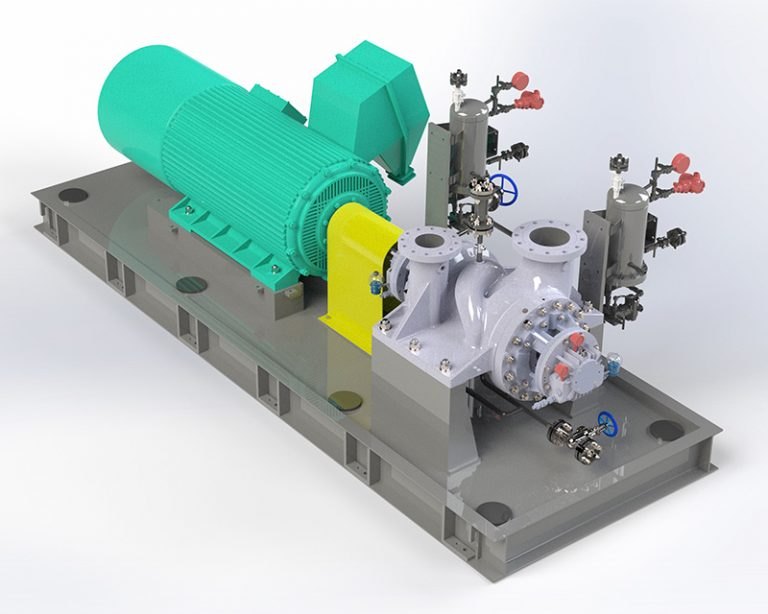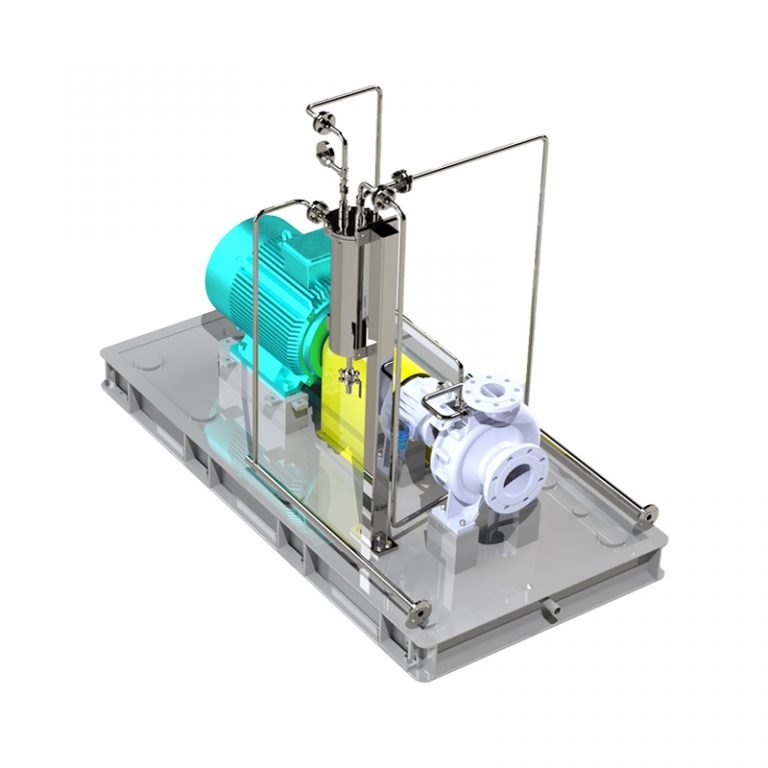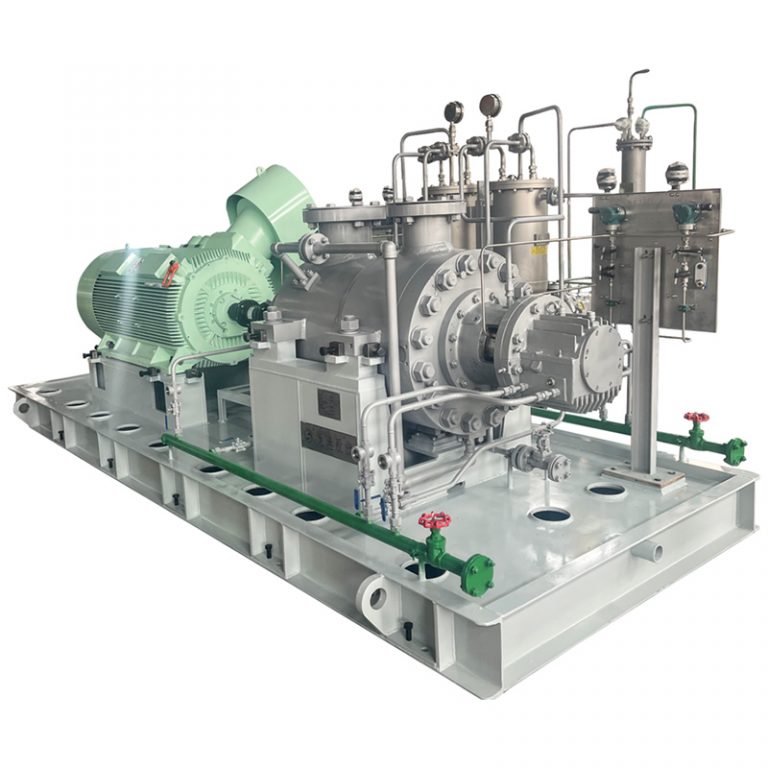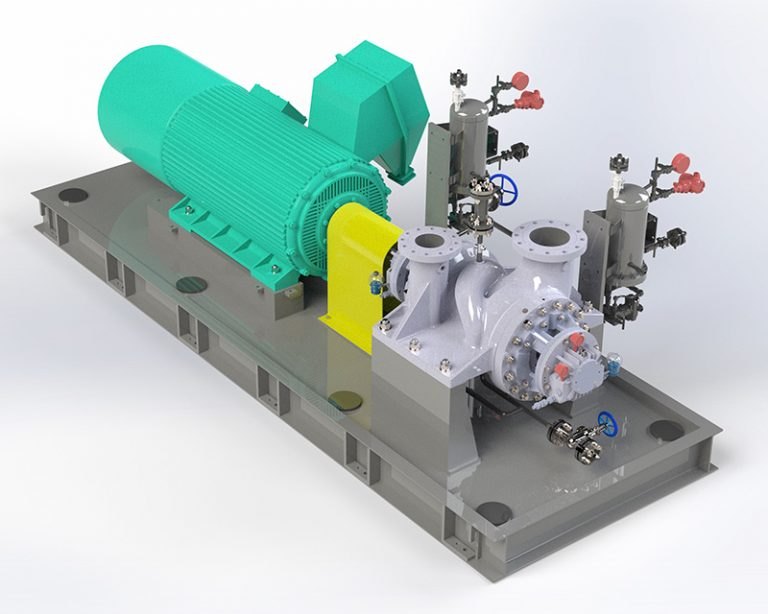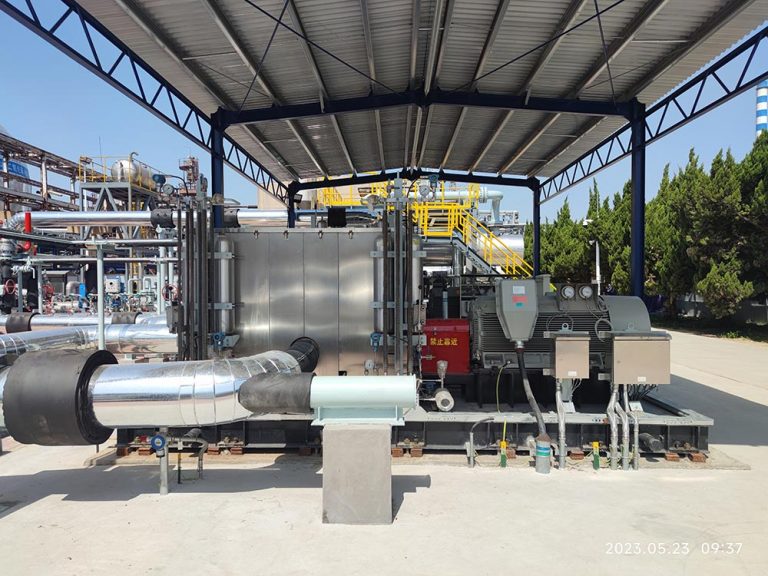
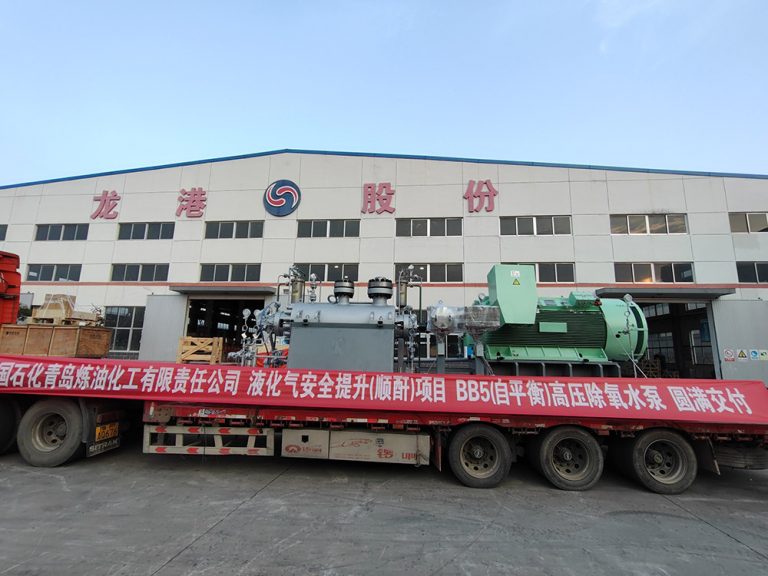

Pomp zasilający etylenem należy dobierać, biorąc pod uwagę ryzyko wrzenia, niską temperaturę, parametry ssania, uszczelnienie oraz kompatybilność materiałową, a nie tylko wydajność i wysokość podnoszenia. W przypadku zastosowań z etylenem, pionowa pompa zawieszona typu bag może być bardzo dobrym rozwiązaniem, ponieważ jej konstrukcja z podwójną obudową, możliwość pracy w niskich temperaturach oraz projekt pierwszej stopnia skupiony na parametrach ssania odpowiadają warunkom, które utrudniają obsługę lekkich węglowodorów.
Dlaczego dobór pompy zasilającej etylenem jest decyzją procesową
Etylen może być trudny do pompowania, ponieważ niewielka zmiana ciśnienia lub temperatury może zbliżyć płyn do stanu wrzenia. Ta zmiana wpływa jednocześnie na wejście pompy, wirnik pierwszego stopnia, uszczelniacz mechaniczny, łożyska oraz reakcję układu sterowania. Wiarygodna specyfikacja zaczyna się więc od określenia warunków normalnych, minimalnych, maksymalnych, rozruchowych i wyłączeniowych.
Przegląd inżynieryjny powinien określić wydajność, wysokość podnoszenia, gęstość, lepkość, ciśnienie pary, ciśnienie ssania, temperaturę roboczą, NPSHa oraz oczekiwane zachowanie gazu lub pary. Powinien również wskazać, czy pompa jest zainstalowana poniżej poziomu gruntu, czy linia ssana może zostać opróżniona oraz jak operatorzy potwierdzą stabilny przepływ cieczy przed osiągnięciem przez napęd prędnosci znamionowej.
Dopasuj strukturę pompy do służby w niskich temperaturach
Dlaczego układ VS6 z podwójną obudową ma znaczenie
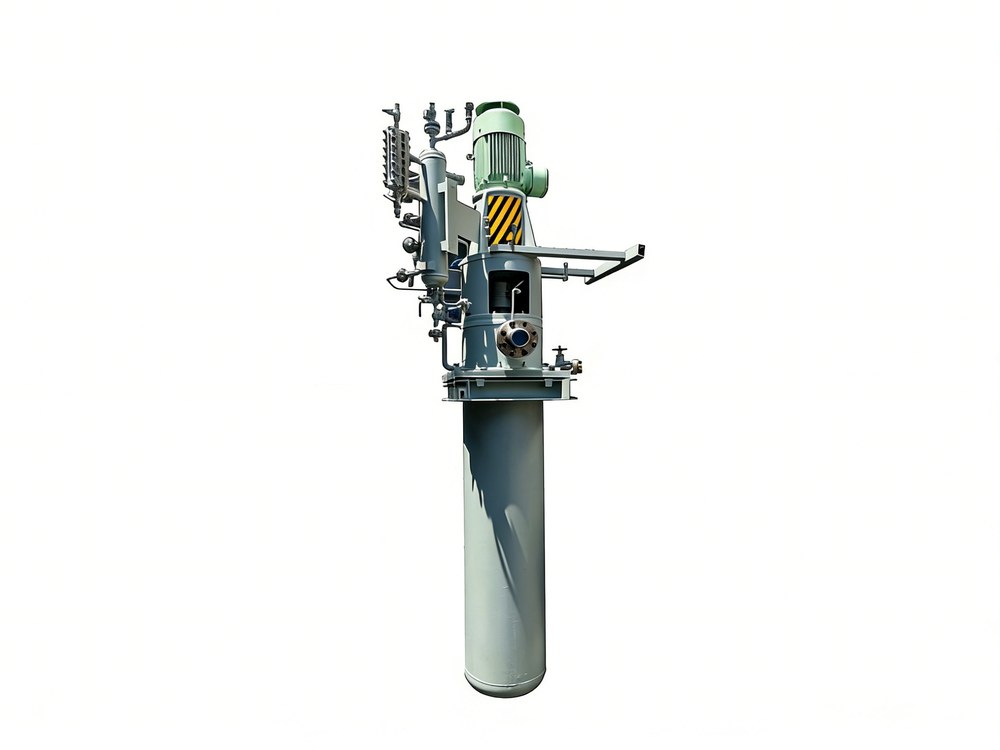
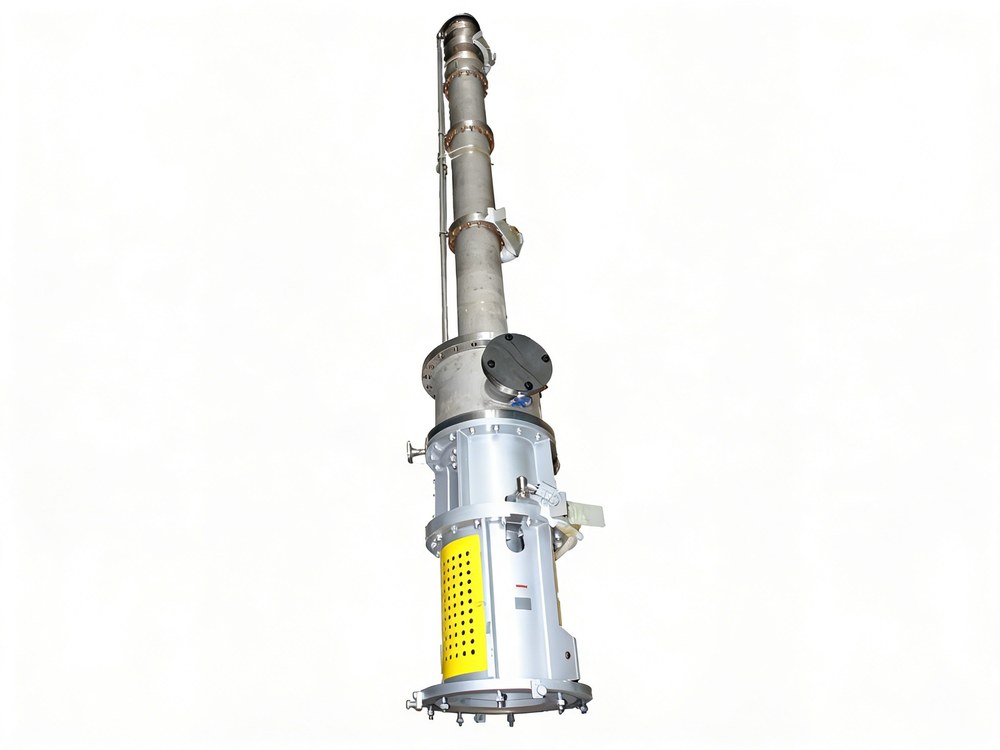
LDT(VS6) firmy Longgang Pump to wielostopniowa pompa wirowa z podwójną obudową, rozdzielona promieniowo, przeznaczona dla mediów łatwo ulotnych i w niskich temperaturach, takich jak etylen i propan. Zewnętrzna obudowa tworzy osłonę zawierającą ciśnienie wokół wewnętrznej zespołu pompy, podczas gdy zawieszenie umożliwia montaż pionowy w układzie często stosowanym dla zimnych płynów procesowych.
Konstrukcja produktu oddziela zadania hydrauliczne pierwszego stopnia od późniejszych etapów. Pierwszy stopień jest zaprojektowany pod kątem lepszej wydajności przeciwkawitacyjnej, podczas gdy kolejne stopnie koncentrują się na efektywnym generowaniu ciśnienia. Inducer (wirnik wstępny) na wlocie wirnika może poprawić parametry ssania, gdy margines dostępnej wartości NPSH jest wąski, choć ostateczny wybór hydrauliczny musi nadal być sprawdzony względem rzeczywistej krzywej systemu.
Projekt VS6 wykorzystuje również strukturę wielopunktowego podparcia oraz sztywne warunki pracy wału. Te szczegóły mają znaczenie, ponieważ długi wirnik pionowy musi pozostawać pod kontrolą, gdy pompa radzi sobie ze zmianami temperatury, wahaniem ciśnienia i siłami dynamicznymi generowanymi przez wielostopniowy zespół hydrauliczny.
Kiedy inne struktury pomp mogą pasować lepiej
Nie każde zadanie związane z etylenem wymaga tej samej architektury. Pionowa zawieszona pompa jednookałkowa VS1 może być rozważana, gdy instalacja ma układ mokrego studzienki, a medium, ciśnienie, temperatura i warunki ssania mieszczą się w zakresie jej projektu. Jej zanurzone łożiska ślizgowe wykorzystują wielopunktowe podparcie, a komora uszczelnienia może być skonfigurowana z różnymi układami uszczelniającymi, płukania i chłodzenia.
Pionowa pompa procesowa OH2 może być bardziej praktyczna, gdy układ zakładu zapewnia natarcie zalane, a stan płynu nie wymaga specyficznej aranżacji niskotemperaturowej pionowej pompy z podwójną obudową. LZE(OH2) firmy Longgang Pump wykorzystuje poziomy, jednopstopniowy, jednostronny ssący, rozdzielony promieniowo, środkowo wspierany korpus spiralny i jest wymieniany dla szerokiego zakresu obojętnych lub korozyjnych cieczy w niskich lub wysokich temperaturach.
The LDTV VS1 vertical suspended single-shell pump provides a useful structural comparison.
Select the Mechanical Seal Around the Real Fluid Condition
Seal Face Stability at Low Temperature
A mechanical seal for a low-temperature centrifugal pump must maintain a stable lubricating film while the process fluid remains close to its vapor-pressure limit. Seal face opening, flashing, brittle elastomers, and thermal distortion can all become more likely when the pump starts, stops, or moves away from its normal operating point.
The seal arrangement should be chosen with the seal chamber pressure, shaft movement, fluid cleanliness, vapor behavior, and allowable leakage in view. Longgang Pump’s VS6 design can use mechanical seals or packing seals according to the operating condition. That flexibility does not remove the need to define the support plan; it makes the process data more important.
Flushing, Cooling, and Start-Up Control
For a mechanical seal, the support system should identify the source and quality of the flush or quench fluid, its pressure relative to the seal chamber, and the method used to control temperature. The arrangement should also consider whether the fluid can vaporize in the seal chamber or leave deposits on the seal faces during a long shutdown.
Priming and seal support are closely connected. If air or vapor remains in the casing or suction path, the pump may not establish stable flow, and the seal may lose the liquid film needed for cooling. Operators should confirm liquid filling, venting, minimum-flow protection, and stable suction conditions before treating the pump as ready for continuous operation.
Choose Materials for Temperature and Vaporization Risk
Material selection should cover the outer casing, inner casing, impellers, shaft, sleeves, wear surfaces, fasteners, seal metal parts, faces, and elastomers. Low temperature can change toughness and dimensional behavior, while light hydrocarbons can expose materials to vapor, low lubricity, and rapid changes in thermal load.
The correct choice is not simply the material with the highest nominal temperature rating. Engineers should compare chemical compatibility, low-temperature toughness, erosion risk, thermal expansion, seal compatibility, and the consequences of a change in fluid composition. Any material selected for an ethylene feed pump should be tied to the actual process envelope and the specified operating cases.
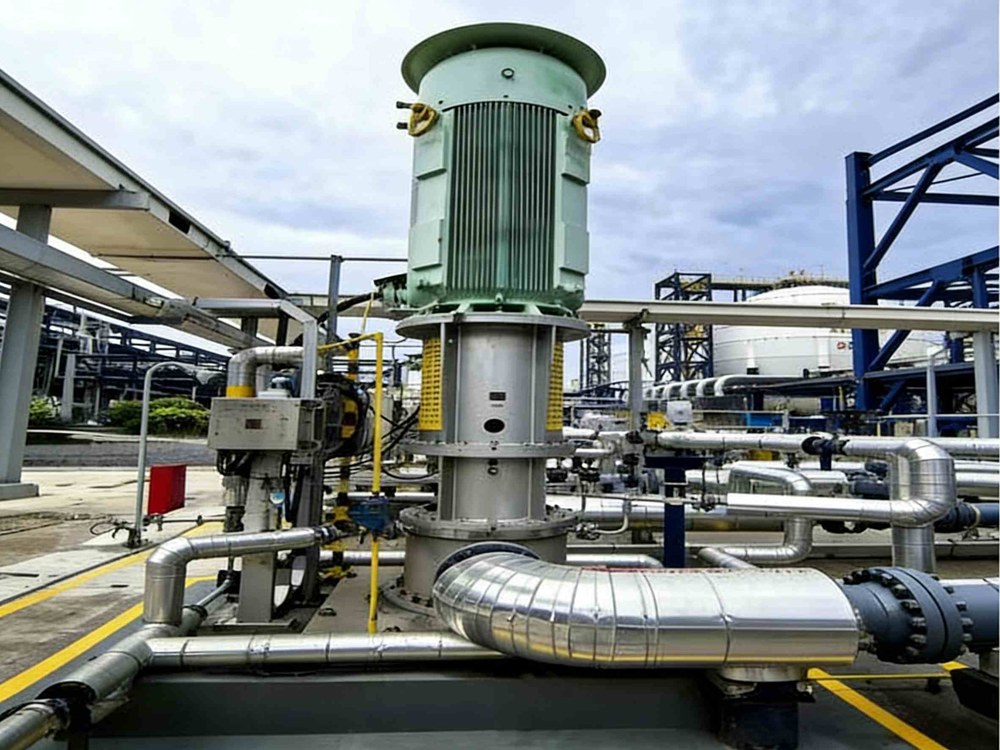
How Longgang Pump Connects Structure, Seals, and Materials
A useful selection review connects the hydraulic duty to the physical arrangement. The VS6 range offers a structure intended for easily vaporized and low-temperature media, while VS1 and OH2 designs provide alternatives for different layouts and process conditions. The decision should then carry through to the seal plan, bearing support, balance method, material list, monitoring points, and maintenance access.
For plant engineers, this integrated approach is more useful than choosing a pump from a single headline parameter. Longgang Pump’s product families cover vertical suspended, vertical submerged, overhung, and between-bearing arrangements, allowing the pump architecture to follow the process rather than forcing the process into one standard configuration.
Explore the wider Longgang Pump product range when the project requires comparison across API centrifugal pump structures.
Podsumowanie
The right ethylene feed pump combines vapor-control capability, low-temperature hydraulic stability, a suitable mechanical seal, and materials matched to the complete process envelope. Longgang Pump’s VS6 structure is designed for easily vaporized and low-temperature media, while its VS1 and OH2 options help engineers compare installation, maintenance, and sealing requirements.
Contact us to review the ethylene duty and develop a coordinated pump selection.
FAQ
Q: What type of pump is suitable for ethylene feed service?
A: The choice depends on flow, head, vapor pressure, temperature, suction condition, installation, and required sealing arrangement. Longgang Pump’s LDT(VS6) is intended for easily vaporized and low-temperature media such as ethylene and propane, while VS1 or OH2 structures may fit different layouts and process envelopes.
Q: Why is a double-casing structure useful for low-temperature fluids?
A: A double-casing pump places the internal hydraulic assembly inside an outer pressure-containing casing. For low-temperature and vapor-prone service, this arrangement can support pressure containment, service access, and a vertical installation layout. The complete benefit still depends on the hydraulic duty, materials, seal plan, and operating procedure.
Q: How should a mechanical seal be selected for an ethylene pump?
A: Review seal chamber pressure, temperature, vapor pressure, fluid cleanliness, shaft movement, allowable leakage, start-up conditions, and the available flush or cooling system. Mechanical seals and packing seals may both be considered for relevant VS6 conditions, but the final choice must match the actual process and safety requirements.
Q: Which data should engineers provide before selecting an ethylene feed pump?
A: Provide flow, head, density, viscosity, vapor pressure, suction pressure, temperature range, NPSHa, gas or vapor content, minimum-flow requirement, installation elevation, fluid composition, material restrictions, and start-up or shutdown cases. These data allow the pump structure, impeller, bearings, seal, and materials to be reviewed as one system.