
Centrifugal pump priming removes air and vapor from the casing and suction line so the impeller starts with a continuous liquid column. In high-temperature chemical service, that simple step protects flow stability, mechanical seals, bearings, and the hydraulic surfaces that keep a process pump predictable. When priming is weak, the pump may spin without moving enough liquid, overheat at the seal faces, vibrate, or move toward cavitation before the operator sees a stable discharge reading.
The topic becomes more important in refineries, petrochemical units, coal chemical plants, and environmental systems because the pumped liquid may be hot, corrosive, volatile, or only lightly tolerant of air pockets. Longgang Pump applications are centered on API chemical centrifugal pumps for those demanding services, so priming is not a minor startup habit. It is part of protecting the pump, the process line, and the people who operate around it.
Why Centrifugal Pump Priming Matters Before Start-Up
A centrifugal pump does not create suction in the same way a positive displacement pump does. The impeller transfers energy to liquid; if the casing is filled with air, the low density of that air prevents the impeller from generating the pressure difference needed to pull liquid into the pump. The result can look like a failed pump even when the real problem is an incomplete pump priming process.
In chemical service, the consequences are sharper. Hot hydrocarbons, quench water, lean liquid, rich liquid, bottom oil, or corrosive media can flash, release gas, or leave vapor pockets in high points of the suction path. A start-up checklist should therefore treat centrifugal pump priming as a hydraulic condition to confirm, not merely a valve-opening step.
What Air Does Inside a Process Pump
Mechanical Seal Dry Running
Mechanical seals need liquid around the seal chamber for cooling and lubrication. If the casing is not fully primed, the seal faces may experience dry running during the first seconds of operation. Even a short event can raise face temperature, distort sealing surfaces, and increase leakage risk after the pump appears to have stabilized.
Longgang Pump process models are commonly designed around API sealing practices. For example, the BB2 and OH1 product families use seal chamber dimensions aligned with API682 requirements, allowing sealing, flushing, and cooling arrangements to be configured for different media. Good priming gives those systems the liquid environment they need before shaft speed and process temperature add stress.
Cavitation, Vibration, and Unstable Flow
Air remaining in the suction line reduces available suction energy and can push the pump toward cavitation-like symptoms. Operators may hear noise, see fluctuating pressure, or observe vibration as vapor and liquid pass through the impeller unevenly. In severe cases, the pump may never establish normal flow, especially when the suction source is below the pump centerline or when high-temperature liquid is near its vapor pressure.
The damage mechanism is not only hydraulic. Vibration can load bearings, couplings, seals, and pipe supports. For high-value petrochemical pumps, avoiding unstable start-up is often less expensive than correcting the downstream effects of a rushed start.
Pump Details That Change Priming Behavior
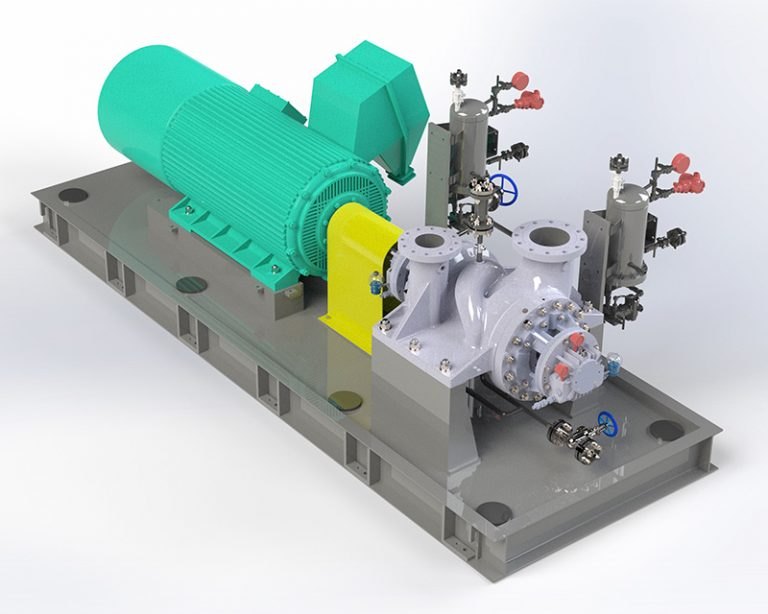
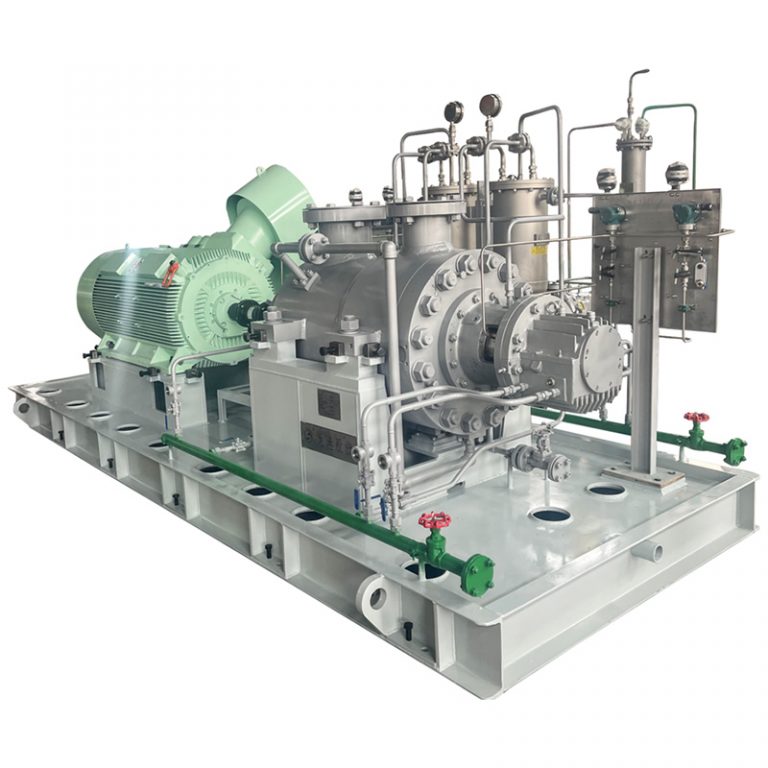
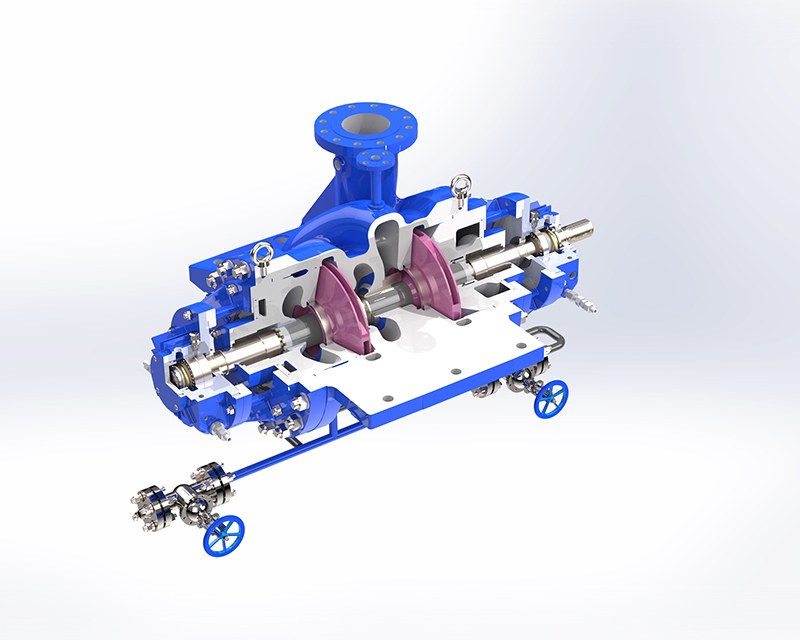
LBD(BB2) Radially Split Process Pump
The LBD(BB2) radially split process pump is a horizontal, radially split, between-bearing pump for heavy-duty petrochemical process service. It is available in single-stage, two-stage, or three-stage structures, with a volute casing and center support arrangement. Its operating range includes flow from 10 to 4000 m3/h, head up to about 600 m, working pressure up to about 15 MPa, and temperature service from -80 to +450°C.
Those conditions explain why priming discipline matters. High temperatures change thermal expansion behavior and can affect alignment during start-up. Corrosive or easily vaporizing media also make trapped gas less forgiving. The BB2 structure uses features such as metal spiral-wound gasket sealing between casing parts, double volute design on larger outlet sizes, and rigid shaft design below the first critical speed to support stable operation, but the pump still needs a liquid-filled casing before it can perform as intended.
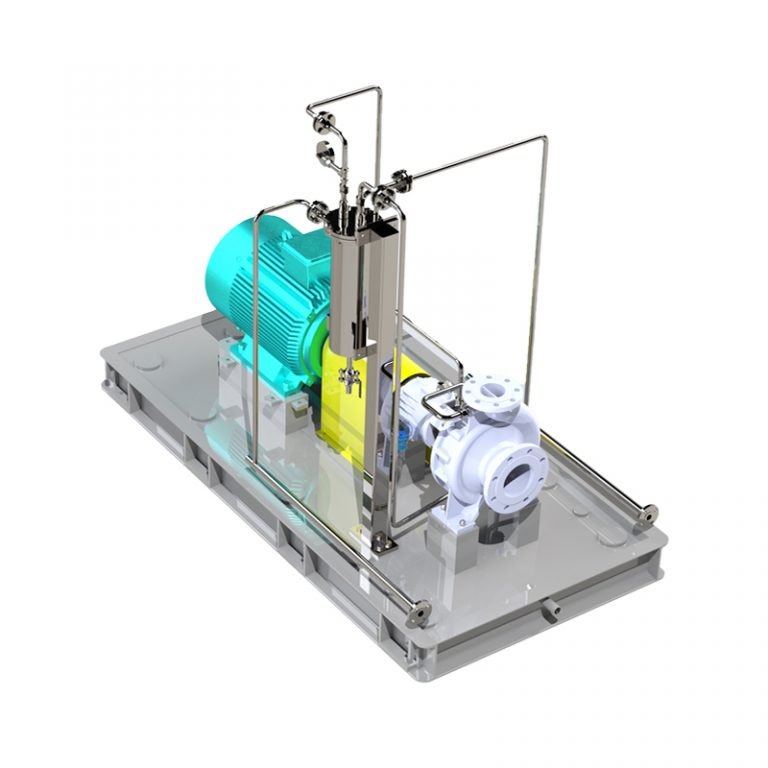
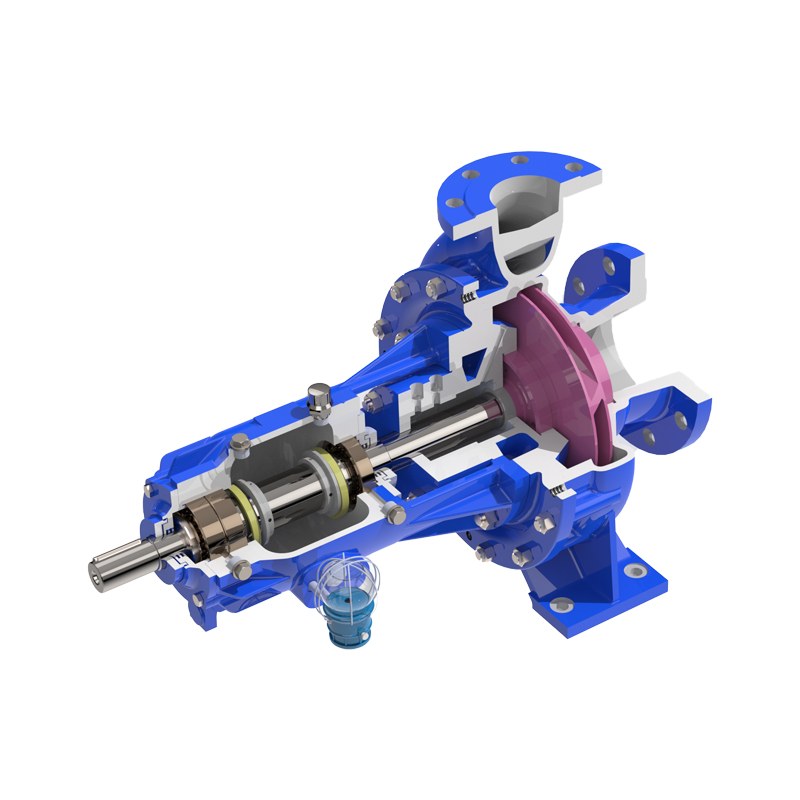
LZA(OH1) Single-Stage Cantilever Pump
The LZA(OH1) single-stage cantilever pump is a foot-mounted, single-stage cantilever centrifugal pump for clean liquids or liquids containing trace particles, including neutral or highly corrosive media over low- or high-temperature ranges. Its operating range includes flow from 5.5 to 2600 m3/h, head from 16 to 250 m, working pressure up to about 15 MPa, and temperature service from -80 to +450°C.
For OH1 installations, centrifugal pump priming is closely tied to suction piping and seal protection. The pump body uses a volute structure, and outlets of DN80 and above use a double volute hydraulic design to help balance radial force. The overall pull-out design allows inspection and maintenance without moving the inlet and outlet pipelines, but that maintainability does not replace careful start-up preparation.
Practical Start-Up Checks for Chemical and Petrochemical Lines
The first check is whether the suction source can keep the pump flooded before start. When the liquid level is above the pump centerline, gravity helps remove air, but vents at high points may still be needed. When the suction source is below the pump, a priming tank, vacuum-assisted arrangement, or other engineered priming method may be needed to establish a continuous liquid column.
The second check is venting. Operators should confirm that casing vents, seal chamber vents, and suction line high points are handled according to the installation design. Closing the vent too early can leave air trapped in the casing; leaving it open too long can create exposure or process-control concerns in chemical service.
The third check is temperature and vapor pressure. A liquid that is stable at ambient conditions may release vapor near operating temperature. For hot oil, light hydrocarbons, ammonia-related service, or similar media, priming should be paired with NPSH review, warm-up procedures, and seal flush confirmation.
The fourth check is discharge restriction. A centrifugal pump is often started against a controlled discharge condition, but the exact valve position depends on the pump type, driver, process, and operating procedure. The safe habit is to follow the engineered start-up sequence rather than treating every centrifugal pump the same.
Where Longgang Pump Fits in Priming-Sensitive Service
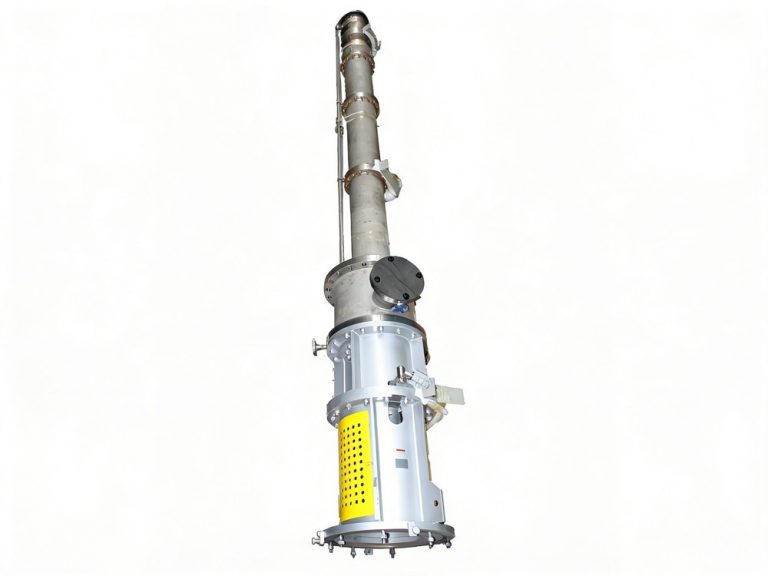
Longgang Pump manufactures BB, OH, and VS series chemical centrifugal pumps used in petroleum, petrochemical, coal chemical, basic chemical, environmental protection, and water treatment applications. The company’s portfolio is relevant to priming discussions because many of these pumps operate where temperature, pressure, corrosion, and vapor control all matter at the same time.
For facilities comparing pump types, the useful question is not only how to prime a centrifugal pump, but how the pump geometry supports reliable operation after priming. A between-bearing BB2 pump may suit heavy-duty, high-temperature process service, while an OH1 cantilever pump may fit many single-stage refinery, chemical, power plant, and environmental duties. The priming method, suction layout, seal plan, and maintenance access should be considered together.
Conclusion
Centrifugal pump priming is a small step only when the service is simple. In high-temperature chemical applications, it becomes a reliability control point that protects the seal chamber, stabilizes hydraulic performance, and reduces the chance of vibration, overheating, or failed start-up. Pumps built for demanding service still rely on disciplined installation and operating practice to deliver their full value.
Review Longgang Pump chemical centrifugal pumps to match start-up requirements with pump structure, seal configuration, and process conditions.
FAQ
Q: Why is centrifugal pump priming necessary?
A: The reason for priming a centrifugal pump is that the impeller requires movement of the liquid and not the air in order to generate pressure. The pump may fail to develop head, overheat at the faces of the seals, vibrate, or come closer to cavitation due to the presence of air.
Q: Do all centrifugal pumps need to be primed?
A: The majority of centrifugal pumps require that the pump casing be full of liquid prior to startup, depending on the installation, although flooded suction installations may remain naturally full. Suction lift or negative suction installations may require priming tanks, vacuum setup, foot valves, and so on.
Q: What is the safest way to prime a chemical process pump?
A: A safe approach will be determined based on the liquid, pressure, temperature, and procedure at the site. For chemical applications, personnel are supposed to check the suction isolation, venting, seal flushing, casing filling, and discharge prior to starting the process. Volatile or toxic liquids demand proper venting.
Q: Can poor priming damage a mechanical seal?
A: Yes. The mechanical seal will be subjected to damage due to inadequate liquid in the seal chamber at startup time. The increase in the seal faces’ temperature occurs rapidly because of dry running, and vibrations may also result due to poor flow.