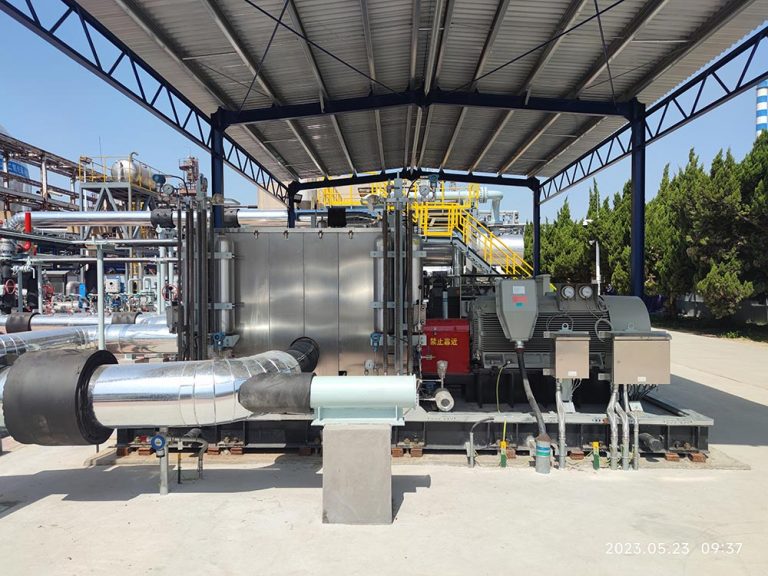
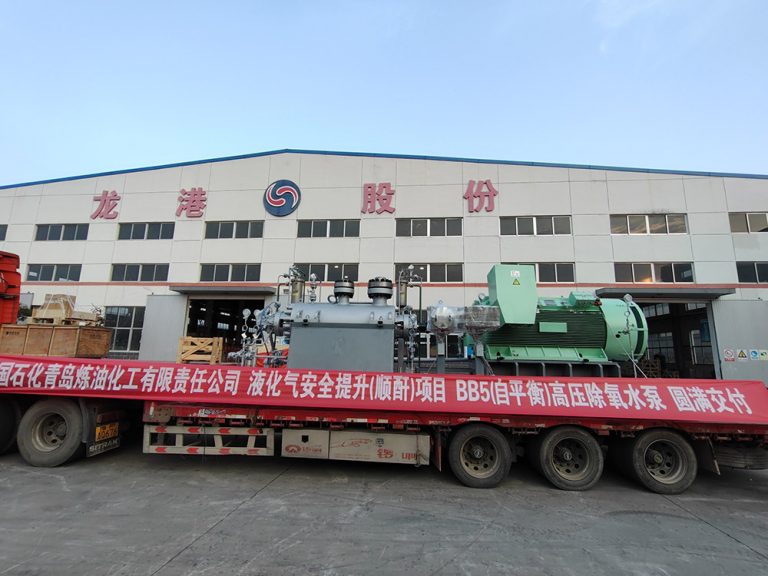

When the liquid sits below grade, a horizontal pump usually needs a pit, a long suction line, or a platform. A vertical turbine pump avoids much of that. The driver mounts on a plate above floor level and the hydraulic end hangs down into the liquid, so suction happens where the fluid already is. That is why these pumps show up in sumps, deep tanks, and hot pits across refinery and chemical service. Picking one comes down to the liquid and the layout, weighed against NPSH, liquid-level swing, temperature, and the shaft length the installation allows. As a first pass: a single-shell can design is commonly used for a wet pit, a long-axis submerged pump is often preferred for a deep or hot sump, and a double-shell bag pump is the usual choice when the medium is cold, light, or near its vapor point.
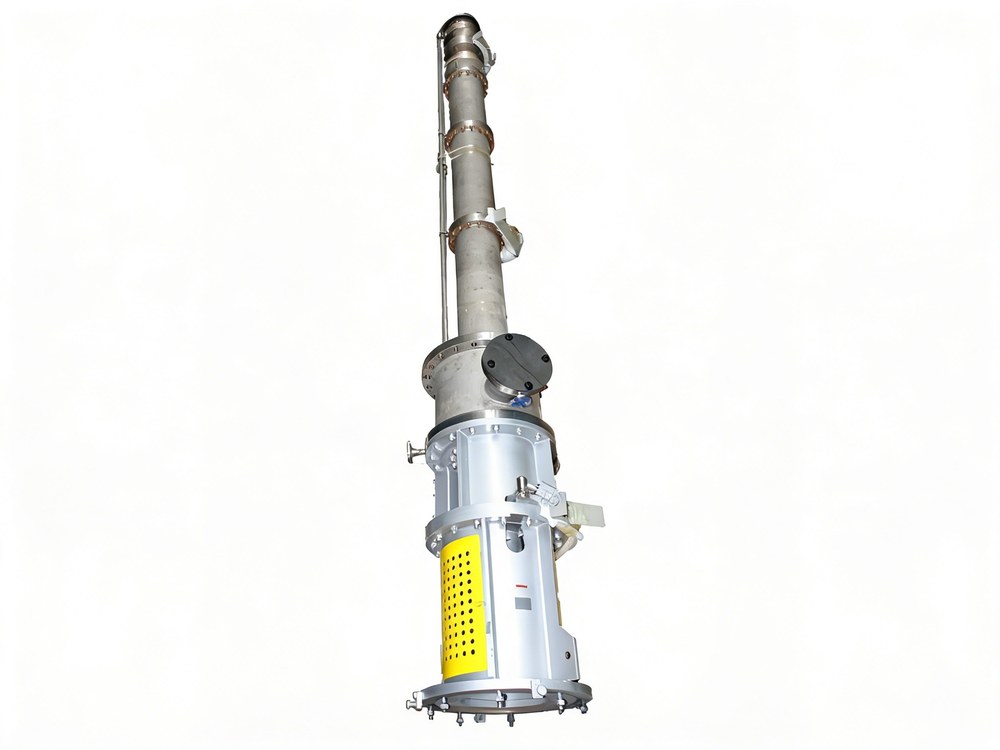
Longgang Pump builds the family to API 610. The line opens with the LDTV(VS1) single-shell vertical suspended centrifugal pump, aimed at wet-pit and sump duty. Below is how to read that duty and land on the structure, seal, and material that fit it.
What a Vertical Turbine Pump Actually Is
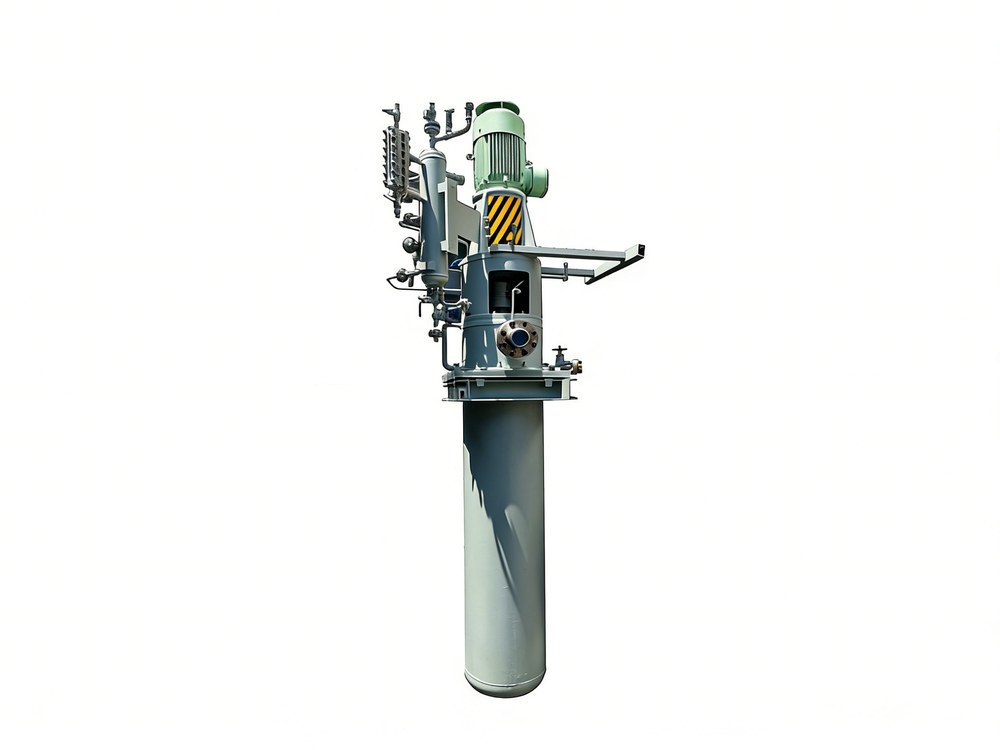
The whole rotor hangs in a vertical line. Motor on top, bearings in the housing up at the mounting plate, impellers strung down the column underneath. Power travels straight down the shaft, and the wet end either submerges in the liquid or hangs in the vessel. The vertical arrangement minimizes floor-space requirements, although proper foundation, mounting-plate stiffness, shaft alignment, and piping support remain essential.
Why the Suction Path Is the Whole Argument
With the hydraulic end submerged, the pump avoids the priming issues associated with long horizontal suction lines, which is exactly the trouble a deep sump causes a horizontal pump. The trade-off is that the shaft and its support are now part of the problem: the column length, the way the shaft is held, and the sealing at the top all have to be right for the duty.
Match the Vertical Design to the Duty
The word vertical turbine pump covers several structures, and picking among them is the real decision. The same plant can need a single-shell can pump in one pit and a double-shell bag pump in another, because the liquid and the depth are different.
Single-Shell for Wet Pits and Sumps
For a moderate, clean-to-laden wet pit, the LDTV(VS1) single-shell vertical suspended pump is a common first choice. Its hydraulic end is a single-shell can hung in the liquid, with the shaft supported up at the plate. In our alkylation deliveries these single-shell designs ran from single-digit flows into the mid-tens of cubic metres per hour across up to ten stages, with heads from the low fifties into the high hundreds of metres for dense hydrocarbon and acid lines.
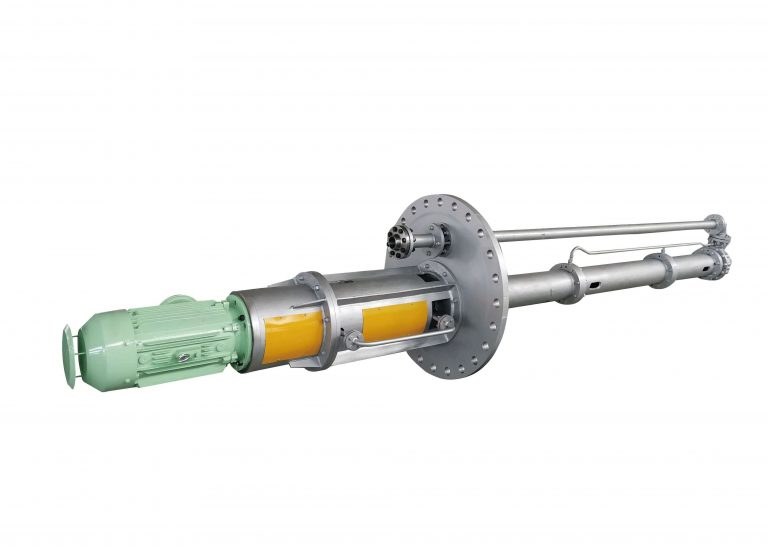
When the pit is deep or the liquid is hot, the column gets longer and the structure shifts to a long-axis submerged pump. The Pompa podwodna długookresowa LY(VS4) puts the hydraulic end down on a long shaft, with the driver and access points above the plate.
Column length should be limited to what the vessel geometry requires, while shaft stiffness, bearing spacing, critical speed, and rotor-dynamic behavior must all be checked for the selected configuration. Our molten-salt submerged pumps carry shafts from roughly 3.3 to 4.5 m, with the hydraulic end down to about 5.8 m, and they run at flows of around 30 to 100 m³/h.
Bag and Double-Shell for Cold or Vapor-Prone Media
When the liquid is cold, light, or close to its vapor point, a single-shell design can run short on NPSH at the first-stage impeller. A double-casing VS6 pump uses an outer suction barrel to provide additional static head at the first-stage impeller. This improves the NPSH margin and makes the design well suited to low-temperature, light-hydrocarbon, and other vapor-prone services, where insufficient NPSH could otherwise lead to vapor formation and cavitation at the first-stage impeller.
Pick Materials and Seals for the Liquid You Actually Handle
Material follows the liquid. On our vertical work, casings and barrels are specified from cast steel up to A-7 and A-8 (316L) and stainless options, with 17-4PH and 35CrMo shafts where the service demands strength or corrosion resistance. A molten-salt pit is a very different material problem from a propylene loading line, and the alloy you specify should say so.
Sealing follows the same logic. The seal plan is driven by the medium’s volatility, toxicity, vapor pressure, temperature, and the applicable emissions requirement. A hot or clean pit can often run a simpler or labyrinth arrangement, while a more volatile or hazardous medium calls for a barrier or flushed plan reviewed against API 682. Because the seal sits at the top of a long column, getting it right is what keeps the rest of the pump out of the liquid it is meant to contain.
Size to the Operating Point and the Suction Level
A vertical turbine pump only behaves as designed at its operating point. Run near the best efficiency point and keep minimum-flow protection in place, because the first-stage impeller is the first to see a cavitation problem when the flow drops. Maintain adequate submergence and NPSH margin at the first-stage impeller, especially at the minimum operating liquid level. Prolonged low-flow operation should also be avoided, because it can increase recirculation, vibration, and heat generation.
Stage count is the second lever. A single impeller sets a head ceiling, so multistaging is the typical way to reach a higher head, while speed remains a normal design parameter in its own right. Get the level, the material, and the stage count right and the vertical pump can run a long time without drawing attention.
Podsumowanie
A well-chosen vertical turbine pump is a reliable piece of equipment. It hangs in the liquid, starts without the suction problems a horizontal pump faces, and holds its operating point. The discipline is in choosing the structure to the duty: a single-shell can for a wet sump, a long-axis submerged pump for a deep or hot one, and a double-shell bag pump when the medium is cold or vapor-prone. Match the material and seal to the liquid, and size to the operating point and the lowest level.
If the service is cold, light, or close to flashing, the LDT(VS6) double-shell vertical suspended bag centrifugal pump is built to add NPSH margin at the first-stage impeller. Send Longgang Pump the flow, head, temperature, and the lowest liquid level you expect. We will size the vertical turbine pump structure that fits your pit or sump.
FAQ
Q: What is the difference between a vertical turbine pump and a vertical inline pump?
A: They are mounted differently and suit different layouts. A vertical turbine pump has its hydraulic end hung down into a pit or tank with the driver on a plate above. A vertical inline pump (OH3) bolts straight into a horizontal pipe line. Choose the turbine style when the liquid is below you and a line pump cannot reach.
Q: How deep can a vertical turbine pump operate?
A: The allowable depth depends on shaft design, bearing spacing, column stiffness, critical speed, installation geometry, and the service conditions. The 3.3 to 4.5 m shaft lengths cited here are examples from our molten-salt projects, not a universal maximum. A duty deeper than those needs a review of the column and its support rather than simply a longer shaft.
Q: Can a vertical turbine pump handle low-temperature or light-ends service?
A: Yes. The double-shell bag design is built for cold, light, or easily vaporized media. Our VS6 deliveries include propylene, liquid ammonia, and C4 in the range from about -40 C to +40 C, with A-7 or S-6 casings, 304 stainless barrels, and 17-4PH shafts.
Q: What materials and seals should I specify?
A: Both follow the liquid. Our vertical work spans cast-steel bodies with stainless impellers at one end and A-7 or A-8 (316L) casings at the other, with 17-4PH or 35CrMo shafts where the service runs hot or aggressive. On sealing, a simple or labyrinth plan may be enough for a clean or hot medium, while a more volatile or hazardous medium calls for a barrier or flushed arrangement checked against API 682.