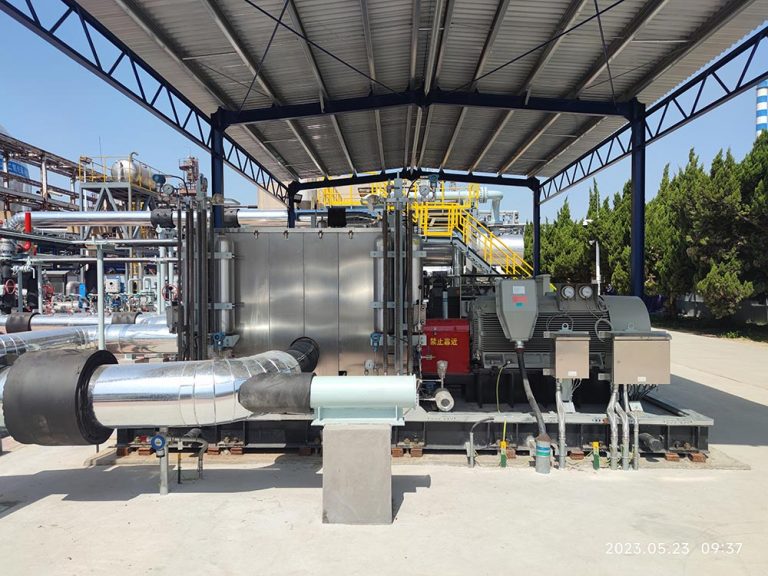
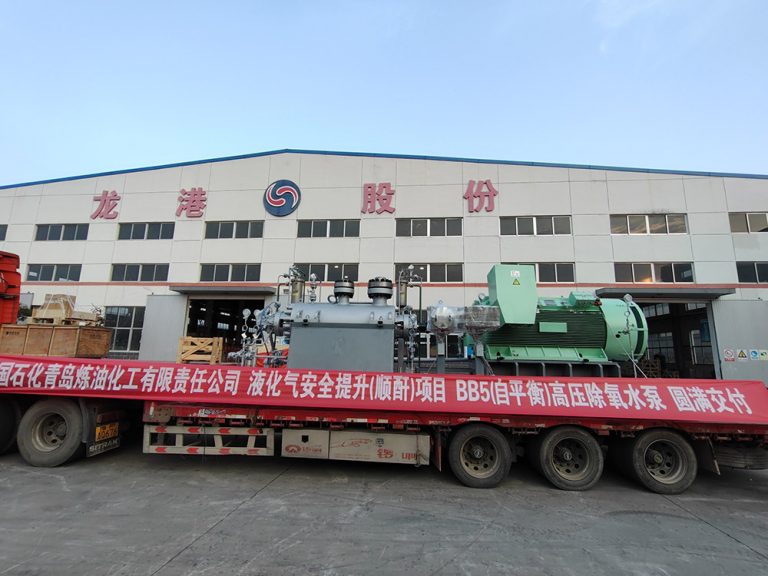

Amid the stringent requirements associated with the transportation of oil products, midstream and downstream businesses face constant challenges. High-pressure pipelines, for instance, may be faced with equipment instability, leaks caused by extremely high temperatures, and expensive maintenance down times. The selection of either the axial pump or the radially split pump is not merely a matter of preference but a crucial step that impacts the hydraulic performance and longevity of a particular project.
At Longgang Pump, we tackle these vital industry problems through carefully designed solutions that meet API 610 and API 682 standards. As a trusted supplier to major global energy firms like CNPC, Sinopec, and CNOOC, our goal is to supply centrifugal systems that emphasize dependability in the most unstable settings.
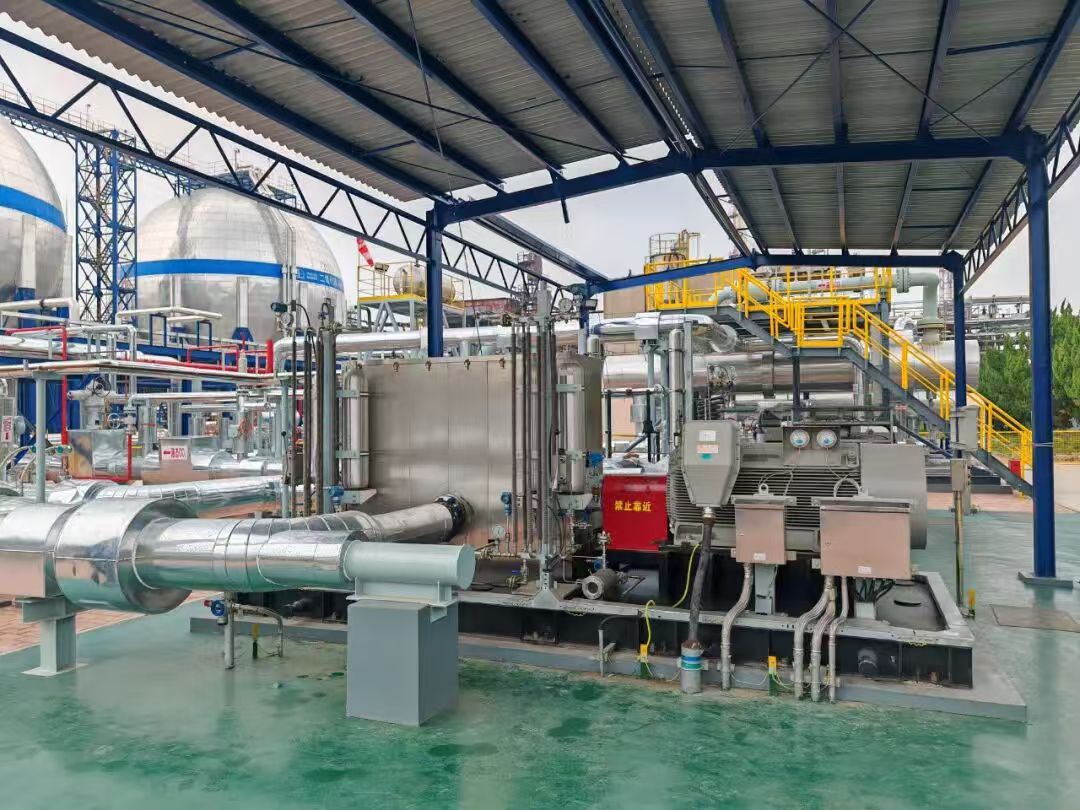
Selecting the Right Architecture: Axial Pump vs Radially Split Pump
The selection of pump casing orientation depends on the particular temperature, pressure, and maintenance needs of the petroleum transport application.
The Efficiency of Axial Split Designs (BB1 and BB3)
For large-volume crude oil piping transfer and long-distance water supply, the axial split casing provides superior maintenance benefits.
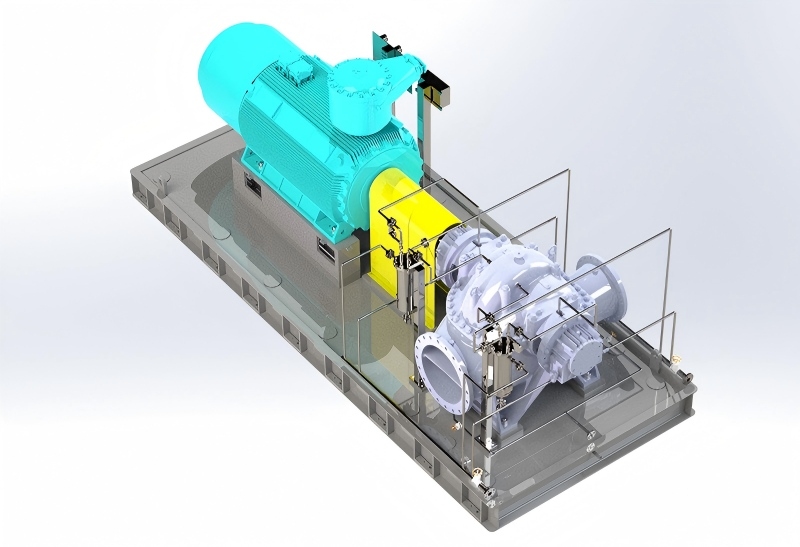
- LAD(BB1)-Axial Split Double Suction Pump:This series has a casing split into two parts the body and the cover that connect via a large flange at the center. The main advantage for B2B brand owners is that the suction and discharge pipes sit in the lower half of the casing. As a result, workers can inspect and replace the entire rotor, bearings, and mechanical seals without disconnecting the inlet and outlet piping.
- LCD(BB3)-Horizontal Split Multi-Stage Pump:For high-head pipeline transportation, the LCD(BB3) features a symmetrical impeller setup that naturally balances axial forces. Moreover, the horizontal split design makes multi-stage maintenance quick and straightforward, which is essential for ongoing oil mining operations.
The Robustness of Radially Split Designs (BB2)
In refinery units that manage high-temperature or hazardous media, the radially split pump serves as the standard engineering choice for safety and steadiness.
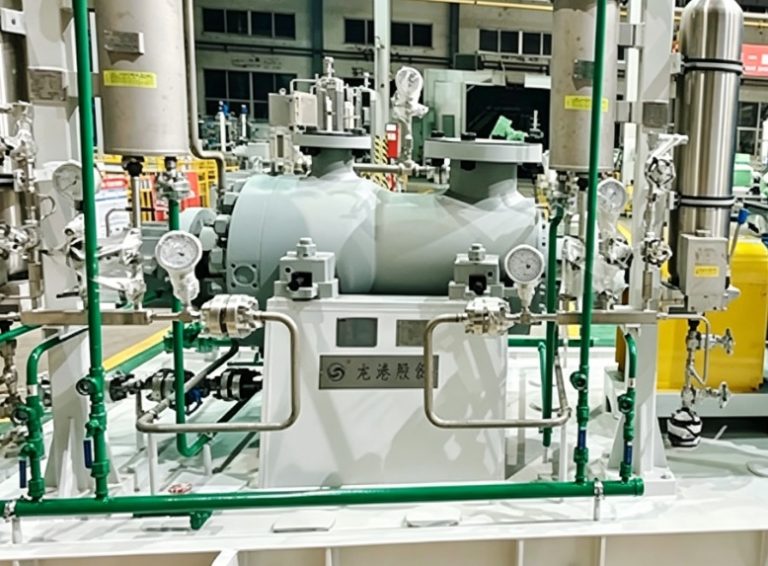
- LBD(BB2)-Radial Dissection Chemical Process Pump:As a leading radially split pump body company, Longgang Pump builds the LBD(BB2) with centerline mounting and a dual-end support structure. This setup is crucial for petroleum success since it avoids shifts in the relative positions of the pump and drive centers due to thermal expansion at temperatures up to 450°C. Additionally, the radially split structure uses reliable metal spiral-wound gaskets, so it becomes the top option for moving toxic, volatile, or highly corrosive oil products.
Optimizing Fluid Dynamics for System Longevity
When we differentiate between single-suction and double-suction pump hydraulics, we examine how the axial flow and radial flow traits influence the Net Positive Suction Head (NPSH).
- Double Suction Advantage:Our LAD(BB1) and several LBD(BB2) setups use double-suction impellers to lower NPSH needs and installation expenses. This dual-entry approach creates a self-balancing axial force, which reduces the load on the 360° integrated bearing brackets and lengthens maintenance periods.
- Rigid Shaft Integrity:In both axial pump vs radially split pump models, Longgang Pump adopts a sturdy shaft design. Consequently, the operating speed stays well under the first critical speed, ensuring smooth performance even in the rough, variable-flow conditions common to oil logistics.
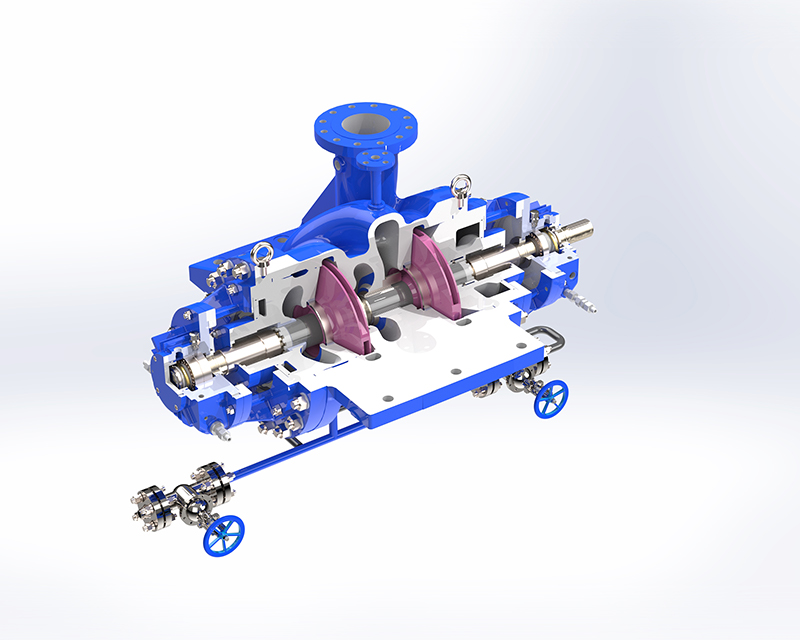
Application Case: High-Temperature Stability at Yulong Island
Our centrifugal technology’s success shows clearly in the 2023 Yulong Island Refining and Chemical Integration Project (Phase I). The project needed a fix for transporting high-temperature hot oil—a medium that often leads to thermal misalignment and mechanical seal breakdowns. Longgang Pump supplied the feed oil circulation pump, which employed an innovative BB5-lined BB3 structure.
By merging the high-pressure containment of a double-shell pump with the thermal stability of a center-supported horizontal split multi-stage architecture, we made sure that the pump center stayed perfectly aligned with the driver amid extreme temperature changes. This specific solution not only equaled the performance of international Tier 1 manufacturers but also gave the customer quicker technical support and better spare parts delivery.
Why Partner with Longgang Pump?
As a brand owner, your standing relies on the trustworthiness of your sub-manufacturers. Longgang Pump delivers a full-service network aimed at industrial achievement:
- Precision Manufacturing:Our workshop includes CNC gantry machining centers and high-precision cylindrical grinders to guarantee that every radially split pump body achieves precise tolerances.
- Quality Guarantee:We offer a 12-to-18-month quality warranty and lifetime service for all products. Furthermore, our Level 1 accuracy test bench (up to 4000 kW and 30 MPa) confirms that your pump works as expected before it reaches the site.
- Technical Advisory:We supply selection advice and operational training to fix technical issues before they turn into operational problems.
Are you prepared to improve your petroleum transport logistics with the proper axial pump vs radially split pump technology? Reach out to Longgang Pump now for a tailored consultation.
FAQ
Q: Which pump is easier to maintain in a remote pipeline station?
A: The axial split models, like the LAD(BB1) or LCD(BB3), are preferred because the rotor can be accessed without removing the pump from the piping.
Q: How does Longgang Pump ensure stability at high temperatures?
A: Our LBD(BB2) radially split pumps use centerline mounting, which allows the pump body to expand symmetrically without losing alignment with the motor.
Q: What is the main difference between axial and radial split pumps in terms of pressure?
A: Radially split pumps generally offer higher pressure containment due to their circular sealing gaskets, whereas axial split pumps are favored for high-flow applications with lower-to-medium pressure.
Q: Can you customize pumps for highly corrosive media?
A: Yes, we have developed special alloy pumps, including super-low carbon duplex stainless steel, to handle media like concentrated sulfuric acid and caustic soda.
Q: What technical support does Longgang provide during installation?
A: We send technical or after-sales personnel to the site to assist with installation, testing, and operational guidance as per contract agreements.