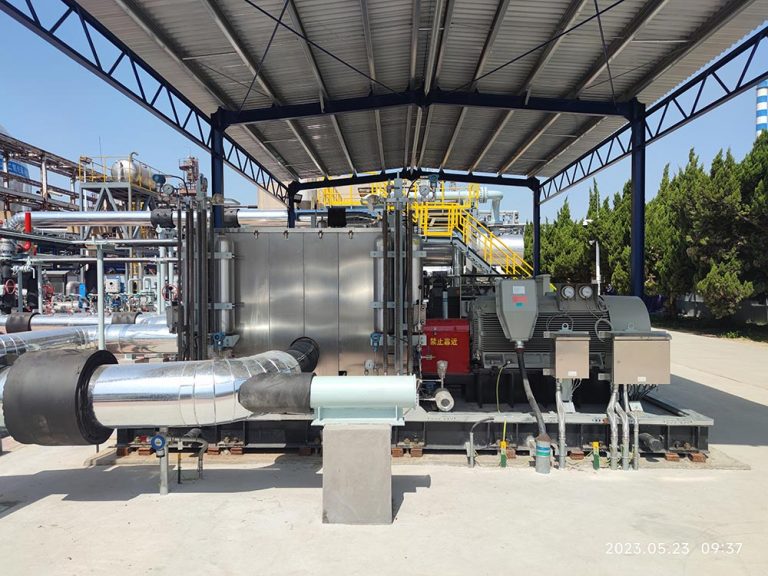
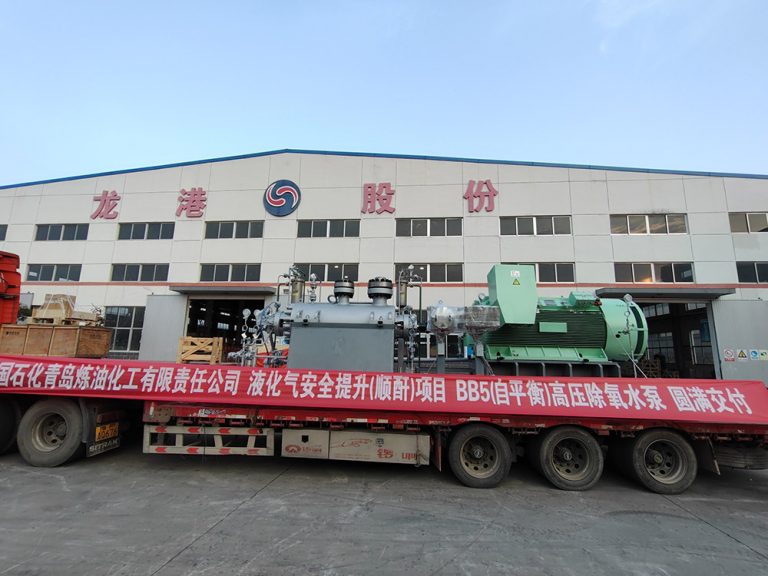

In the demanding field of petrochemical purchasing, a common gap in knowledge often causes major operational problems: the difficulty in telling apart the lasting advantages of an axial vs a radially split pump for particular process settings. Owners of brands often find it hard to balance simple upkeep against strong structure in hot conditions. Picking the incorrect setup leads to too much downtime, seal breakdowns, and reduced safety.
To fix these technical issues, you need a partner who grasps the details of hydraulic design. Longgang Pump steps into this area not only as a maker but as an expert in engineering. As a national “high-tech enterprise” and a Grade A supplier to CNPC, Sinopec, and CNOOC, we focus on delivering top-quality centrifugal pump supply that connects ideal performance in theory with real-world dependability.
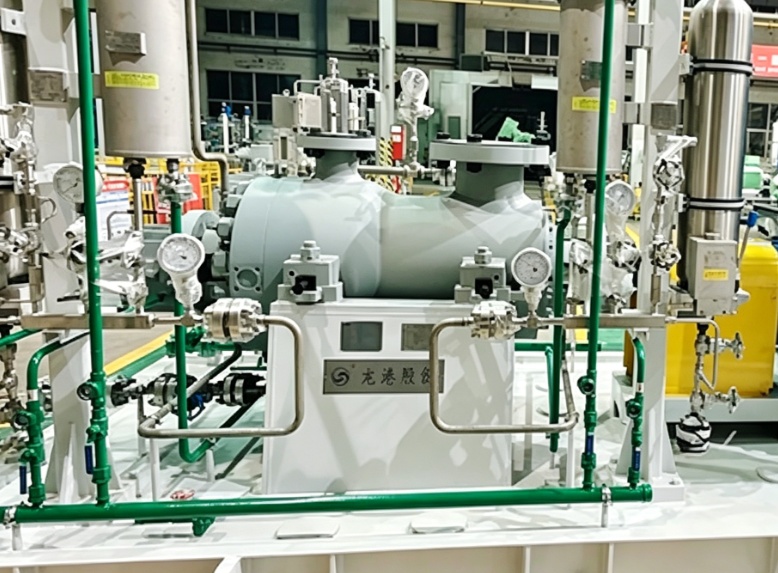
Decoding the Architecture: Axial vs Radially Split Pump
The basic difference between these two setups is how the pump casing splits, which determines their ability to handle pressure and their upkeep methods.
The Maintenance Advantage: BB1 Double Suction Pump
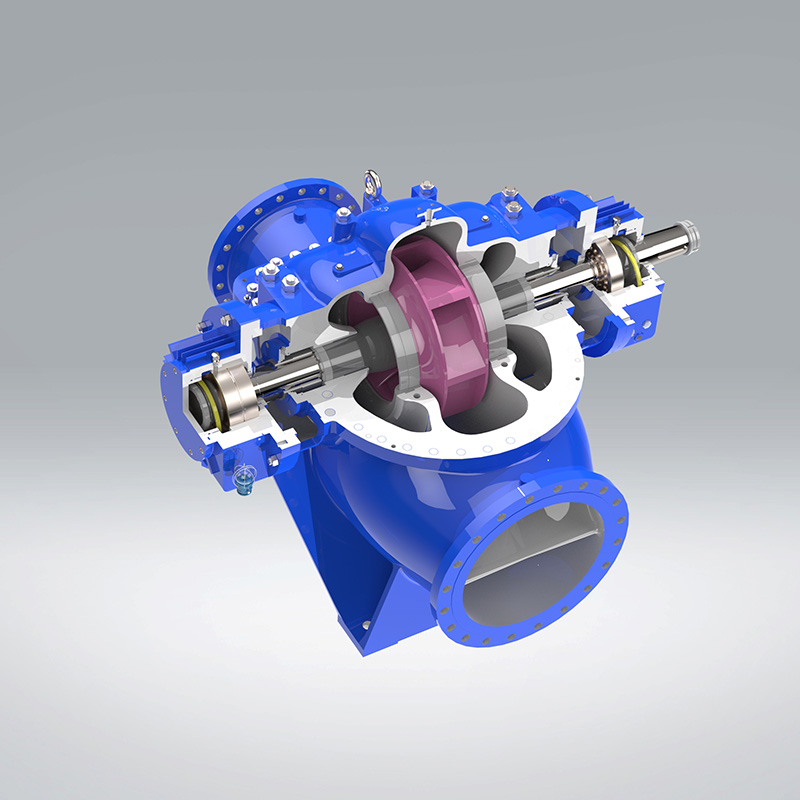
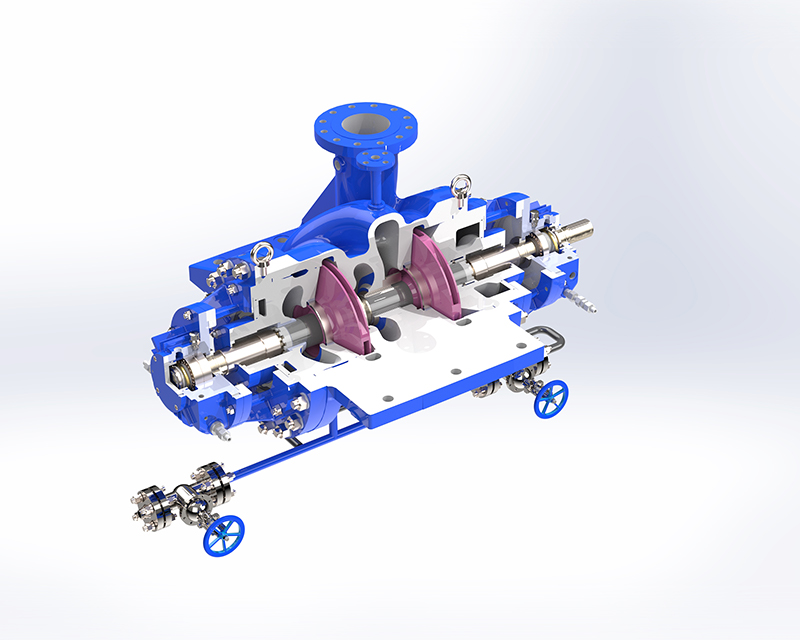
The BB1 double suction pump has an axial split casing, where the pump body and cover connect along the horizontal centerline of the shaft.
- Ease of Access:The main benefit for owners of brands is the chance to check or swap the whole rotor assembly without removing the suction or discharge piping. This setup cuts down repair times and labor expenses a lot.
- Hydraulic Balance:Our BB1 double-suction pump uses a double-suction closed impeller, which naturally balances axial forces. As a result, it offers a broader operating range and less vibration, so it suits high-flow water supply, crude oil transfer, and industrial desalination well.
- Stability:For bigger models, we add a double volute casing, which reduces radial pressure pulses. Therefore, the pump runs smoothly even near the edge of its performance curve.
The High-Temperature Workhorse: BB2 Centrifugal Pump
When the job involves very high temperatures or dangerous fluids, the BB2 centrifugal pump serves as the go-to option in the industry.
- Thermal Stability:In contrast to axial designs, the BB2 centrifugal pump includes a radially split casing and centerline mounting. This setup keeps the pump lined up with the drive center, even when the casing grows under temperatures that reach up to 450°C.
- Leak Prevention:By using dependable metal spiral-wound gaskets for sealing, the BB2 centrifugal pump is built for the safe movement of toxic, risky, or quick-to-vaporize fluids, like quenching oil and ethylene separator return fluids.
- Energy Efficiency:Our own BB2 models, developed independently, achieve a confirmed hydraulic top efficiency of 90.5%, which beats national first-level energy efficiency standards by 3.5%.
Strategic Selection: Petrochemical Application Scenarios
Deciding between an axial vs radially split pump relies on the exact needs of the petrochemical plant.
For big water transport or crude oil lines, the BB1 double suction pump stands out because of its huge flow capacity (up to 8500 m³/h) and upkeep ease. It becomes the key choice in setups where uptime depends on simple physical access.
On the other hand, for refinery normal and vacuum units, or coal chemical “black water” cycles, the BB2 centrifugal pump proves essential. Its capacity to endure working pressures up to 15 MPa and harsh environments makes it a vital part of tough petrochemical processing.
Solution for High-Efficiency Crude Oil Transportation
A well-known owner in the coal chemical field dealt with repeated bearing issues and high energy use in their crude oil line. They had started with a basic radial pump that did not fit their flow needs well.
Longgang Pump supplied a custom BB2 centrifugal pump fix that included our unique high-efficiency hydraulic model. We used CFD three-dimensional fluid simulation to adjust the impeller to its precise operating point.
- The Result:Installing our BB2 centrifugal pump raised the unit’s efficiency to the standard 90.5%.
- Impact:The client enjoyed a clear drop in yearly energy costs, and because of the sturdy shaft design and self-balancing double-suction impeller structure, the mean time between failures (MTBF) increased twofold.
Why Longgang Pump is the Preferred Manufacturing Partner
For owners of brands looking for a solid centrifugal pump supply, Longgang Pump provides more than just parts. Our 1st-level accuracy test bench and API Q1 compliant production line make sure that every BB1 double suction pump and BB2 centrifugal pump follows the strictest global standards.
- R&D Excellence:We work with top universities and apply 3D laser printing for testing validation, which keeps our products ahead in new ideas.
- Service Commitment:We give a 12/18-month warranty and 24-hour technical support, including help with on-site installation and testing.
- Material Versatility:Besides common materials, we create special alloy pumps for very corrosive fluids like concentrated sulfuric acid and caustic soda.
In the discussion of axial vs radially split pumps, the best pick hinges on your operational goals. At Longgang Pump, we supply the engineering know-how to clarify that pick.
Contact Longgang Pump today to improve your petrochemical fluid systems with a high-performance centrifugal pump supply.
FAQ
Q: When should I choose an axial vs. a radially split pump for my project?
A: Choose an axial split (BB1) for high flow and easy maintenance at moderate temperatures; choose a radial split (BB2) for high-temperature, high-pressure, or hazardous media.
Q: What is the maximum temperature a Longgang BB2 centrifugal pump can handle?
A: Our LBD (BB2) series is designed to operate in temperatures ranging from -80°C up to +450°C.
Q: How does the BB1 double suction pump improve maintenance efficiency?
A: The axial split casing allows for rotor inspection and removal without disconnecting the suction or discharge piping, significantly reducing downtime.
Q: Does Longgang Pump offer customization for specific chemical media?
A: Yes, we develop special alloy pumps for corrosive liquids like hydrochloric acid and caustic soda, tailored to client requirements.