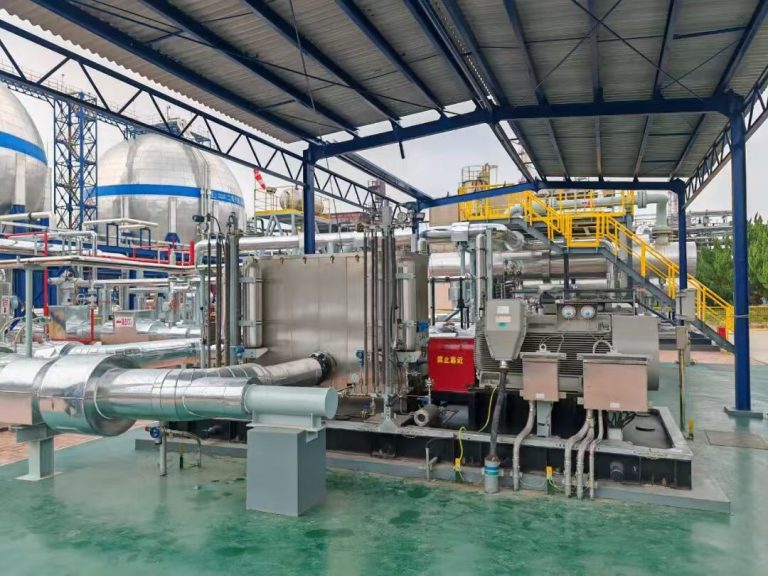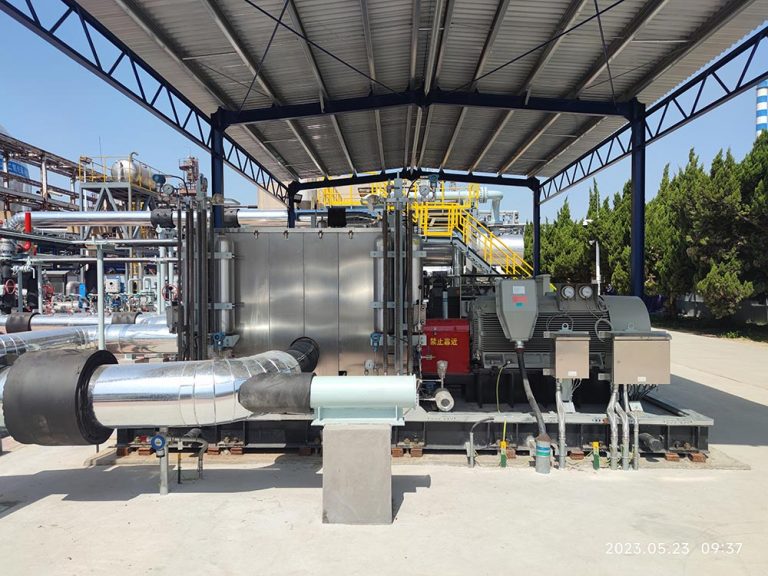

A molten salt circulation pump for a maleic anhydride unit should be selected from the salt temperature, flow, head, viscosity, density, heat-transfer arrangement, sealing method, and material compatibility. In the project data available for this duty, the heat transfer salt operates at approximately 260 to 300°C, with a design flow of about 8 to 12 m3/h and a head of 45 m, making thermal control and seal reliability as important as hydraulic capacity.
Why Molten Salt Circulation Pump Selection Needs a Full Duty Review
Heat transfer salt is not a generic hot-water service. Its density, viscosity, temperature range, and chemical composition influence the impeller load, shaft power, bearing condition, seal behavior, and the ability of the system to restart after a shutdown. A pump that matches the nominal flow can still struggle if the salt cools in the casing or if the circulation path contains an air pocket.
For the maleic anhydride duty recorded in the project data, the operating temperature spans roughly 260 to 300°C, the medium density is about 1.866 to 1.913, the flow is about 8 to 12 m3/h, and the required head is 45 m. These figures should be treated as the specific design basis for that application, not as a universal range for every molten salt pump.
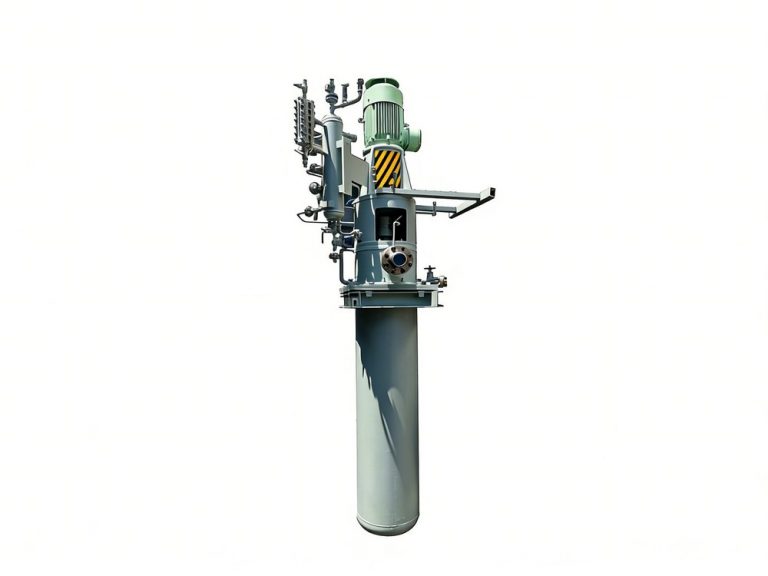
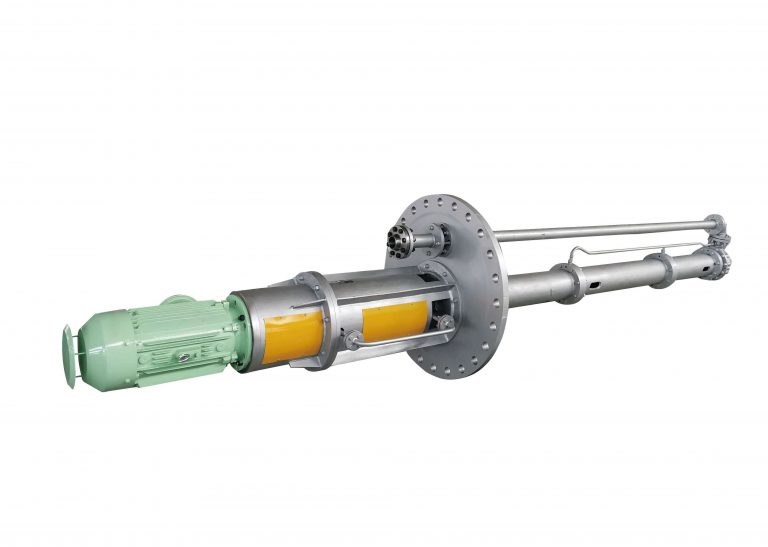
For a vertical submerged structure, review the LY VS4 long-axis submerged centrifugal pump.
Match the Pump Structure to the Heat-Transfer Circuit
Why a VS4 Vertical Submerged Structure Can Be Practical
Longgang Pump’s LY(VS4) is a single-casing, single-suction, radially split, vertical suspended long-axis pump driven through a line shaft. This arrangement is relevant when the pump is installed in a sump or vessel and the liquid level provides the submergence needed for the suction condition. It can reduce the need for a long external suction line and keeps the hydraulic end close to the process liquid.
The VS4 design uses a ZL bearing arrangement with thin-oil lubrication and can be cooled by air or water. Most axial force is balanced through sealing rings and balance holes, with angular-contact ball bearings carrying the residual force. Rotor clearance is adjusted axially so the impeller remains correctly positioned as the pump is assembled and maintained.
For a hot salt circuit, the long shaft, insertion depth, bearing cooling, and vessel geometry must be reviewed together. The pump should not be chosen only because it is vertical. The installation needs enough liquid level, proper heat retention, accessible inspection points, and a shutdown procedure that limits solidification or deposit formation.
When a Between-Bearing Process Pump Is a Better Fit
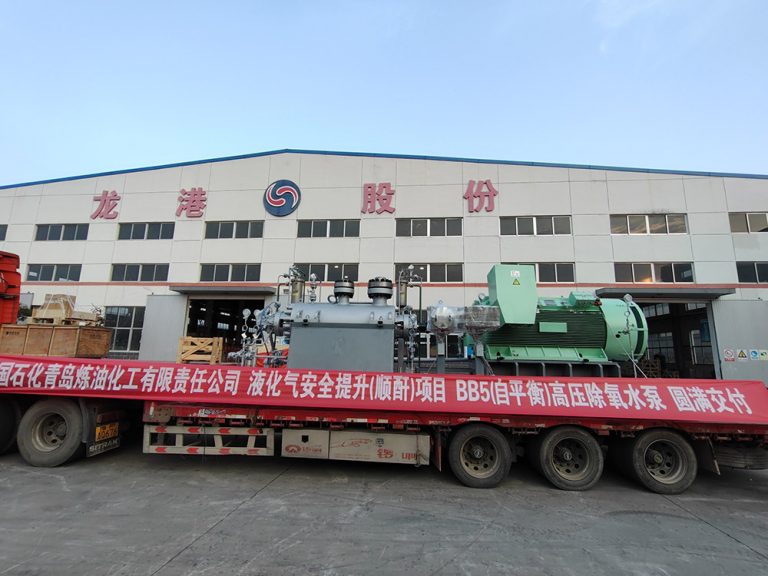
A horizontal BB2 process pump may be more suitable when the process requires a surface-mounted arrangement, the suction condition is stable, and the pressure, temperature, and material requirements fit a between-bearing design. Longgang Pump’s LBD(BB2) uses a horizontal, radially split, center-supported structure for high-temperature, high-pressure, and corrosive media.
The BB2 layout can use centerline mounting to reduce changes in the relative position of the pump and driver as the casing expands. A double-volute design is used for larger outlet sizes to reduce radial force and shaft loading. This makes the structure relevant for process sections where maintenance access, rotor stiffness, and surface installation are more important than vessel submergence.
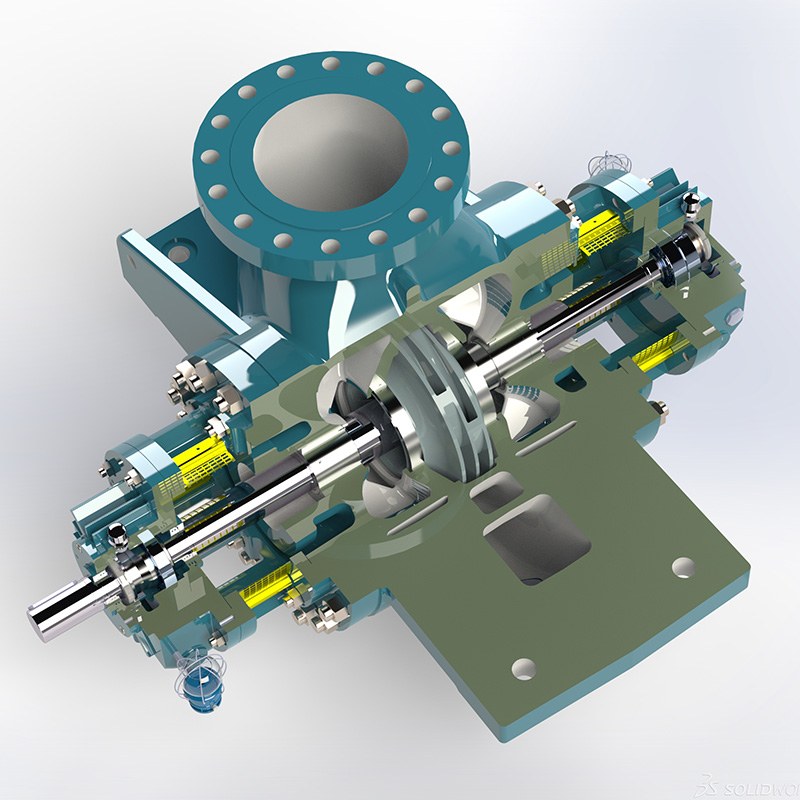
Compare the alternative process architecture with the LBD BB2 radial-dissection chemical process pump.
Mechanical Seal Selection for Molten Salt Service
Why Packing May Be Used in a High-Temperature Duty
The project data lists a packing seal with self-flushing sliding bearings for the molten salt circulation pump. That arrangement can be considered when the application prioritizes thermal tolerance, practical maintenance, and a seal configuration that suits the selected vertical shaft arrangement. It should not be presented as the right answer for every salt chemistry or every pump layout.
Packing performance depends on shaft condition, packing material, compression, cooling, leakage control, and the temperature distribution around the stuffing box. Excessive compression can increase friction and heat, while insufficient compression can allow leakage. The operating team needs a controlled adjustment method and a clear inspection routine.
When Mechanical Seals Need More Support
A mechanical seal may be appropriate when leakage control, emissions management, or process containment requires a defined sliding-face system. Longgang Pump’s VS4 product information allows single-face, double-face, in-series, packing, and dry-gas sealing forms according to the user’s requirements. The decision should follow the salt’s temperature, vapor behavior, lubricity, crystallization tendency, and the permitted maintenance method.
Seal support should address heat removal and the risk of solidification near the sealing area. The flush or cooling medium must remain compatible with the process and must not create a new contamination or pressure problem. For a pump that cycles between hot operation and shutdown, the seal plan should include warm-up, draining, isolation, and restart conditions.
Choose Materials for Salt Chemistry and Temperature
The project record identifies 35CrMo as the material for the molten salt pump. This is useful as an application-specific reference, but it does not establish that 35CrMo is suitable for every heat transfer salt. The salt composition, impurities, oxygen exposure, temperature profile, velocity, and contact time must be reviewed before the material list is extended to another project.
Material selection should cover the casing, impeller, shaft, shaft sleeve, wear surfaces, fasteners, bearings, packing or seal parts, and any balance components. The objective is not only corrosion resistance. The parts must also retain suitable strength, dimensional stability, wear behavior, and serviceability at the operating temperature.
Protect Bearings, Shaft Alignment, and Heat Balance
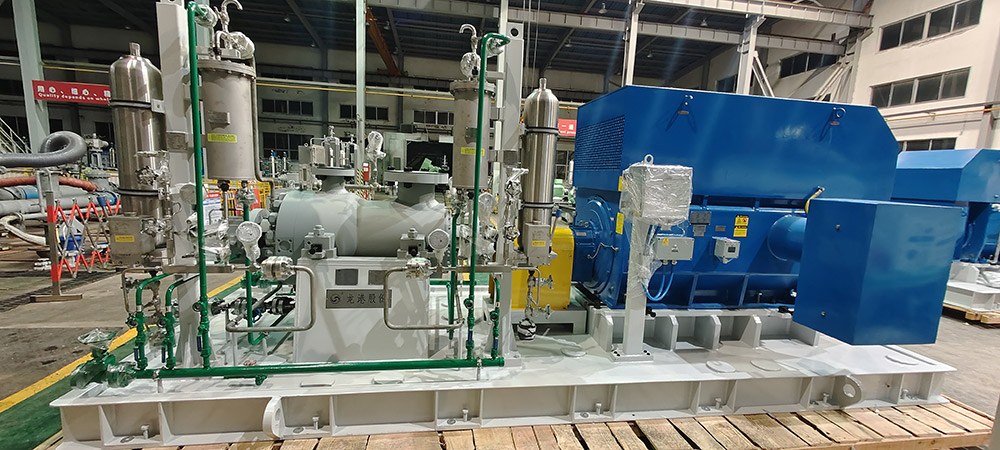
A molten salt circulation pump operates as a connected thermal and mechanical system. Heat can travel through the shaft and housing, while the long-axis arrangement can amplify the effect of misalignment, bearing wear, or inadequate cooling. The pump specification should therefore identify bearing lubrication, cooling method, support spacing, shaft insertion depth, and inspection access.
The hydraulic duty also needs a stable operating window. The pump should be checked at minimum, normal, and maximum flow, with attention to low-flow heating, recirculation, suction pressure, and the ability to maintain the salt in a fluid state. Stable operation protects the pump and helps keep the maleic anhydride reactor heat-transfer process predictable.
How Longgang Pump Supports Application-Specific Decisions
Longgang Pump’s BB, OH, and VS families allow the pump structure to follow the installation and fluid condition. For a submerged hot-salt circuit, the VS4 arrangement can be reviewed around vessel geometry, shaft support, sealing, and cooling. For a surface-mounted process line, BB2 or an appropriate OH configuration may provide a more practical maintenance path.
The most useful selection package brings together the process data, pump curve, minimum-flow requirements, material list, seal plan, bearing arrangement, heat-retention method, and maintenance route. This prevents the common mistake of treating structure, mechanical seal, and material as separate decisions made at different stages.
For related API process pump options, visit Longgang Pump and compare the product architecture with the heat-transfer circuit.
Conclusion
A molten salt circulation pump for a maleic anhydride unit must keep the heat-transfer loop hydraulically stable while controlling temperature, leakage, bearing load, and material compatibility. The project-specific VS4 duty shows why a vertical submerged structure, packing seal, self-flushing sliding bearings, and 35CrMo material reference must be evaluated as one coordinated design. Contact us to review the salt chemistry and develop a suitable pump configuration.
FAQ
Q: What is the best pump structure for molten salt circulation?
A: The right structure depends on vessel geometry, liquid level, flow, head, temperature, maintenance access, and the salt’s behavior during shutdown. A VS4 vertical submerged pump can fit a sump or vessel arrangement, while a BB2 or OH configuration may be more practical for a surface-mounted process line.
Q: Why are vertical submerged pumps used in high-temperature systems?
A: A submerged arrangement places the suction end close to the process liquid and can reduce the challenges created by a long external suction line. It also follows the geometry of a vessel or sump. The design still requires adequate liquid level, shaft support, cooling, sealing, and a shutdown plan that limits salt solidification.
Q: How should a molten salt pump seal be selected?
A: Review temperature, salt chemistry, vapor behavior, lubricity, crystallization, leakage limits, shaft movement, cooling, and maintenance practice. Packing may be considered in some high-temperature arrangements, while mechanical seals or other forms may suit different conditions. The seal should be selected with the pump structure and heat-balance plan.
Q: Is 35CrMo suitable for every heat transfer salt application?
A: No. The project record identifies 35CrMo for a specific molten salt circulation duty, but suitability depends on salt composition, impurities, temperature, velocity, oxygen exposure, and service duration. Material selection should cover all wetted and sealing components and should be reviewed before applying the same choice to another salt system.