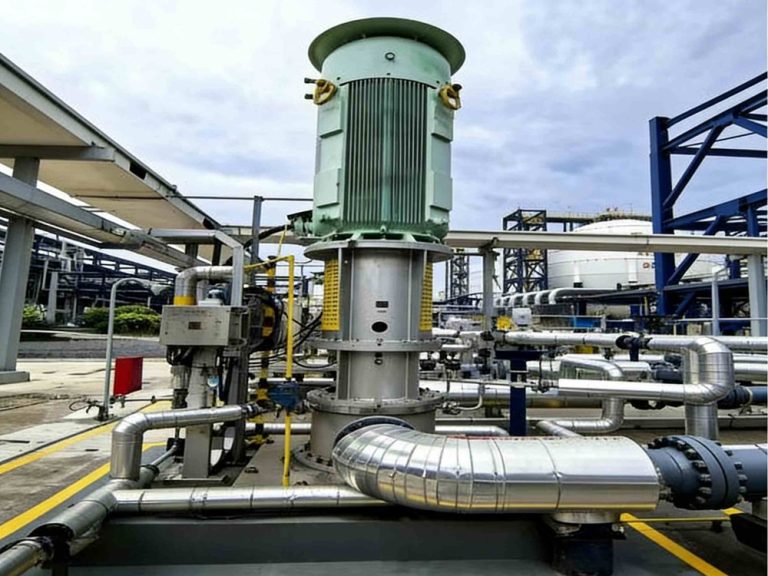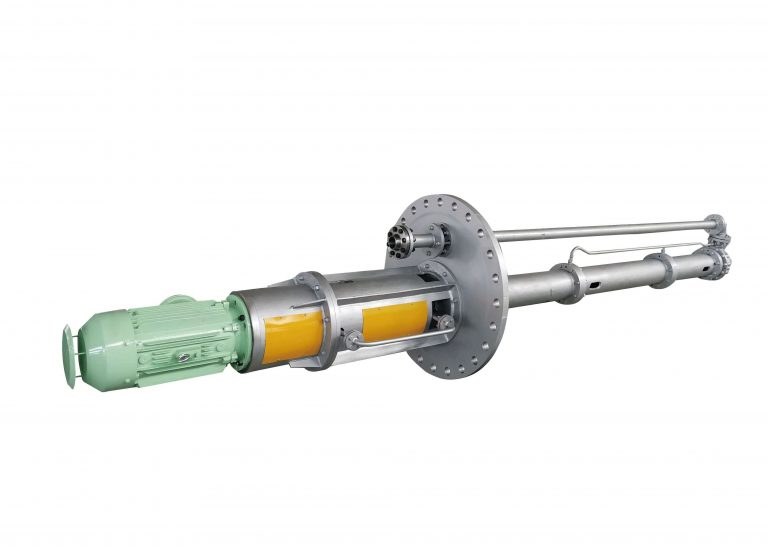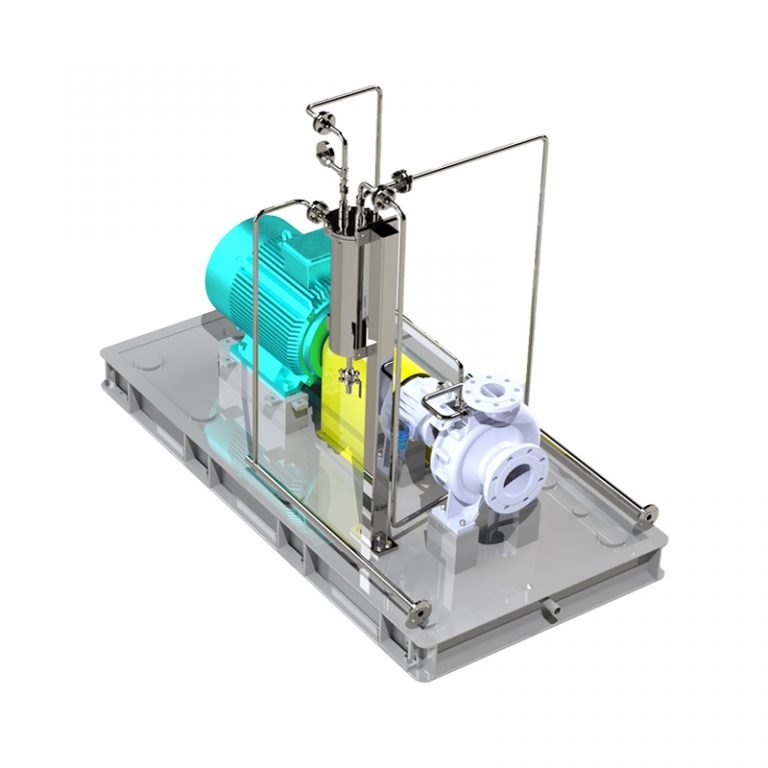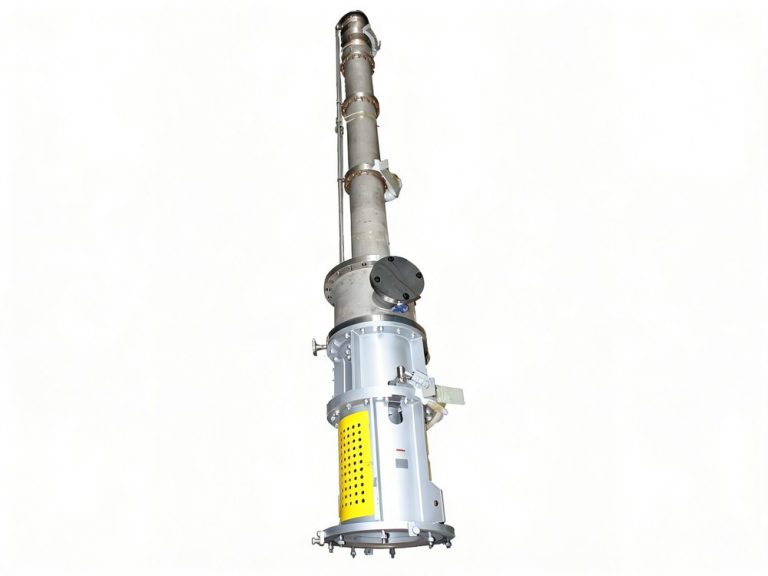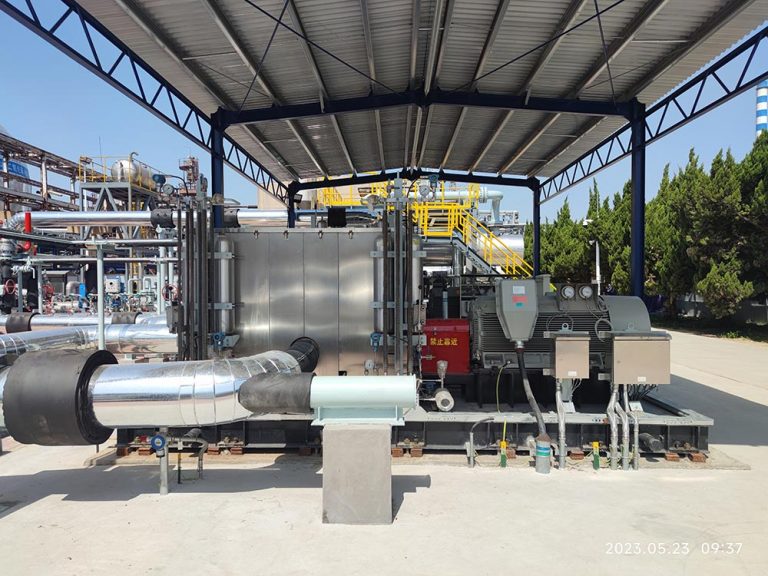
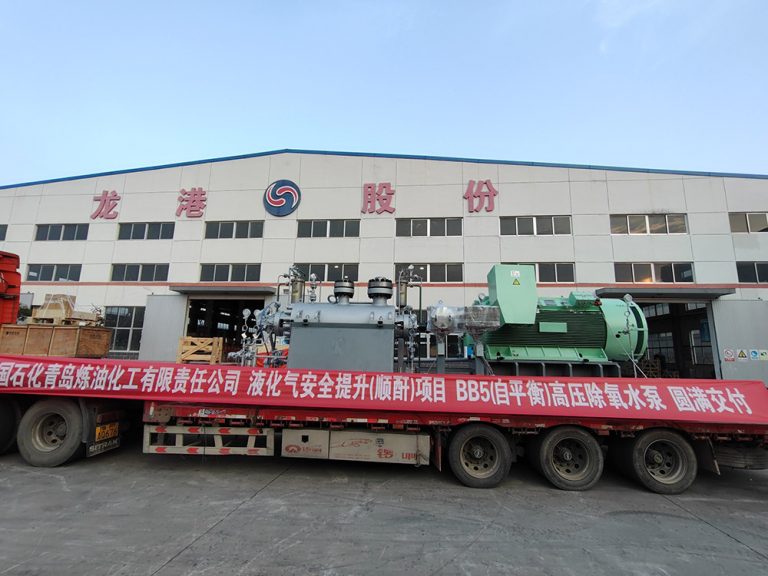

A CO2 booster pump for CCUS must keep a difficult medium inside the intended phase and pressure window while delivering stable flow. Liquid carbon dioxide can gasify easily, has low lubricity, and may operate at low temperature. Longgang Pump’s Qilu Petrochemical-Shengli Oilfield CCUS application gives a concrete reference point: 125 m3/h flow, 800 m head, and a 500 kW motor for long-distance dense-phase CO2 transportation.
What Makes CO2 Pumping Different
Carbon dioxide service is sensitive to pressure and temperature changes. A local pressure drop can change the phase condition, while heat input can alter density and vapor pressure. The pump, suction line, valves, seals, instrumentation, and control logic must therefore be considered as one pressure-management system.
Dense-Phase Operation and Phase-State Control
In a CCUS transport system, the objective is not simply to move a liquid from one point to another. The operating envelope must maintain a predictable phase state through suction, boosting, discharge, and pipeline entry. The selected pump should be evaluated against start-up, shutdown, minimum flow, recycle, and emergency depressurization conditions.
Low Temperature and Low Lubricity
Low lubricity increases the importance of correct clearances, material pairing, bearing protection, and seal-face lubrication. Low temperature can affect elastomers, gasket behavior, thermal contraction, and the response of auxiliary systems. These risks make a generic hydrocarbon pump specification inadequate without a detailed CO2 service review.
Choosing the Right CO2 Booster Pump Structure
Read the Longgang Pump CCUS project for the application context and listed duty.
Multistage Hydraulic Design
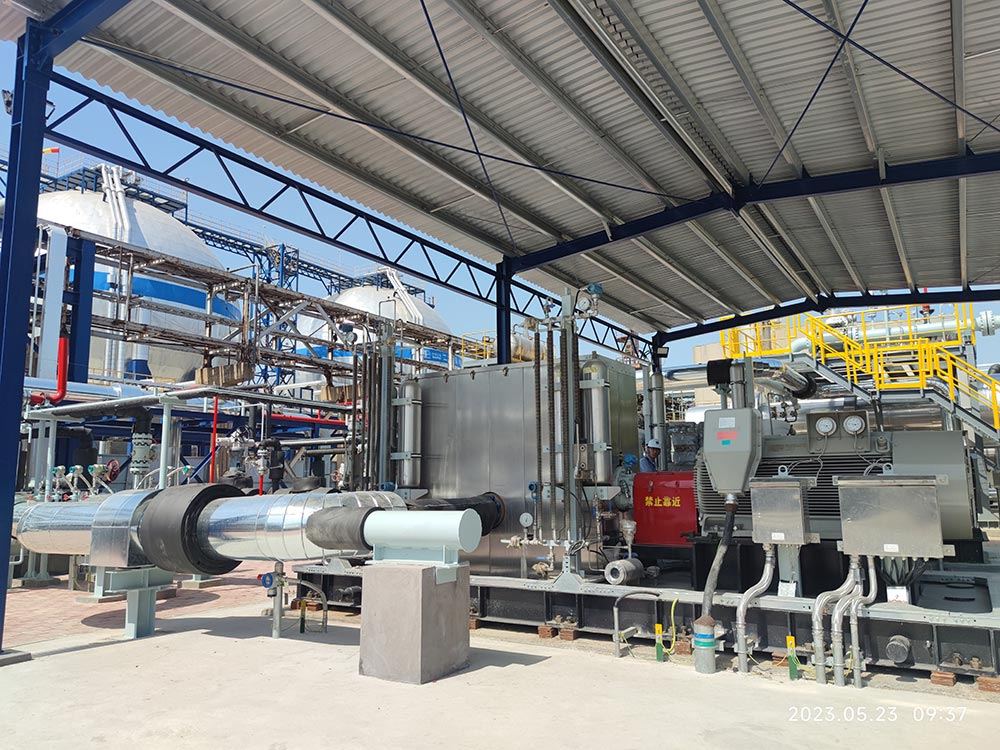
A multistage arrangement can build high head through several controlled pressure increases rather than asking one impeller to produce the entire pressure rise. For a CO2 booster pump, the stage design should be matched to density, flow, suction pressure, discharge pressure, and the allowable phase margin. The pump curve must also show a stable operating range around normal and turndown conditions.
Radial Force and Axial Force Management
Pressure changes across the impellers create axial and radial loads that affect the rotor, bearings, seals, and casing. A self-balancing arrangement can reduce the load carried by thrust components, while symmetrical hydraulic passages and a rigid shaft help control vibration. Longgang Pump describes self-balancing structural work and composite drag-reduction technology in its CCUS project information.
Rotor Stability and Long-Distance Transport
Long shafts and high head demand careful control of deflection, critical speed, clearances, and surface finish. The project information also describes a long pump shaft ultra-deep grinding process. Such manufacturing details matter because small geometric errors can become significant when low-lubricity fluid, high pressure, and continuous operation are combined.
Mechanical Seal Selection for CO2 Service
The mechanical seal must control leakage without creating a new source of heat, vaporization, or instability. Seal selection should define the pressure at the chamber, minimum and maximum temperature, fluid state, contaminants, pressure fluctuations, face materials, secondary seals, and the barrier or flush arrangement. The seal plan should be validated across start-up, normal operation, turndown, and shutdown.
Preventing Leakage and Vaporization
A seal face can lose its lubricating film if the fluid flashes locally or if the seal chamber pressure drops below the required margin. The auxiliary system should provide the correct pressure and temperature conditions without introducing an incompatible fluid into the process. Instrumentation for seal pressure, temperature, and leakage response can support early intervention.
Monitoring Temperature, Vibration, and Pressure
CO2 service benefits from monitoring that links mechanical condition to process state. Discharge pressure, suction pressure, seal conditions, bearing temperature, vibration, and motor load should be reviewed together. A rising vibration signal with falling suction pressure may indicate a hydraulic phase problem rather than a simple alignment issue.
Material Selection for High-Pressure CO2 Pumps
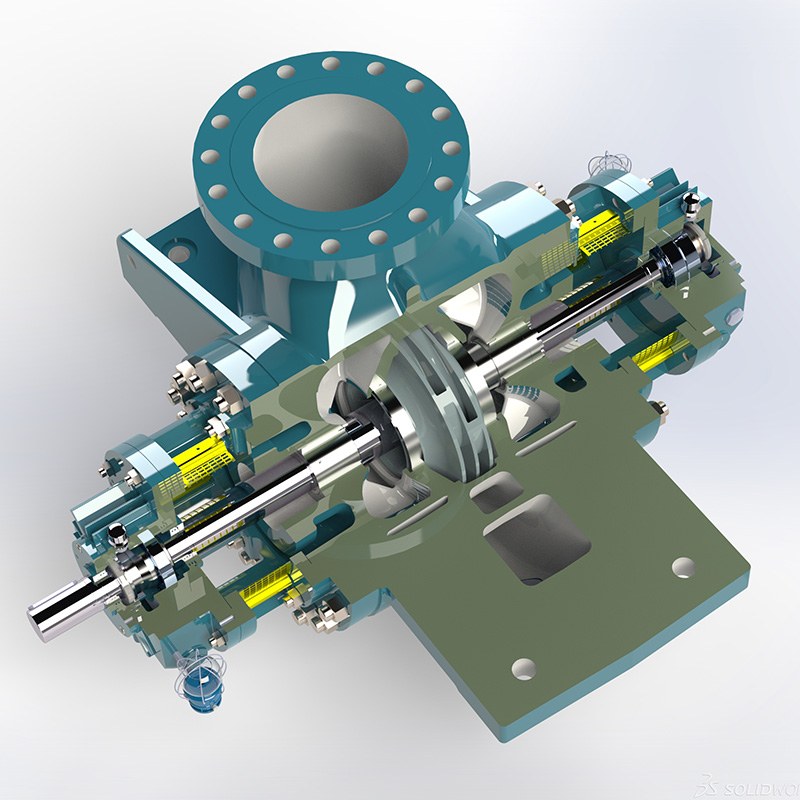
Material selection should cover pressure containment, low-temperature toughness, corrosion risk from water or impurities, wear, and compatibility with the seal system. Carbon dioxide itself is not the only consideration. Water content, oxygen, hydrogen sulfide, chlorides, and other contaminants can change the corrosion environment, while pressure cycling can influence fatigue and gasket performance.
Pressure-Bearing Casing and Rotor Parts
The casing must be matched to the pressure-temperature envelope and the applicable inspection requirements. The impeller, shaft, wear parts, and sleeves need compatible strength, hardness, and dimensional stability. A material that performs well in dry ambient service may not offer the same margin in dense-phase CO2 with low temperature and pressure cycling.
Seal and Gasket Compatibility
Elastomers and gaskets should be selected for the minimum temperature, decompression behavior, fluid impurities, and expected cycling. The seal faces and metallic components should also be checked for corrosion, galling, and lubrication behavior. Material compatibility is a complete system decision, not a single grade selected for the casing.
Longgang Pump’s CCUS Application Experience
Explore the Longgang Pump industrial centrifugal pump for the industrial pump range.
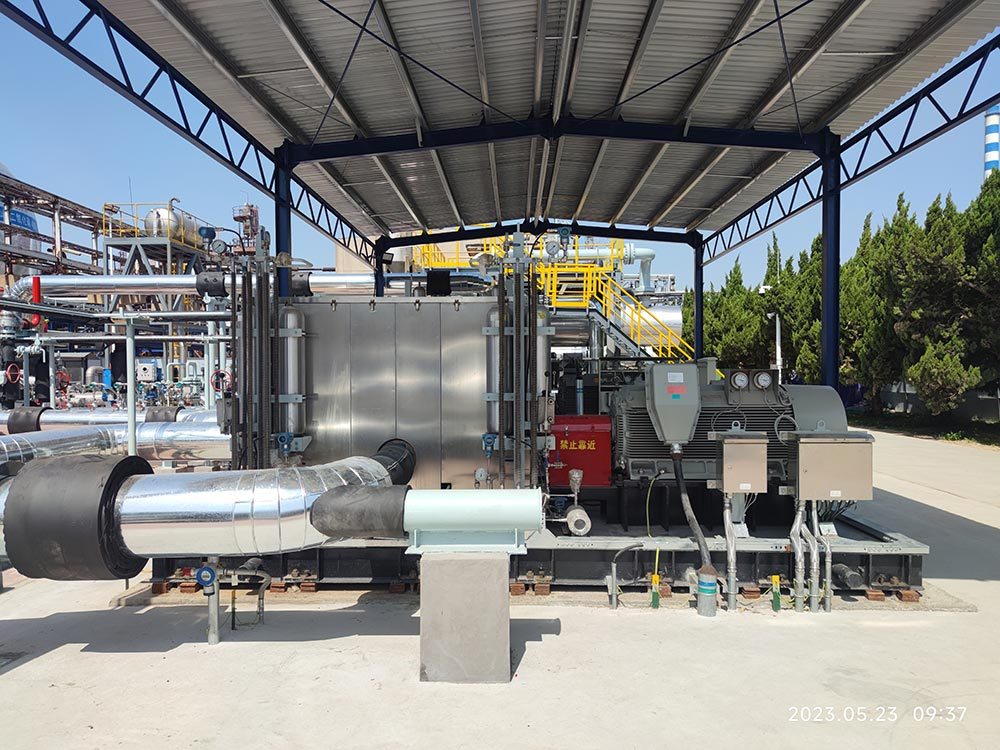
Longgang Pump presents its Qilu Petrochemical-Shengli Oilfield Million Tons CCUS Project as a long-distance dense-phase CO2 transport application. The listed capacity is 125 m3/h at 800 m head with a 500 kW motor, and the described CO2 pressure is 10.0 MPa. The application also identifies phase-state control, flow assurance, safety control, a self-balancing structure, an embedded honeycomb ring, composite impeller-surface drag reduction, and long-shaft grinding as part of the engineering response.
For engineers evaluating a CO2 booster pump, the useful lesson is the connection between process state and machine design. The pump cannot be separated from the suction vessel, pipeline profile, pressure-control strategy, seal support, relief philosophy, and operating procedure. A reliable solution starts with complete system data and then selects the hydraulic and mechanical design that preserves the required margin.
CCUS projects place unusual demands on a CO2 booster pump because pressure stability, phase control, low lubricity, low temperature, sealing, and material compatibility are tightly connected. A suitable high-pressure centrifugal pump must be designed as a complete system, not selected from flow and head alone. Longgang Pump brings together pump structure, rotor balancing, manufacturing control, sealing considerations, and CCUS application experience.
Contattaci to discuss the CO2 composition, pressure envelope, flow, head, pipeline profile, and seal requirements.
FAQ
Q: What is the most important factor in CO2 booster pump selection?
A: The most important factor is maintaining the required phase and pressure margin across the complete operating range. Flow, head, suction pressure, temperature, CO2 composition, impurities, minimum flow, start-up, shutdown, and pipeline conditions should be evaluated together. Hydraulic design, seals, materials, and controls must support the same operating envelope.
Q: Why is CO2 service difficult for mechanical seals?
A: Carbon dioxide can gasify when local pressure or temperature conditions change, and its low lubricity can reduce the stability of the seal film. The seal plan must control chamber pressure and temperature, use compatible faces and secondary seals, and provide suitable flushing, cooling, or barrier support through start-up, normal operation, and shutdown.
Q: What parameters are listed for Longgang Pump’s CCUS application?
A: The project information lists a flow of 125 m3/h, a head of 800 m, and a 500 kW motor. It describes dense-phase CO2 transport at 10.0 MPa and identifies phase-state control, self-balancing structure, an embedded honeycomb ring, composite drag reduction, and long-shaft grinding as parts of the engineering solution.
Q: Can a standard petrochemical pump be used for CO2?
A: Not without a complete suitability review. CO2 service can involve low temperature, low lubricity, phase change, pressure cycling, and impurity-related corrosion. The casing, rotor, seals, gaskets, bearings, instrumentation, and control system must be checked against the actual composition and operating envelope before a pump is accepted for the duty.