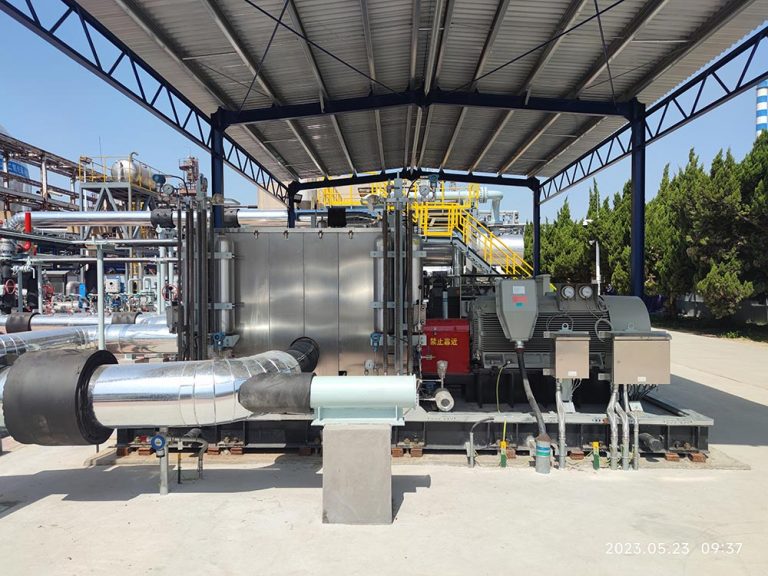
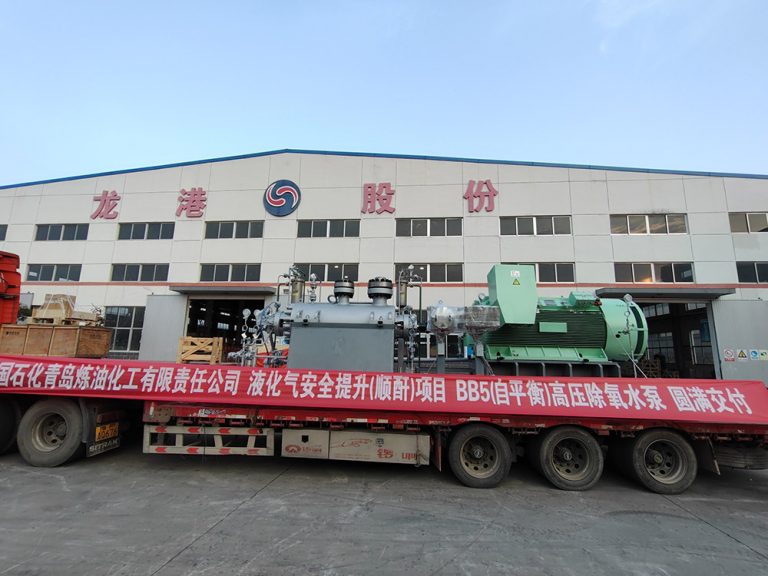

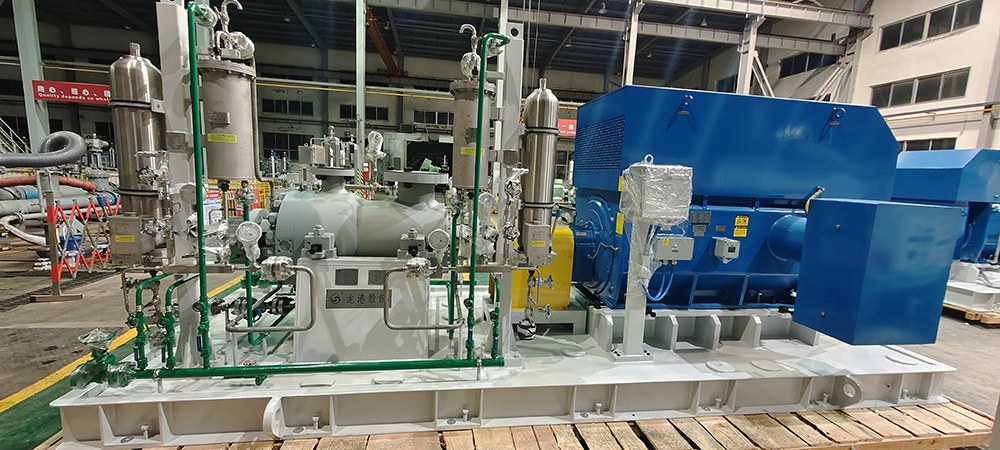
How to prime a centrifugal pump begins with one practical goal: remove air from the casing and suction line so the impeller starts in liquid, not gas. A centrifugal pump cannot create stable discharge pressure when air occupies the passage where liquid should be. Correct pump priming protects the impeller, mechanical seal, bearings, and suction performance.
In refinery, chemical, water transfer, and environmental service, startup is not a small operating detail. Longgang Pump OH-series centrifugal pumps work across demanding duties, so the priming method should be matched to the fluid, suction condition, casing arrangement, and venting points instead of being treated as a generic checklist.
Why How to Prime a Centrifugal Pump Starts With Air Removal
A centrifugal pump transfers energy through a rotating impeller. The impeller is designed to accelerate liquid, and liquid density is what allows the pump to build useful head. If the casing is full of air, the impeller spins without developing the pressure difference needed to pull liquid into the suction inlet.
That condition is often called air binding. It can look like a pump that is running normally from the outside while flow remains weak, unstable, or absent. The safest response is to stop, vent, refill, and confirm suction conditions rather than keep running and wait for the pump to recover on its own.
Priming and the Impeller
The basic function of the centrifugal pump impeller is to convert driver energy into liquid velocity and pressure. During priming, the operator prepares the hydraulic passage so that conversion can happen immediately at startup. Without a liquid-filled casing, the impeller may generate heat, noise, and vibration before useful flow begins.
This matters in high-value process service because the first seconds after startup influence seal condition, bearing loading, and cavitation risk. Good centrifugal pump priming is therefore part of preventive maintenance, not only an operating habit.
Priming and Seal Protection
Mechanical seals depend on a controlled fluid environment. If the seal chamber contains air or vapor pockets, the sealing faces may run hot, lose lubrication, or become exposed to unstable pressure. Venting and filling the casing help protect those parts before the pump reaches operating speed.
Longgang Pump OH1 and OH2 designs follow API 610 and API 682 design context, which makes seal-system discipline especially important. Operation should still match the selected seal plan, fluid condition, and site procedure.
Practical Pump Priming Process for Industrial Duties
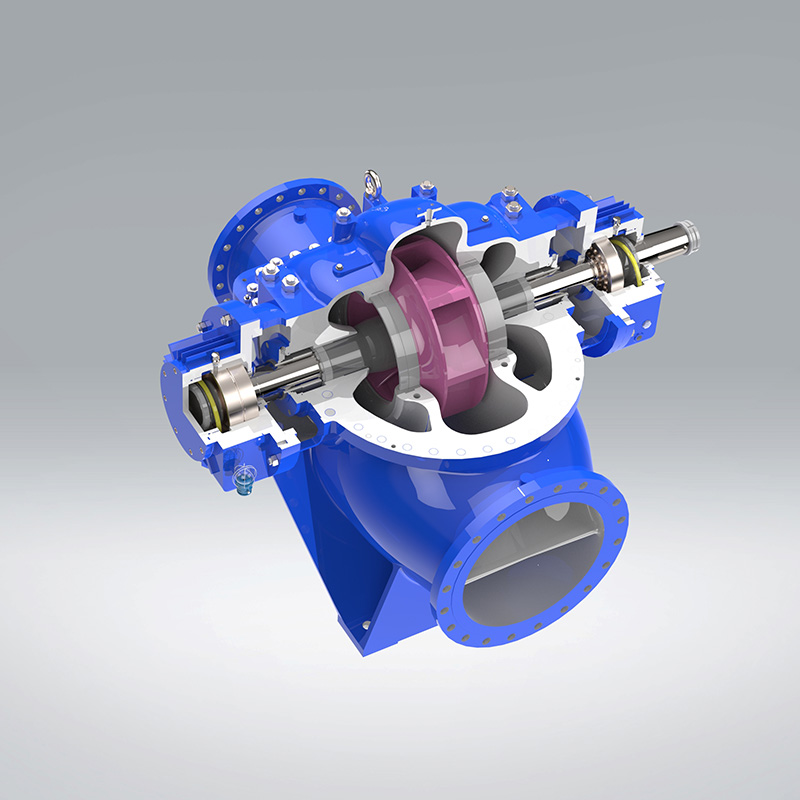
A reliable pump priming process starts before opening the motor starter. Confirm that the suction-side isolation valve is open, the discharge valve position matches the site startup procedure, and the casing drain is closed. The suction source should have enough liquid level and available pressure to satisfy the installation arrangement.
Next, fill the casing and suction line from the highest practical point while allowing air to escape through a vent. When a steady liquid stream appears, close the vent and check flanges, plugs, seal connections, and auxiliary lines. With suction lift or negative suction, a priming tank or vacuum arrangement may be required.
After filling, rotate or bump the driver only when site rules allow it, then start the pump while monitoring suction pressure, discharge pressure, vibration, noise, and motor load. A smooth rise in discharge pressure usually confirms that the casing stayed liquid-filled. Unstable pressure, sharp noise, or rapid vibration increase should be treated as a warning signal.
Centrifugal Pump Priming Methods and Installation Choices
Flooded Suction
Flooded suction is the simplest priming condition because the liquid level sits above the pump centerline or suction opening. Gravity helps keep the casing full, and venting is mainly used to release trapped air. Even then, the operator should check high points in the suction line because an air pocket can still restrict flow.
Manual Filling and Venting
Manual priming may fit smaller or less frequent startup duties where the fluid is safe to handle and the suction geometry is simple. It becomes less attractive when fluids are hot, corrosive, volatile, or hazardous. In those cases, exposure risk and inconsistent venting can become larger problems than the extra equipment required for assisted priming.
Vacuum or Assisted Priming
A vacuum priming arrangement evacuates air from the casing or suction line so liquid can rise and fill the pump. This approach is useful where the pump sits above the source or where long suction lines create air traps. The system must be compatible with the liquid vapor pressure and the plant safety philosophy.
Where Longgang Pump OH Series Designs Fit
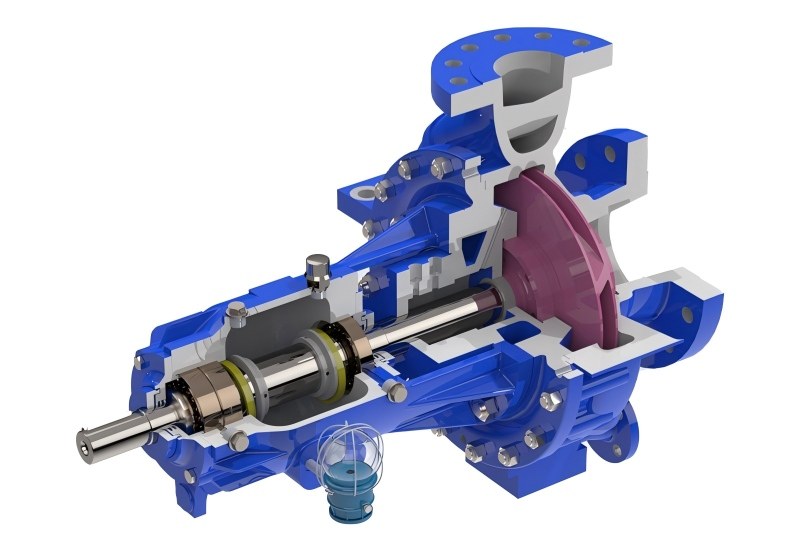
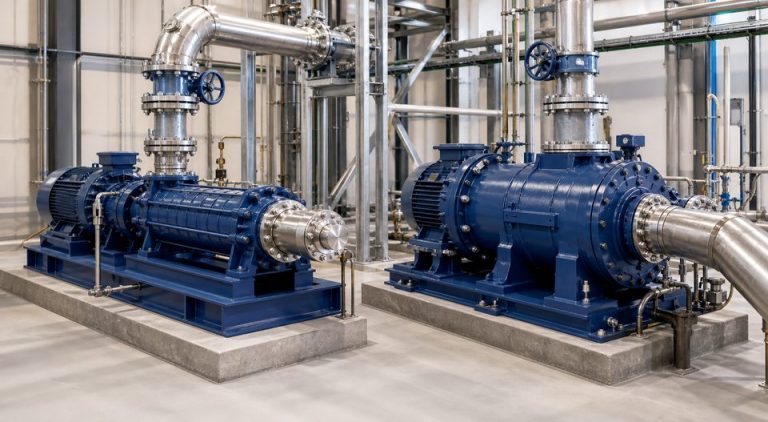
Longgang Pump offers OH-series single-stage centrifugal pump options for industrial transfer duties. The LZA(OH1) is used in atmospheric and vacuum refineries, catalytic cracking, coking equipment, the petrochemical industry, the coal chemical industry, power plants, chemical fiber, and environmental protection engineering. Its design range is 5.5-2600 m3/h flow, 16-250 m head, about 15 MPa working pressure, and -80 to +450 deg C operating temperature.
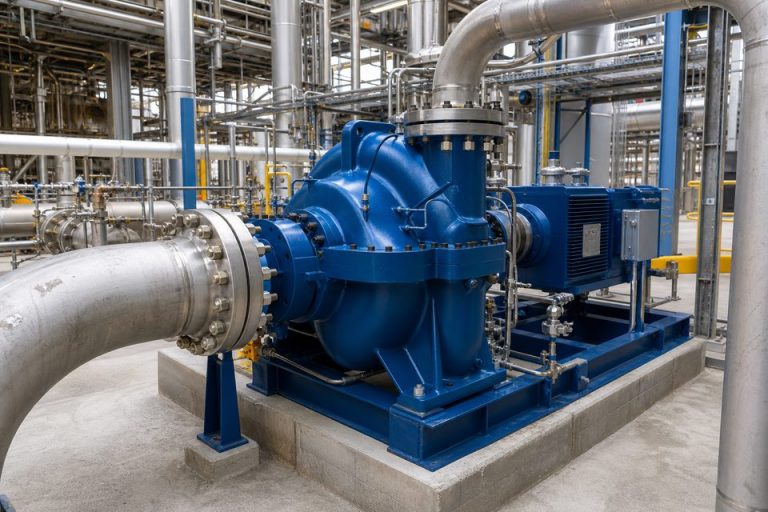
The LZA(OH1) structure uses a volute pump body. For outlet sizes at DN80 or larger, a double-volute hydraulic design helps balance radial force. Its pull-out suspension assembly allows inspection of parts such as the bearing box, shaft, gland, and pump cover without moving inlet and outlet pipelines.
The Longgang Pump LZE(OH2) is designed for clean liquids or liquids containing trace particles, including neutral or highly corrosive fluids at low or high temperatures. It shares the 5.5-2600 m3/h, 16-250 m, about 15 MPa, and -80 to +450 deg C family range. Its volute casing, efficient hydraulic impeller, and axial-force balancing by balance holes and throat bushings make priming quality especially relevant to stable startup.
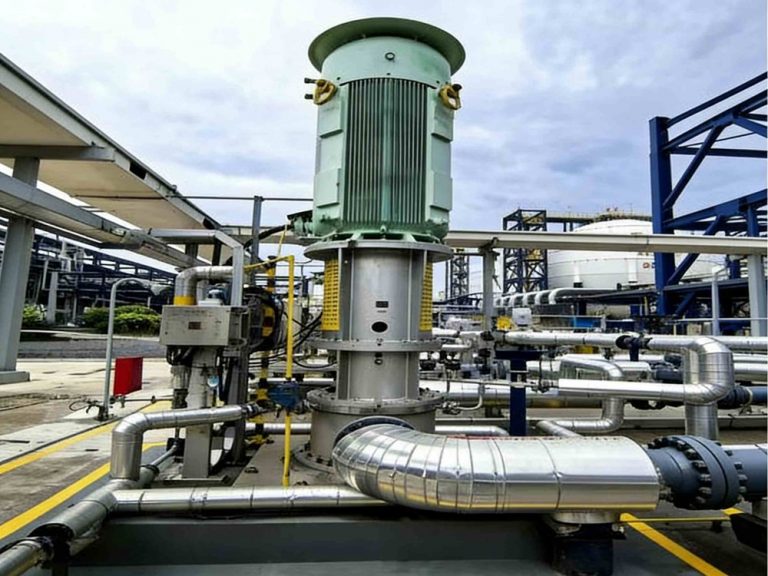
For vertical pipeline layouts, the Longgang Pump LZV(OH3) is used in industrial and urban water supply and drainage, high-rise building pressurized water supply, fire pressurization, long-distance water supply, pressure conveying, and petrochemical fields. Its high efficiency, simple maintenance, and anti-cavitation performance still depend on correct venting and filling before startup.
Common Priming Mistakes That Lead to Cavitation
Incomplete priming often leaves bubbles in the eye of the impeller or high points of the suction line. As pressure changes through the impeller, these bubbles can collapse and create cavitation damage. The first symptoms may be crackling noise, vibration, erratic discharge pressure, or a flow rate that does not match the expected duty.
Another mistake is assuming a single successful start proves the system is always ready. A leakage from the vent, a non-sealing foot valve, a higher suction line, or a process fluid with high vapor pressure can enable the casing to leak out any fluid when in standby condition. Priming should be viewed as a repeated verification process for the equipment each time it is drained.
Choosing a Safer Startup Habit
A good startup habit combines mechanical checks with process awareness. Confirm accessible vents, meaningful gauge readings, clean suction strainers, and open auxiliary seal lines where required. The procedure should also define when to stop the pump instead of continuing through abnormal noise, low pressure, or rising vibration.
For Longgang Pump applications, the right practice depends on the selected model, liquid, suction source, installation elevation, and operating temperature. Hot, corrosive, or volatile liquids need tighter checks than cool water.
Conclusion
How to prime a centrifugal pump is ultimately a question of reliability: remove air, fill the casing, protect the seal chamber, and start only when suction conditions are ready. Longgang Pump OH-series centrifugal pumps provide industrial structures and operating ranges for demanding fluid transfer, but correct priming turns those mechanical features into stable startup performance.
Explore Longgang Pump centrifugal pump solutions for process systems that need dependable startup and long-term operation.
FAQ
Q: Do centrifugal pumps need to be primed?
A: Yes, most centrifugal pumps need the casing and suction path filled with liquid before startup. Priming removes air so the impeller can transfer energy to liquid and build pressure. A flooded suction installation may stay naturally primed, but venting and startup checks are still important after maintenance or shutdown.
Q: What is priming in centrifugal pump operation?
A: Priming is the act of loading the pump casing and suction pipe with water by displacing any entrapped air or vapor. Priming is meant to ready the impeller, seal chamber, and suction pipe for operation. Failing to prime will cause the pump to fail to operate properly.
Q: What causes a centrifugal pump to lose prime?
A: The common causes are suction leaks, leaking foot valves, insufficient liquid level, improper venting, high suction piping, dried casing, and easily vaporized fluids. A pump can also lose prime after maintenance if the casing is not refilled correctly before startup.
Q: Is vacuum priming better than manual priming?
A: Vacuum priming is likely to prove more reliable when it comes to suction lift, negative suction, suction lines, or any other dangerous fluids. Manual priming may apply to easier systems; however, its success is determined by the accessibility of the operator. The safer option will vary depending on many factors.