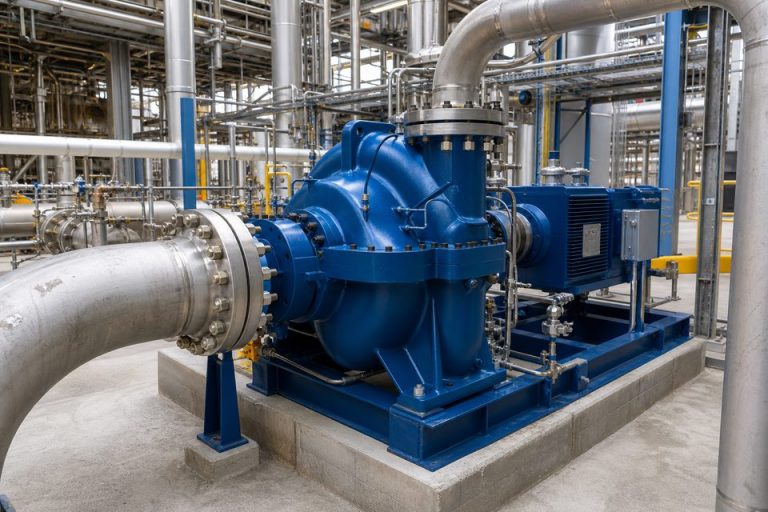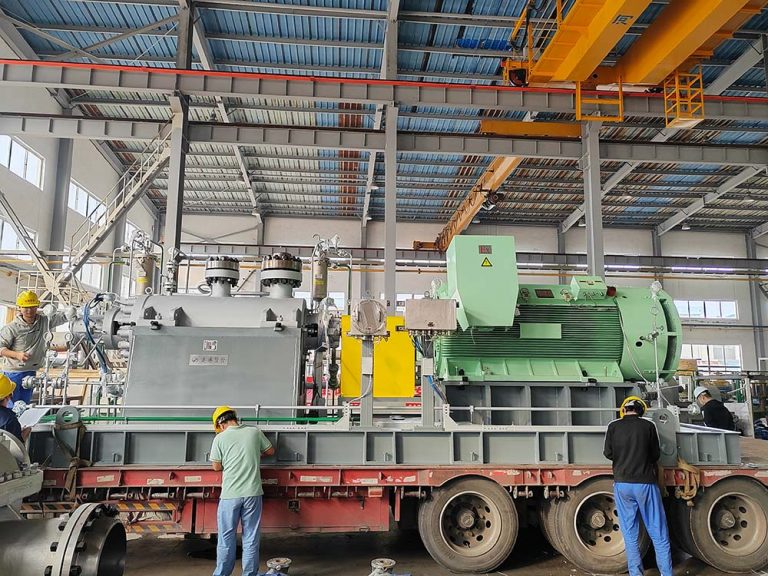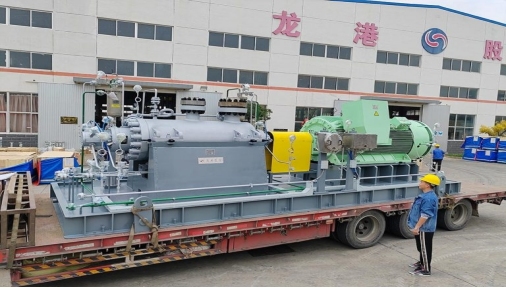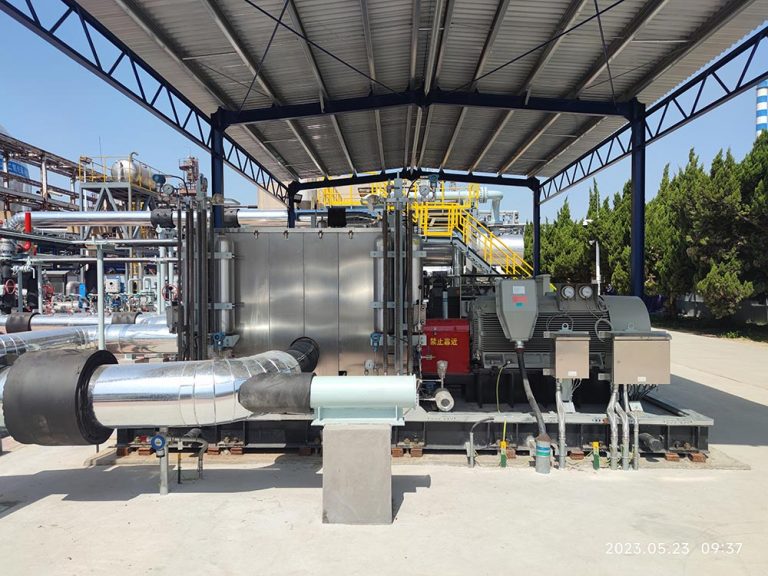
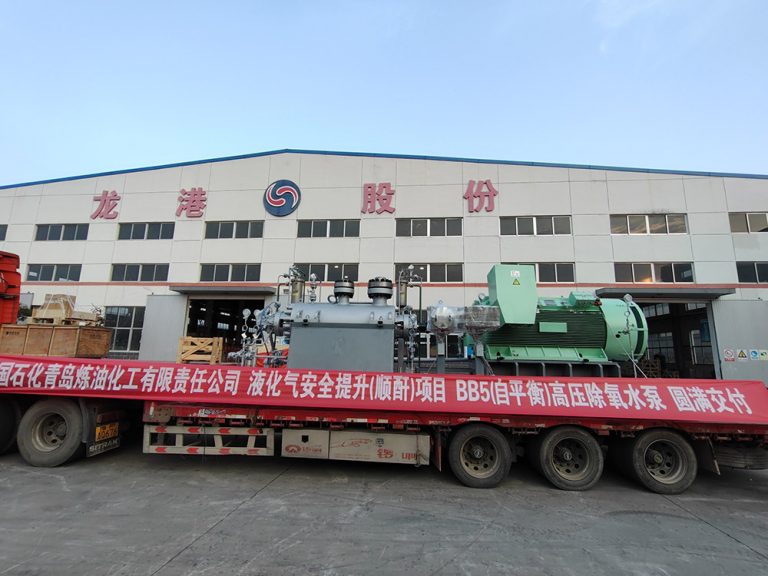

The main BB4 vs BB5 pump difference is pressure containment: a BB4 is a radially split, segmented multistage pump with one casing, while a BB5 places a multistage inner assembly inside a second barrel-style pressure casing.
Neither design is automatically superior. The correct multistage centrifugal pump depends on liquid properties, temperature, pressure, duty profile, containment requirements, suction conditions, available maintenance space, and the consequences of an unplanned shutdown.
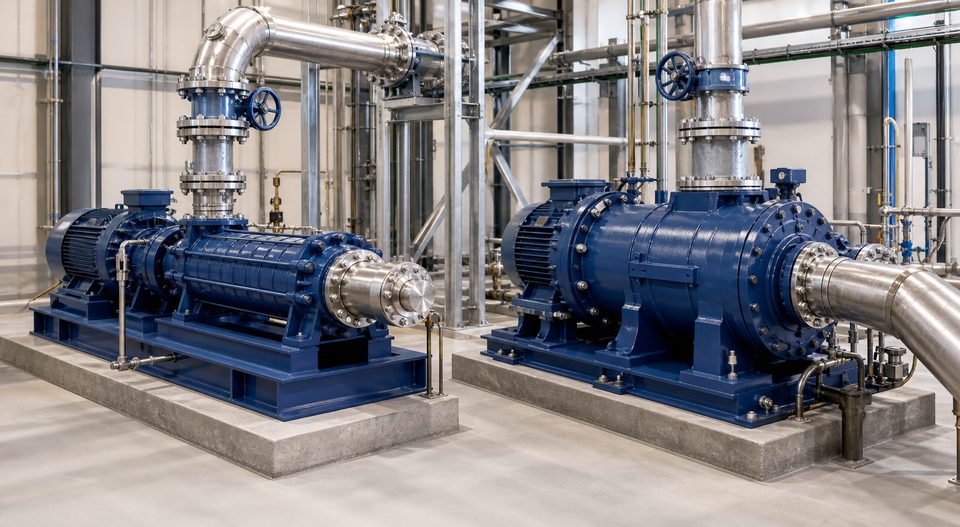
The Core Difference Between BB4 and BB5 Pumps
LDD(BB4): Segmented Single-Casing Construction
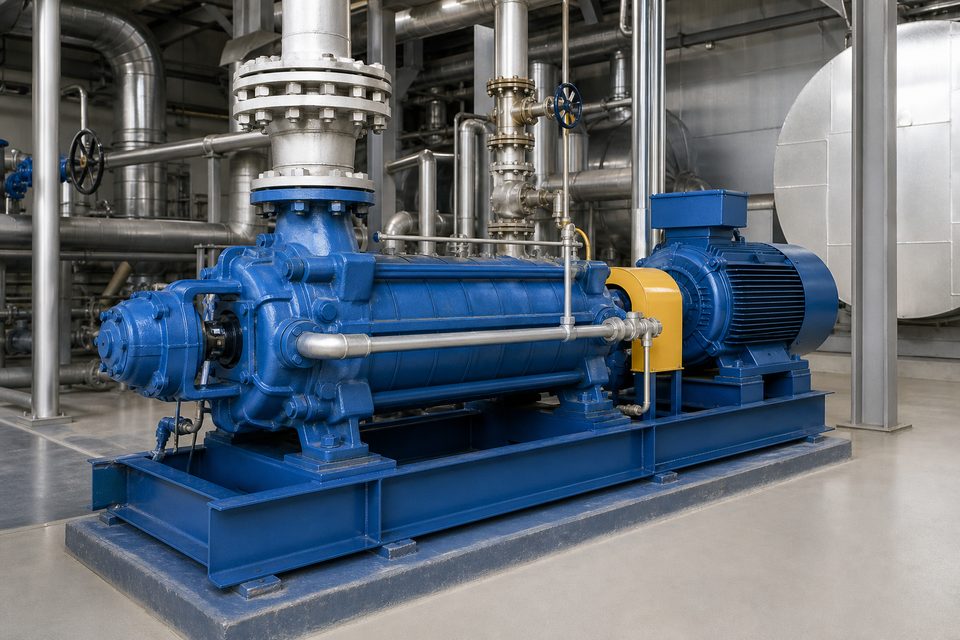
The LDD(BB4) high-pressure segmented multistage pump is horizontal, single-casing, segmented, and equipped with impellers arranged in the same direction.
Its external pressure-bearing components may be manufactured by casting or forging. Because the stage casings form the pressure boundary, disassembly typically proceeds section by section. This construction is well suited to clean or nearly clean high-pressure liquid services when a separate outer barrel is not required.
LTD(BB5): Double-Casing Barrel Construction
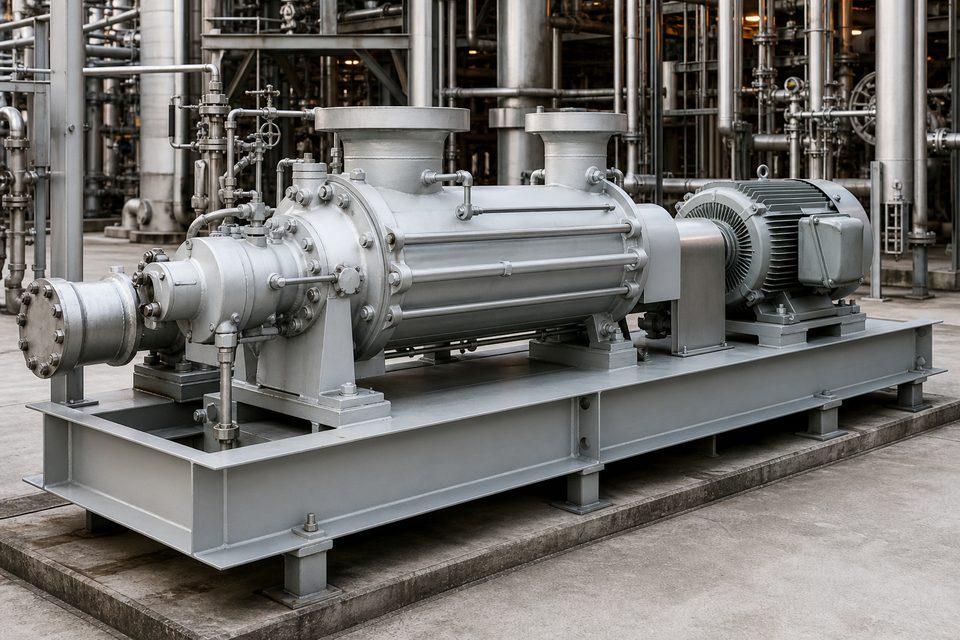
The LTD(BB5) double-shell multistage pump is horizontal, centerline-supported, double-casing, segmented, and fitted with impellers arranged in the same direction. It also follows API 610/ISO 13709.
Its forged external shell provides the principal pressure boundary around the inner pump assembly. The inner core is designed for removal without moving the inlet and outlet pipelines. This barrel arrangement is particularly relevant when high pressure, high temperature, hazardous hydrocarbons, or critical process availability justify the additional containment structure.
BB4 vs BB5 Pump Performance Ranges
Shared High-Pressure Capability
Both Longgang Pump series cover flows from 5 to 1,200 m³/h, heads up to approximately 3,000 m, and working pressures up to approximately 30 MPa. Either family can address substantial pressure rise, but they do not make the pumps interchangeable.
Each impeller adds energy to the liquid, allowing a multistage pump to achieve head that would be impractical for one stage. Final stage count and impeller diameter must be selected against the duty, efficiency, NPSH, shaft power, rotor dynamics, and allowable casing pressure.
Temperature Is a Major Differentiator
The LDD(BB4) series is rated for −80°C to approximately 210°C. The LTD(BB5) series is rated for −80°C to approximately 450°C. This difference can shift high-temperature refinery or hot hydrocarbon service toward BB5, provided the selected materials, seals, bearings, and auxiliaries are suitable.
A temperature range should never be separated from pressure. Material strength, thermal expansion, flange rating, seals, lubrication, and casing clearances all change with temperature, so the complete pressure-temperature combination must be verified.
Where the LDD(BB4) Fits Best
Boiler Feed Water and Condensate
Longgang Pump lists boiler feed water and condensate transport in power stations among the primary LDD(BB4) services. These duties require stable high-pressure output and careful control of suction conditions because hot water can lose NPSH margin as temperature approaches saturation.
The first-stage impeller may be single-suction or double-suction according to the duty. A double-suction first stage can support larger capacities or low-NPSH conditions, while the remaining stages build the required discharge head.
Desalination and Power Applications
The LDD(BB4) is also listed for industrial reverse-osmosis desalination, combined-cycle power stations, solar-energy utilization, and other industrial power applications. These services generally favor clean liquids and sustained high pressure, aligning with the segmented multistage structure.
Axial-Thrust Management in BB4
The LDD(BB4) employs a drum-disc-drum combined balancing mechanism. Longgang Pump states that this arrangement dynamically balances axial force so the bearings do not carry axial load during normal operation. Transient and residual loads still need to be considered in the complete rotor and bearing design.
Bearing options include ZH sliding bearings and ZQ forced-lubrication bearings. The ZQ arrangement uses radial sliding bearings and bidirectional tilting-pad thrust bearings with temperature protection and monitoring, supporting higher energy-density duties.
Where the LTD(BB5) Fits Best
Refinery, Petrochemical, and Natural-Gas Processing
The LTD(BB5) is listed for refineries, petrochemical plants, natural-gas processing, crude-oil refining, and liquefied-gas pipeline transportation. These services often combine high pressure with elevated temperature, volatile fluids, or high consequences for loss of containment.
A double casing adds a separate external pressure shell around the internal multistage element. It should not be described as a guarantee of zero leakage, but it provides a containment architecture distinct from the single-casing BB4.
Offshore and Onshore Injection or Transfer
BB5 applications also include water injection and crude-oil transportation on offshore or land platforms. Engineers must evaluate maintenance access, corrosion exposure, utilities, piping loads, and vibration.
Maintenance Access in a Barrel Pump
The removable inner core allows service without moving the main suction and discharge pipelines. Adequate axial withdrawal space, lifting capacity, cartridge handling, and alignment controls remain necessary.
Bearing and Impeller Choices
Common Bearing Options
Both series can use ZH sliding bearings or ZQ forced-lubrication bearings. Selection should account for speed, power, loads, temperature, oil-system reliability, cooling, instrumentation, and startup behavior.
First-Stage Suction Configuration
Both product families allow a single-suction or double-suction first-stage impeller. The choice is driven by capacity and cavitation requirements rather than by BB4 or BB5 classification alone. Available NPSH, suction pressure, liquid vapor pressure, temperature, and inlet piping losses must be calculated for the worst credible condition.
Flange and Pressure-Class Selection
For both series, Longgang Pump lists flange ratings from ANSI 300# through ANSI 2500#, with other standards available depending on requirements. The selected class must reflect design pressure and temperature, corrosion allowance, piping specification, gasket type, bolting, and applicable project rules.
A Practical BB4 vs BB5 Selection Framework
Choose by Fluid and Temperature
BB4 is a logical starting point for high-pressure clean-liquid duties within its temperature range, especially boiler feed water, condensate, desalination, and power services. BB5 becomes more compelling for hot hydrocarbons, liquefied gas, refinery duties, and other services that benefit from a barrel pressure casing.
Choose by Containment and Maintenance Strategy
Assess the consequence of an internal casing or joint problem, the required inspection interval, pipeline-disconnection constraints, available withdrawal space, lifting facilities, and spare-rotor strategy. A BB5 cartridge can simplify some overhauls, but its heavier double-casing system requires suitable handling and maintenance planning.
Choose by the Full Hydraulic Window
Compare rated and alternate duty points, minimum continuous flow, runout, startup, recycle, and upset cases. The best selection should keep the pump in a stable operating region, maintain adequate NPSH margin, avoid excessive power demand, and satisfy the required pressure-temperature envelope.
The wider Longgang Pump API range should also be reviewed when a BB3, BB2, or vertical configuration fits the installation more naturally than either BB4 or BB5.
Conclusion
The BB4 vs BB5 pump decision is fundamentally a choice between a segmented single casing and a double-casing barrel architecture. Longgang Pump’s LDD(BB4) is closely aligned with boiler feed, condensate, desalination, and power duties up to its temperature limit, while the LTD(BB5) extends to hotter, high-pressure refinery, hydrocarbon, liquefied-gas, and injection services. A sound decision connects casing design with fluid properties, pressure-temperature conditions, axial-thrust control, NPSH, bearings, seals, and maintenance strategy.
Compare Longgang Pump high-pressure solutions against your complete operating conditions.
FAQ
Q: What is the main difference between a BB4 and BB5 pump?
A: A BB4 is a radially split, segmented multistage pump with a single pressure casing. A BB5 places a multistage inner assembly inside a second barrel-style casing. That outer pressure shell changes containment, temperature capability, maintenance access, weight, and typical applications, even when the two series share similar headline flow and head ranges.
Q: Is a BB5 pump always better than a BB4 pump?
A: No. BB5 construction can be valuable for high-temperature, high-pressure, or hazardous hydrocarbon service, but it adds weight and structural complexity. A BB4 can be the more appropriate solution for clean high-pressure liquids such as boiler feed water or desalination when its temperature, pressure, suction, reliability, and maintenance characteristics satisfy the duty.
Q: Which pump is more suitable for boiler feed water?
A: Longgang Pump specifically lists boiler feed water and condensate among the applications of the LDD(BB4). Its segmented multistage construction, selectable first-stage suction design, axial-force balancing mechanism, and bearing options suit high-pressure power duties. Final selection still depends on temperature, NPSH, flow, head, water chemistry, driver, and plant standards.
Q: Why does axial thrust matter in a multistage centrifugal pump?
A: Each impeller can create an axial hydraulic force, and the forces can accumulate across stages. If they are not controlled, bearings, seals, clearances, and rotor position can be affected. Balancing devices, impeller arrangement, and thrust bearings work together to manage steady and transient forces while maintaining reliable rotor operation.