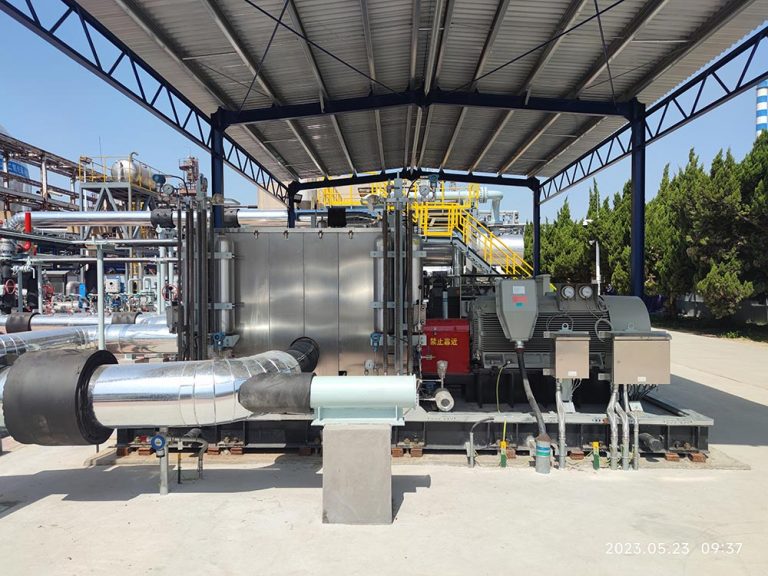
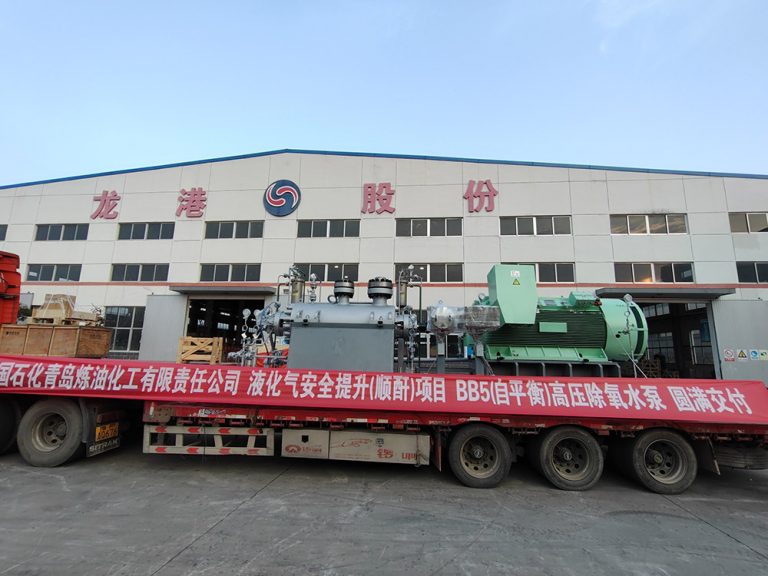

Centrifugal pump cavitation prevention starts before commissioning. The reliable approach is to assess the actual NPSH margin, liquid vapor pressure, inlet geometry, rotor support, mechanical seal arrangement, and wetted materials as one selection problem. That matters in petrochemical, coal chemical, and low-temperature services because a pump can meet its flow and head duty while still losing stability when the liquid level falls, the temperature rises, or the suction line adds more loss than the design case assumed.
Start With the Real NPSH Condition
NPSHa is set by the suction vessel pressure, minimum liquid level, liquid temperature, vapor pressure, and suction-piping losses. NPSHr is a pump characteristic that changes with the selected hydraulic design and operating flow. Selection therefore needs to compare them at the expected operating range, including low flow, normal flow, and rated flow, rather than at one convenient point on the curve.
Two duties at the Yulong Island refining and chemical integration complex illustrate the difference. An OH2 ethylene glycol pump at minus 14 C operated with NPSHa of 10 m and NPSHr of 3.3 m, while a C5 reflux OH2 pump worked with the much tighter condition of 3.5 m NPSHa and 2.5 m NPSHr. The pump family alone does not determine cavitation risk; the fluid state and suction system do.
Choose the Hydraulic Structure for the Suction Risk
VS6 for Easily Vaporized and Low-Temperature Liquids
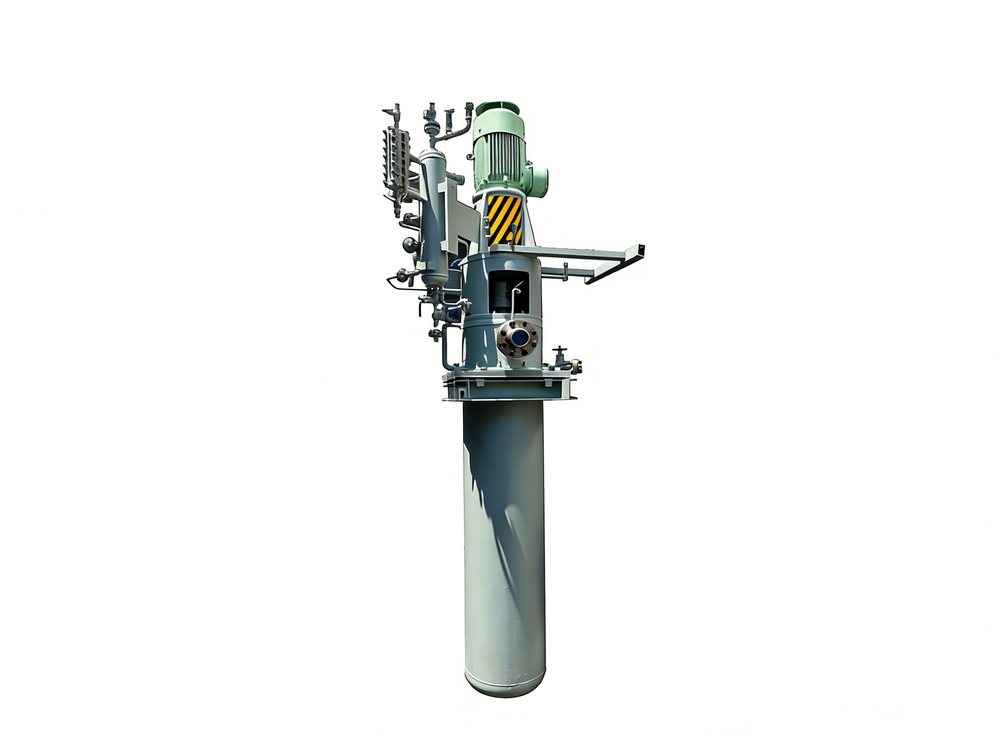
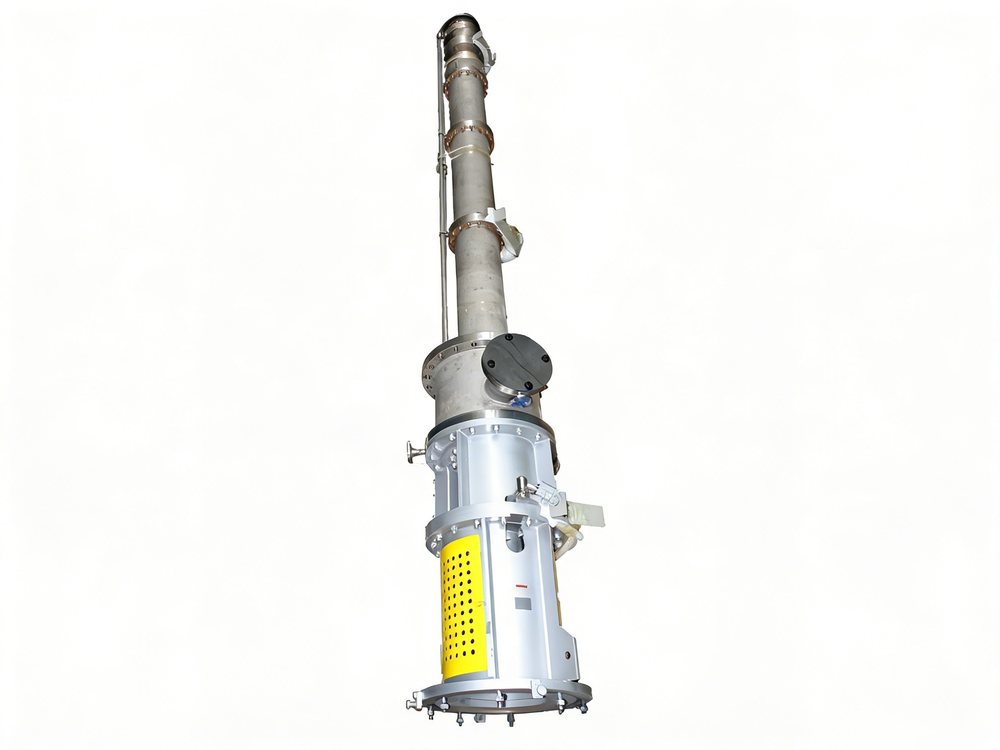
For ethylene, propane, liquefied gas, and similar vapor-prone media, a vertical suspended arrangement can protect the suction side by placing the hydraulic section below the liquid level. Longgang Pump’s LDT(VS6) is a double-casing, multi-stage vertical suspended pump with an inducer at the impeller inlet. The inducer improves inlet performance before the main impeller, while the multi-point submerged bearing support helps keep the long rotor stable.
Longgang Pump LDT(VS6) vertical suspended bag centrifugal pump is suited to duties where the process can flash at the impeller eye and a conventional above-ground suction layout would leave little operating margin.
BB1 and BB2 for High Flow or Severe Process Service
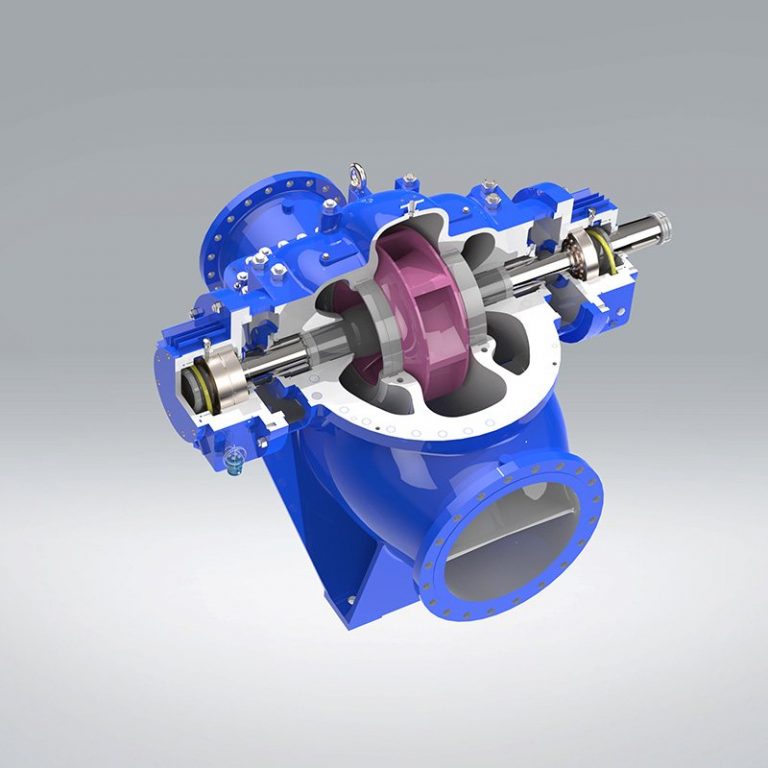
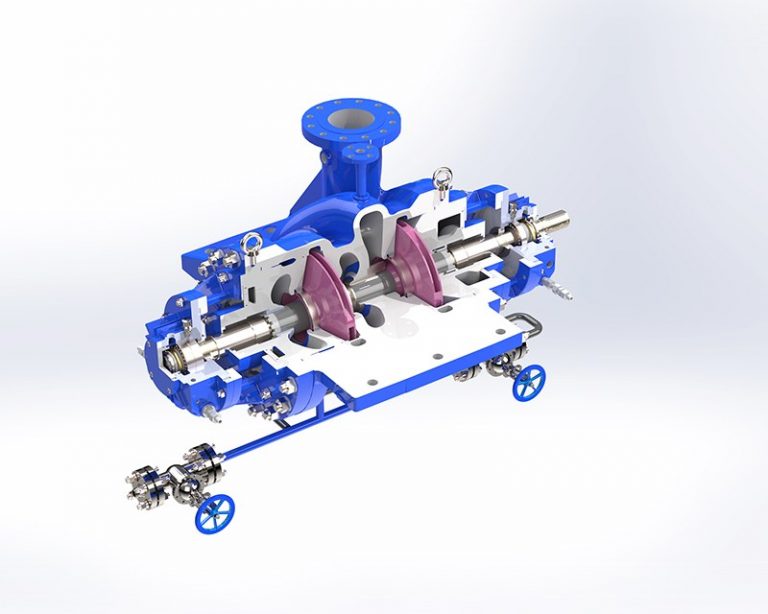
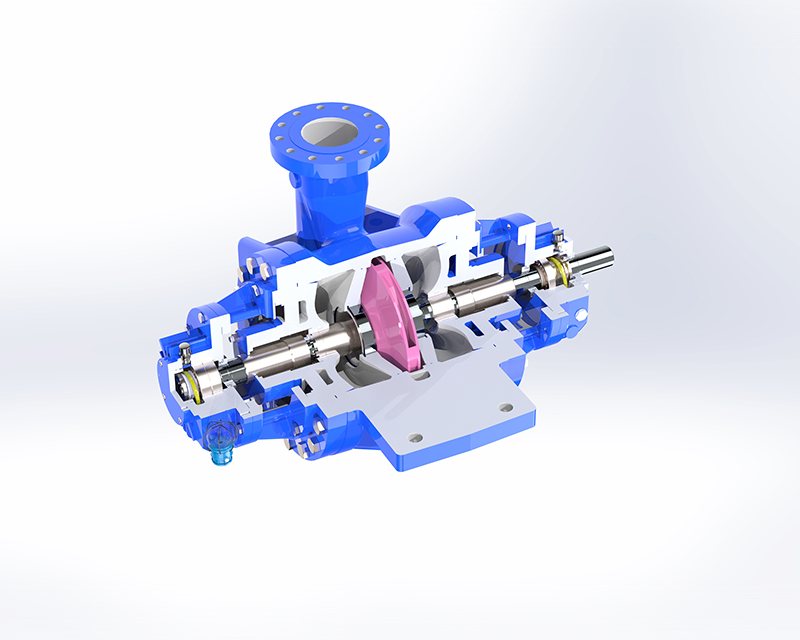
Where flow is high and the liquid is reasonably clean, a BB1 double-suction impeller can lower inlet velocity and reduce NPSHr while also balancing much of the axial load. For hotter, higher-pressure, or corrosive process fluids, a centerline-mounted BB2 can maintain casing and shaft alignment as temperature changes. BB2 designs can also use a first-stage double-suction impeller where the suction requirement is especially demanding.
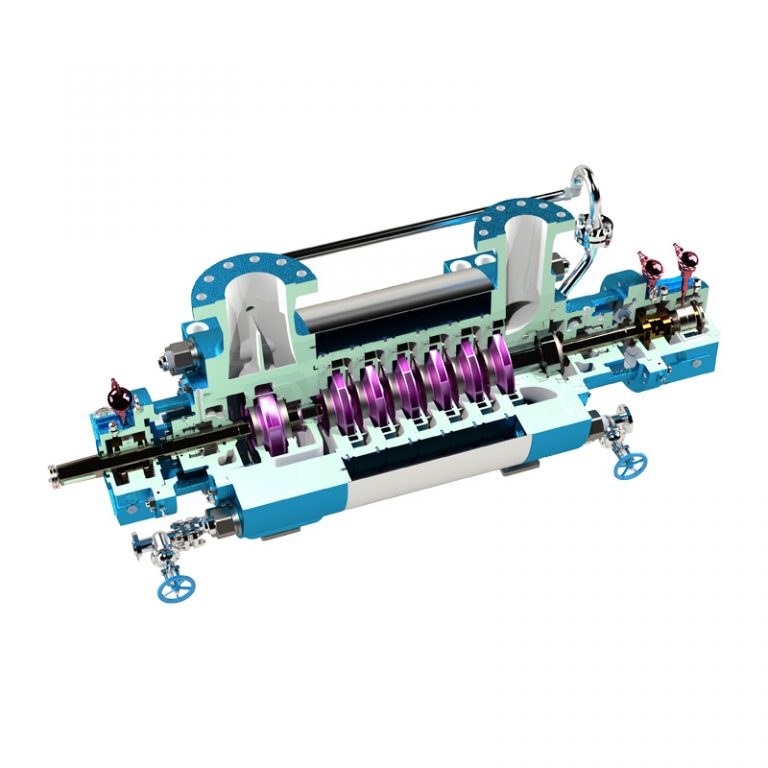
Longgang Pump LBD(BB2) radially split chemical process centrifugal pump gives engineers a between-bearing option when anti-cavitation hydraulic design must coexist with high process temperature, pressure, or corrosion exposure.
VS4 for Hot Liquid Pits and Submerged Suction
Vertical submerged configurations are also useful when the liquid is hot and the suction vessel is the practical way to preserve available head. In an alkylation project, Longgang supplied a VS4 molten-salt pump for 260 to 300 C heat-transfer salt and a VS4 liquid-sulfur pump for 125 to 155 C liquid sulfur. The submerged layout shortens the effective suction path and avoids treating a high-temperature liquid like an ordinary horizontal transfer duty.
Mechanical Seal Selection Is Part of Cavitation Prevention
Cavitation does not only pit an impeller. The resulting pressure pulsation and vibration can disturb seal-face tracking, increase heat at the faces, and reduce bearing life. The seal plan must therefore match the medium and the expected stability of the suction condition. A basic Plan 11 arrangement can suit clean water, demineralized water, and many stable hydrocarbon duties. Hot hydrocarbons, flashing liquids, and hazardous media may require a more protective combination such as Plan 11 plus 52, 53A, or 53B, subject to the final API 682 seal-system design.
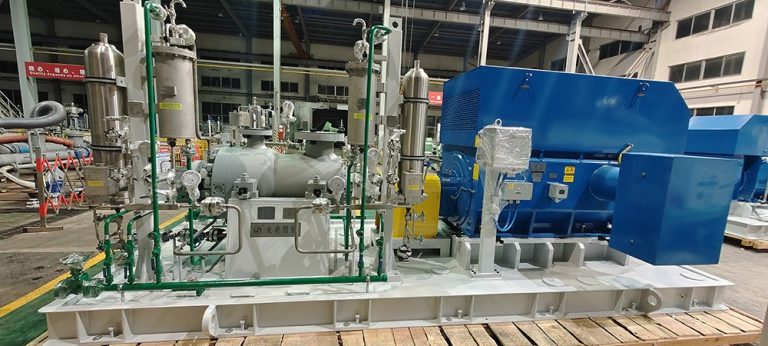
A C5 reflux pump at Yulong Island used Plan 11 plus 53A, while a fire-flare condensate pump used Plan 31 plus 52. In chlorine-alkali water and sodium-salt services, Plan 54 can be used where an externally supplied barrier fluid is needed. Molten-salt and liquid-sulfur VS4 duties used packing seals with sliding-bearing self-flushing, showing that a conventional mechanical seal is not automatically the best answer for every hot medium.
Materials Limit the Damage When Cavitation and Corrosion Combine
Material selection cannot eliminate cavitation, but it affects how quickly cavitation damage, corrosion, and wear combine. 304 and 316L are used widely for water, solvent, and moderately corrosive process duties. Coal-chemical ammonium-salt scrubbing service can require CD4MCu, while concentrated and spent sulfuric-acid duties may use fluoroplastic wetted parts or 904L casings and impellers. These choices must be checked against concentration, temperature, chlorides, solids, and the actual wetted-component design.
For high-pressure feedwater and hot process services, material strength, erosion resistance, and thermal stability are as important as nominal corrosion resistance. The right specification covers the casing, impeller, shaft, sleeves, wear rings, and seal faces as a system, rather than naming one corrosion-resistant alloy for the entire pump.
Cavitation Review for Critical Service
Before finalizing a centrifugal pump, verify the lowest operating level, highest liquid temperature, vessel pressure, vapor pressure, suction-line losses, and operating-flow range. Then select the inlet hydraulic design, pump structure, seal plan, and materials together. Also confirm the startup condition, venting path, minimum-flow operation, and the monitoring required for a critical service.
Conclusion
Centrifugal pump cavitation prevention is most effective when NPSH, impeller inlet design, structure, mechanical seal selection, and material selection are evaluated together. Longgang Pump applies that engineering logic across BB and VS pumps for high-temperature, corrosive, low-temperature, and vapor-prone industrial duties.
FAQ
Q: Can a mechanical seal solve a cavitation problem?
A: No. A seal plan can improve containment and seal-face reliability, but it cannot replace adequate NPSH margin or a suitable inlet hydraulic design. Resolve the suction condition first, then select the seal system for the medium and risk level.
Q: When is an inducer useful in a centrifugal pump?
A: An inducer is useful when a vapor-prone liquid has limited suction margin. It preconditions the liquid before the main impeller and can reduce the NPSHr requirement when it is matched to the full hydraulic design.
Q: Does a corrosion-resistant alloy prevent cavitation damage?
A: No. Materials help resist erosion and corrosion, but repeated vapor-bubble collapse can still damage wetted parts. Correct NPSH, inlet geometry, and operating range remain the primary controls.
Q: Why are vertical suspended pumps used for liquefied hydrocarbons?
A: They can place the first-stage hydraulic section below liquid level, reduce suction-lift exposure, and provide a practical layout for low-temperature or easily vaporized liquids such as ethylene, propane, and liquefied gas.