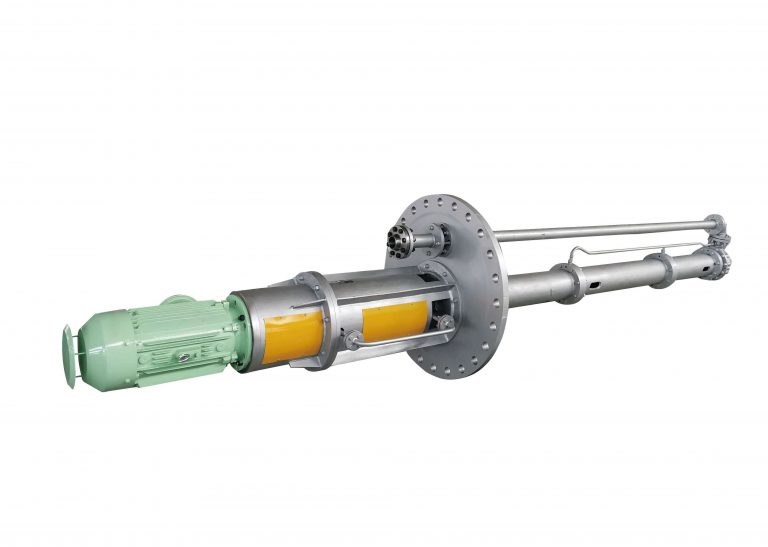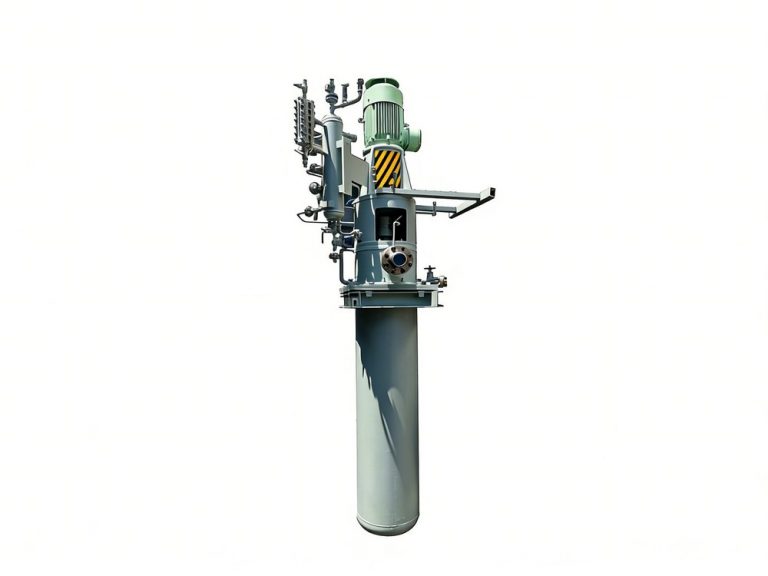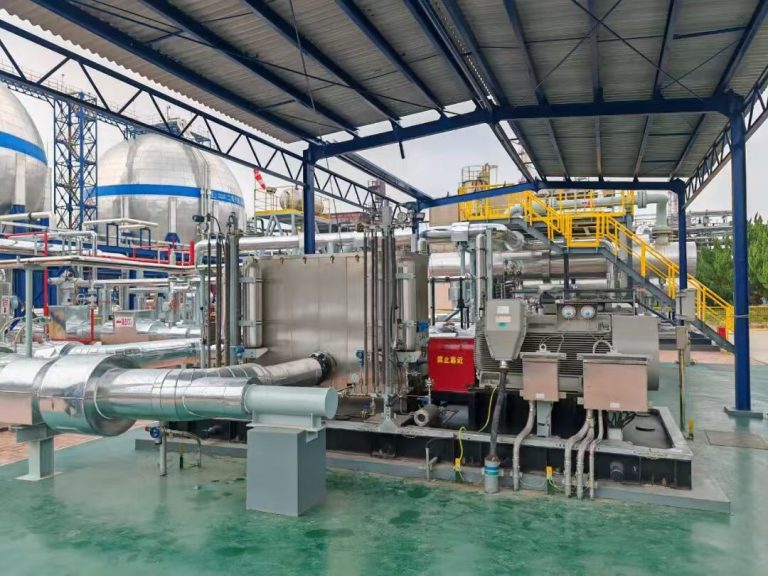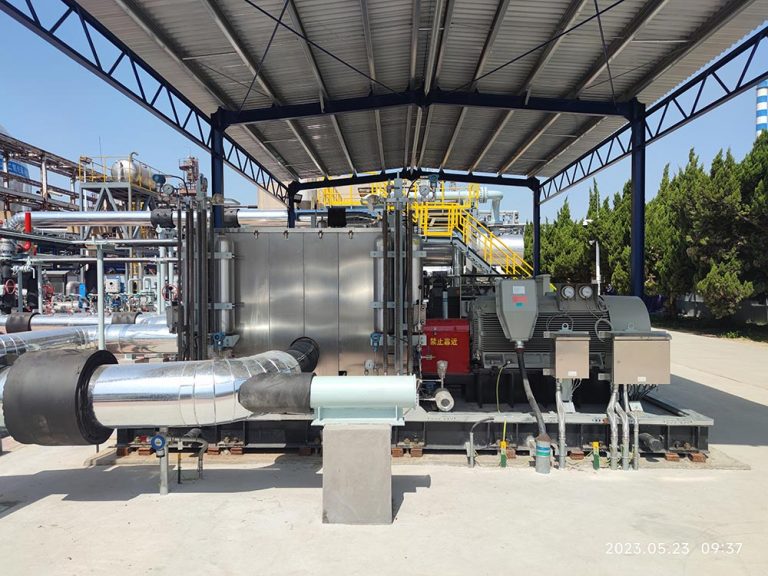
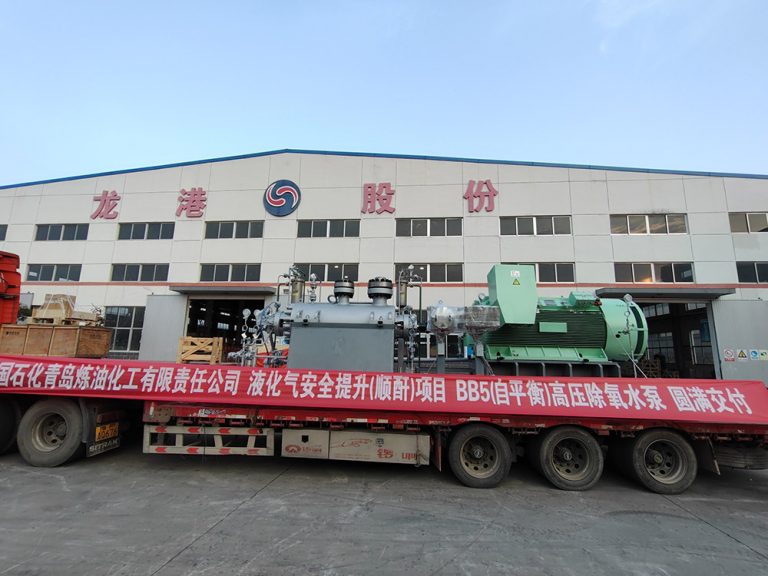

In tough industries like petrochemical processing, water treatment, and metallurgy, the success of liquid handling setups depends on the dependability of key parts. Brand owners and operators often deal with ongoing problems when they use low-quality pumping gear. These include repeated mechanical seal breakdowns, too much shaking that wears out bearings, and long stops for fixes. Such troubles usually come from a basic mismatch between the pump’s housing style particularly axial versus radial split and the needs of the fluid system.
To cut down these dangers and keep operations smooth, picking a maker with solid engineering skills is crucial. Longgang Pump , founded in 2001, holds the status of a national “high-tech enterprise” and serves as a Grade A supplier for big players like CNPC, Sinopec, and CNOOC. We focus on supplying top-tier centrifugal pumps, which connect solid hydraulic planning with strong real-world results.
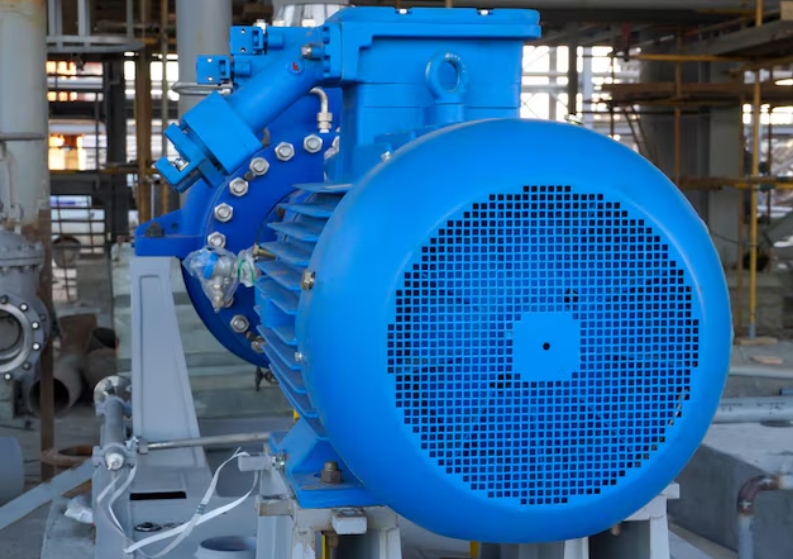
Understanding the Mechanics of Liquid Transportation
Before exploring particular setups, procurement experts should review the fundamentals of fluid movement. This helps them choose wisely.
What is a centrifugal pump?
A centrifugal pump is a machine that shifts fluids by turning spinning energy from an engine or motor into the energy of flowing liquid. It acts as the “heart” in many industrial systems for moving liquids.
How Does a Pressure Pump Work?
People often wonder, how does a pressure pump work in a centrifugal setup? The action starts when fluid comes into the pump’s intake via the impeller’s center. Then, as the impeller spins, it speeds up the fluid to high speeds. After that, the pump housing either a volute or diffuser changes this quick speed into pressure. Finally, it sends the fluid out through the exit port.
Radial Flow vs Axial Flow
When it comes to hydraulic planning, radial flow vs axial flow explains the path the fluid takes as it exits the impeller. Radial flow pumps send fluid straight out from the shaft, which suits them for creating strong pressure (head). Axial flow pumps push fluid along the shaft’s line, fitting well for big-volume, low-pressure jobs. For B2B brand owners, the key difference usually shows up in the housing build: axial split vs radial split.
The Axial Split Solution: High-Efficiency BB1 Pumps
For big liquid-moving tasks, especially in water delivery and crude oil lines, the LAD (BB1) series stands out as a top option.
High-Efficiency BB1 Double Suction Pump for Liquid Transportation
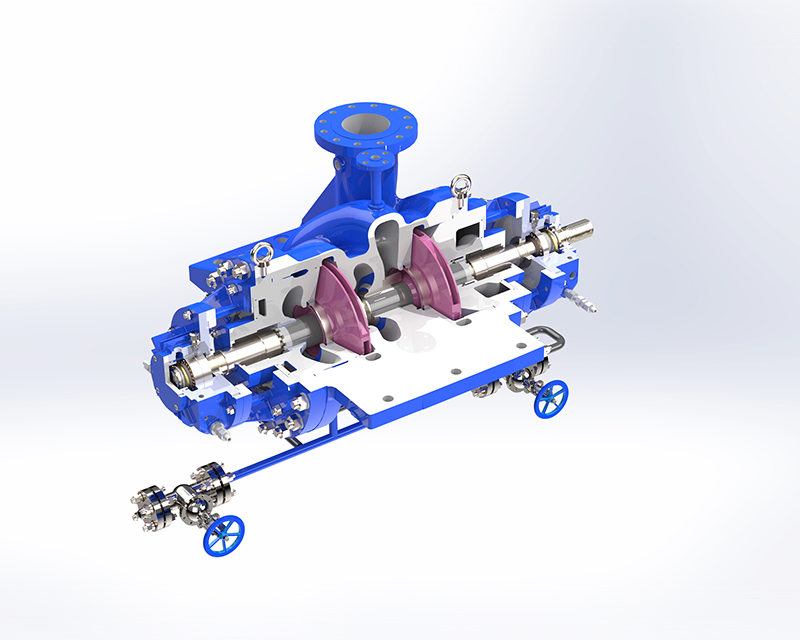
The high-efficiency BB1 double suction pump for liquid transportation has an axial split housing, where the pump body and lid split along the level line. This setup offers two main benefits:
- Maintenance Accessibility:The intake and exit pipes sit in the bottom part of the housing. Because of this, workers can check and swap rotor pieces, bearings, and mechanical seals without touching the entry and exit pipes. As a result, fix times drop sharply.
- Structural Stability:The double-suction impeller setup naturally offsets axial forces. Therefore, it leads to less shaking and longer life for parts.
Longgang’s LAD series employs a double volute housing for bigger sizes to reduce side pressure waves. Thus, it ensures steady work even in rough industrial settings.
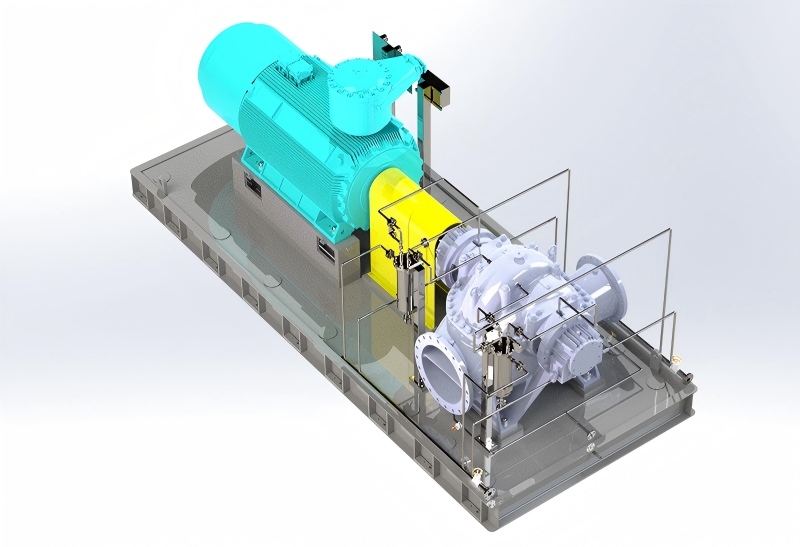
The Radial Split Solution: BB2 Pumps for Harsh Conditions
When jobs involve very hot conditions, great pressures, or risky materials, a radial split style becomes essential.
BB2 Pump with High Pressure and Low Maintenance
The LBD (BB2) series is a level, radially split, between-bearing pump built to match strict API 610 rules. This BB2 pump with high pressure and low maintenance suits the toughest petrochemical tasks.
- Thermal Stability:It uses center-line mounting and a two-end support frame. So, the BB2 pump keeps its lineup even when the body grows from hot materials (up to +450℃).
- Superior Sealing:The radial split build includes reliable metal spiral-wound seals. For this reason, it works best for moving harmful or quick-to-vaporize fluids like ethylene or quenching oil.
Radial vs Axial Centrifugal Pump Performance Comparison
Choosing the correct gear calls for a close radial vs axial centrifugal pump performance comparison. Both kinds play roles in industrial fluid shifts, but their best uses vary a lot.
| Feature | Axial Split (BB1 – LAD) | Radial Split (BB2 – LBD) |
| Primary Advantage | Ease of maintenance without piping removal | High temperature and pressure integrity |
| Max Temperature | Up to +210℃ | Up to +450℃ |
| Max Pressure | Up to 5.0 MPa | Up to 15 MPa |
| Key Application | Crude oil piping, Water supply, Irrigation | Refining units, Coal chemical, Ethylene |
| Axial Balancing | Double-suction impeller (Self-balancing) | Double-suction or balance hole structure |
For brand owners, the query of “what is the best centrifugal pump for liquid transportation” depends on the exact process details. In cases of large-volume, normal-temperature fluid moves, the BB1 excels due to its return on investment in upkeep. However, for high-energy petrochemical uses, the BB2 sets the standard for safety and steadiness.
Case Study: Breakthrough in Dense-Phase CO2 Transportation
Longgang Pump’s skill in technology shines brightest in the “Qilu Petrochemical – Shengli Oilfield Million Tons CCUS Project”. This effort needed a boost pump to handle dense-phase carbon dioxide at 10.0 MPa pressure.
In the past, such high-pressure, low-lubrication tasks depended on costly gear from abroad. Longgang Pump created a fully local, self-balancing BB2 pump with high pressure and low maintenance just for this issue. We tackled problems in flow steadiness and phase control. As such, our fix reached 90.5% hydraulic efficiency which beats national standards by 3.5%. Now, this project cuts carbon dioxide output by 1 million tons each year. It shows that Longgang’s API-matching designs lead on the world stage.
Why Choose Longgang Pump as Your Manufacturing Partner?
Selecting Longgang Pump for your centrifugal pump supply means putting money into quality and fresh ideas.
- Precision Testing:We have a top-level accuracy test stand that can check pumps up to 4000 kW and 30 MPa.
- Advanced R&D:Our group applies CFD three-dimensional fluid modeling and ANSYS finite element review to spot performance risks before building.
- Unmatched Service:We offer a 12/18-month guarantee and ongoing technical help, with a pledge to address quality concerns in 24 hours.
Elevate your industrial fluid transfer systems with Longgang Pump. Contact Longgang Pump today for a professional consultation and a customized technical proposal.
- Address: 12 Jingliu Road, High-Tech zone, Yantai, Shandong, China
- Phone:+86 18865532020 / 400-111-9188
- Email:lg-pump@lg-pump.com / info@longgangpump.com
FAQ
Q: What is the best centrifugal pump for liquid transportation in large-scale water systems?
A: The BB1 (LAD series) axial split pump is ideal due to its high-efficiency double suction design and ease of maintenance.
Q: How does the BB2 pump handle high-temperature liquids?
A: It utilizes centerline mounting to ensure the pump center remains aligned with the drive center even during thermal expansion.
Q: Can Longgang Pump provide customized materials for corrosive fluids?
A: Yes, we have developed special alloy pumps for highly corrosive media like concentrated sulfuric acid, hydrochloric acid, and caustic soda.
Q: What is the maintenance advantage of the BB1 series?
A: The axial split casing allows for rotor and bearing replacement without moving the inlet or outlet piping, significantly reducing downtime.
Q: Does Longgang Pump comply with international standards?
A: Yes, our products are designed in accordance with API 610 and API 682, and our facility is API Q1 and ISO 9001 certified.