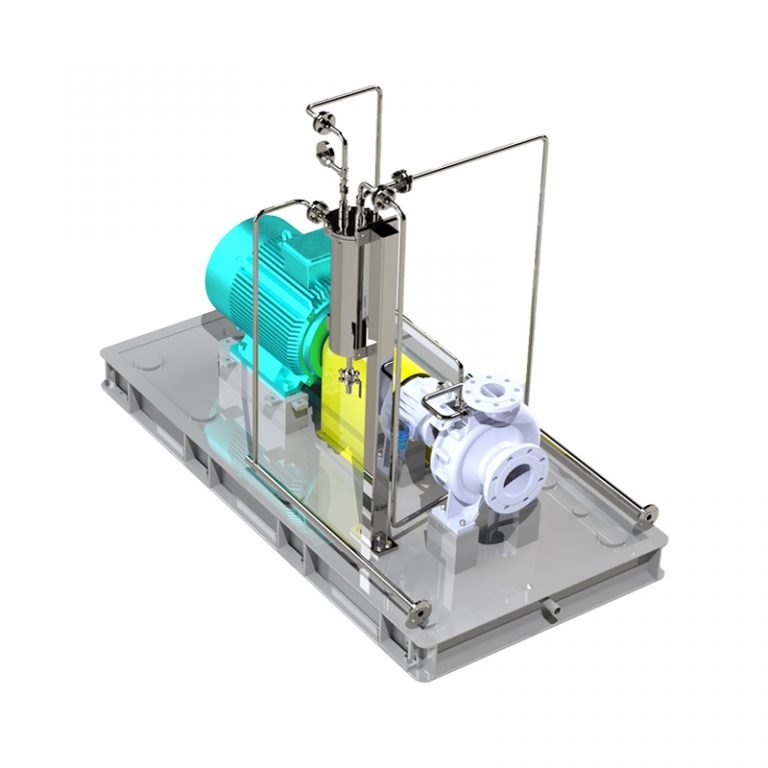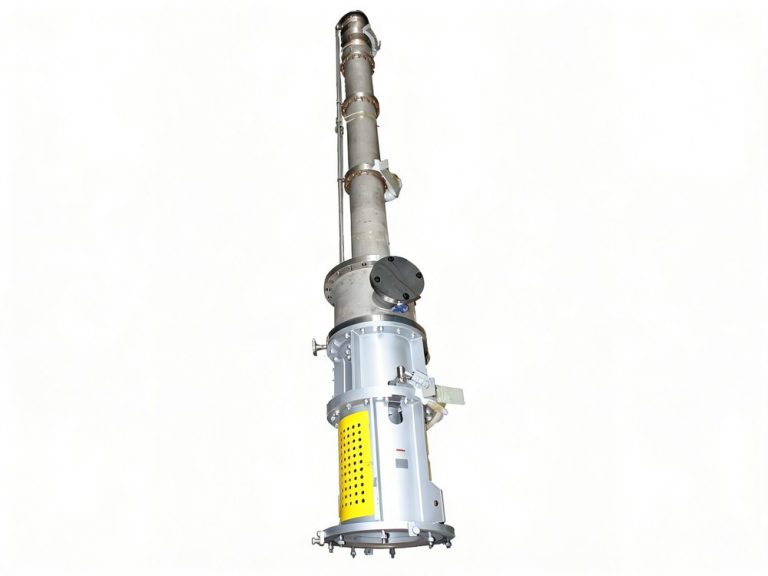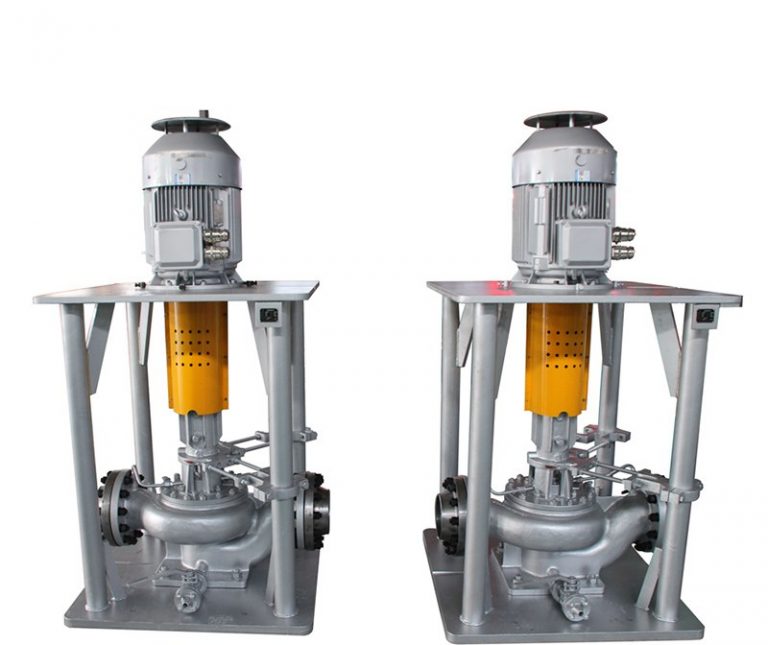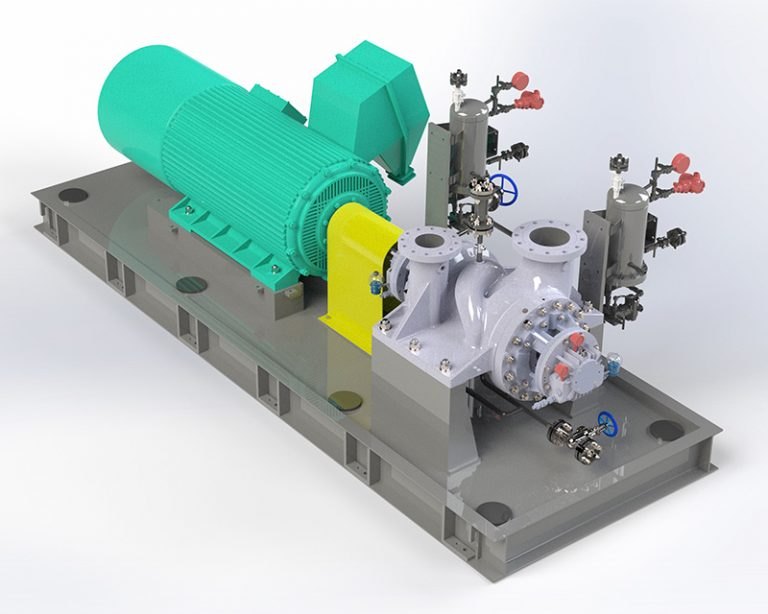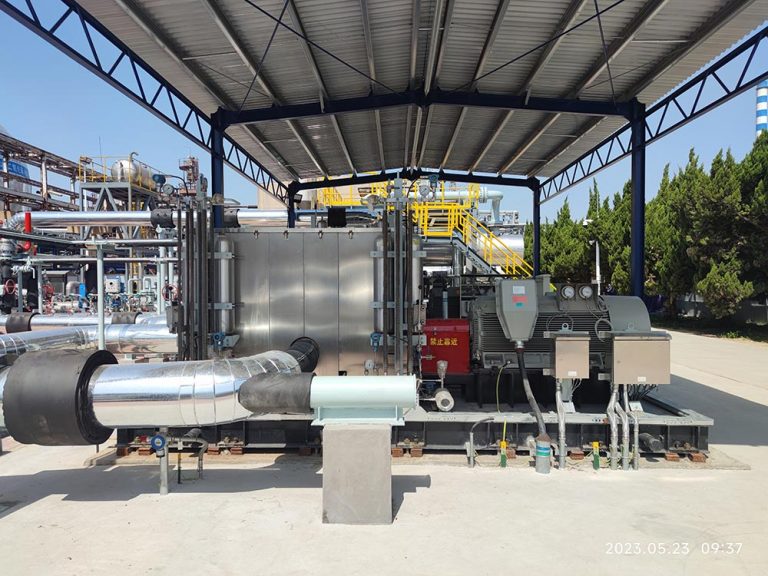
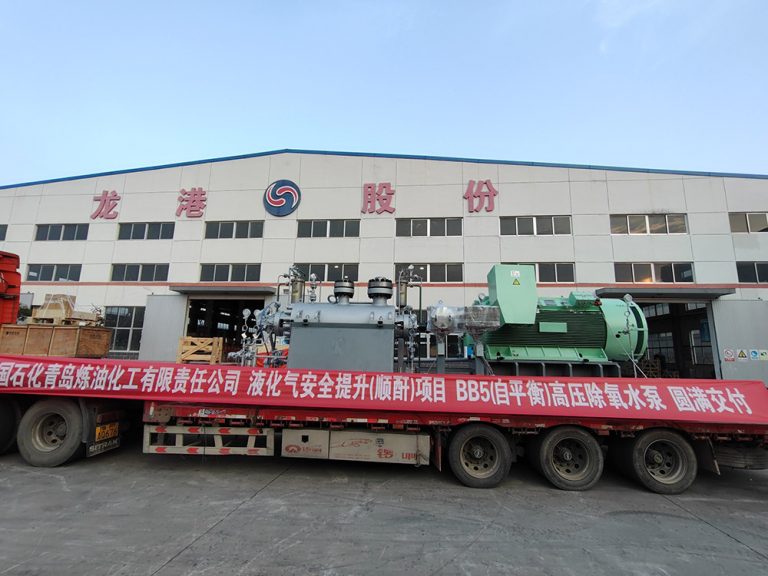

For a liquid sulfur process, the temperature of the sulfur in the pump and discharge lines must be kept within the process temperature range to remain pumpable. For pit or tank type applications, a VS4 sump pump is offered as a vertical version. Other important criteria for selection of a suitable pump and thermal system are immersion height, shaft height, suction submergence, screen loss, heat tracing, sealing and maintenance.
Longgang Pump can check the BB, OH and VS families of API 610 type centrifugal pumps for liquid sulfur service. Check the vessel and associated piping, check the datasheet of the pump, check the vertical model and the material code of the complete package.
Why Liquid Sulfur Pump Selection Starts with Heat
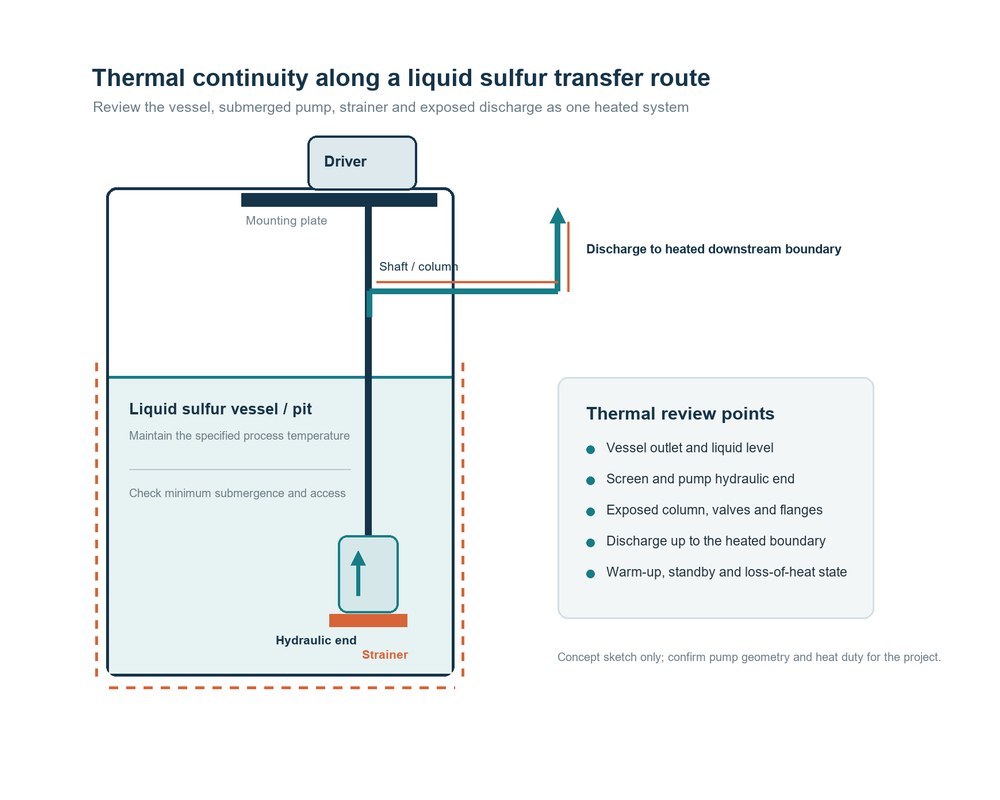
Even when the pump’s hydraulic capacity has been properly specified, sulfur that cools in a localized restriction can quit flowing. Such restriction points can include screens, suction casing pockets, short lengths of exposed pipe, valves, and liquid holding legs in a vessel. Thus, heat continuity is a function of both process and good piping practice, and simply placing a heater in a vessel is not sufficient.
Establish minimum and maximum allowable temperatures for the following locations: vessel, inlet to pump, discharge from pump and downstream equipment. The cases to be considered are: normal transfer, warm-up, hot-standby, shutdown and loss of heat. Minimum temperature must allow for the actual sulfur stream to be pumped. Maximum temperature must allow for liquid, packing, bearings and surrounding plant to safely operate under normal conditions.
Select the Liquid Sulfur Pump Structure
When a Vertical VS4 Arrangement Fits
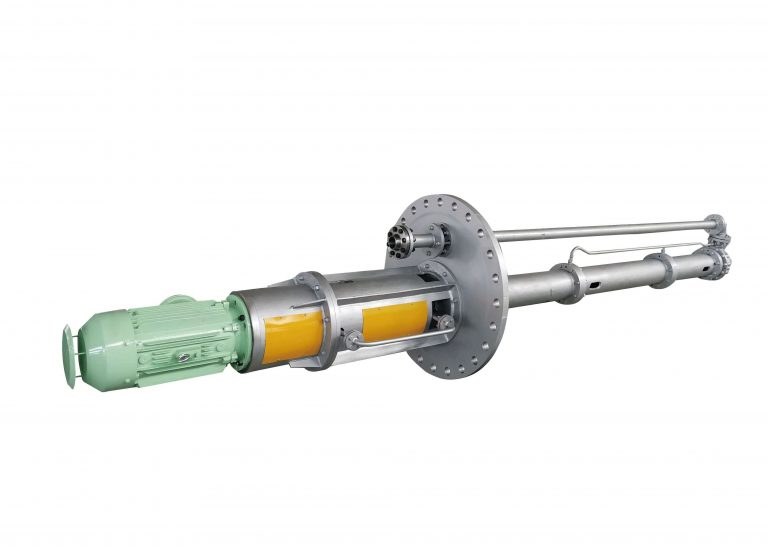
LY(VS4) long-axis submerged centrifugal pumps from Longgang Pump are vertical, line-shaft pumps of API 610 11th edition design. The hydraulic end is submerged in a wet pit or vessel. This information should be reviewed in respect to the liquid level above the suction, insertion length, shaft support, screen clearance, discharge orientation and space requirements to remove the rotating assembly.
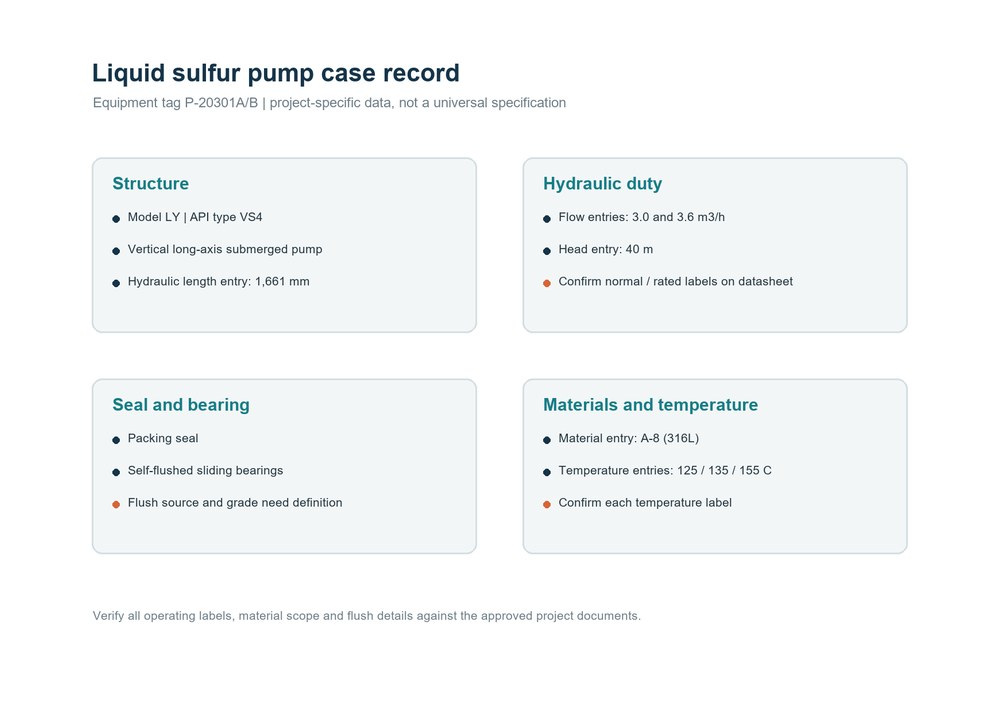
Review the project record for liquid sulfur pumps P-20301A/B. The LY pump is of VS4 design, with flow entries of 3.0 m3/h and 3.6 m3/h and a 40 m head. The material entry is A-8 (316L), and the shaft seal is packing. The sliding bearings are self-flushed. The record also gives temperature entries of 125 degrees C, 135 degrees C and 155 degrees C, but the labels are not defined. They should not be treated as operating, design or maximum temperatures until the project datasheet confirms their meaning.
Consider an Above-Ground Pump Only When the Layout Allows It
I do not recommend jumping to the conclusion that a vertical sump is the best design solution. An above-ground installation using an overhung process pump could also be suitable given the source vessel, minimum liquid level and suction conditions. One single-stage cantilever pump which may be of interest for an appropriate duty is the Longgang Pump’s LZE(OH2) single-stage cantilever pump. This however is not a recommendation for the P-20301A/B service and a full comparison of the alternatives with respect to the suction arrangement, thermal performance and maintenance requirements would be required.
Draw up a list of minimum liquid level, of possible suction-line layouts, of available NPSH, of desired installation depth, of operating range and of removal for both alternatives. Then check these conditions against the proposed pump performance curve and against the proposed mechanical design. The best rated structure may have excessive screen loss, or suffer from thermal problems, or be too large for maintenance access.
Maintain Thermal Continuity from Vessel to Discharge
Begin with a list of all surfaces that can lose heat such as the vessel outlet, strainer, pump casing, exposed column or discharge section, valves, flanges and first section of pipe downstream of the process. The design of trace heating and insulation should be in concert with the process heat balance and the piping design. A heated tank will not be able to keep a cold spot out of an unheated screen or valve body.
Identify areas of the equipment that need to be heated up prior to start up and methods to keep areas hot during unknown periods of shut down. Outlines of startup and shutdown procedures should follow the thermal design of the process. Sulfur should not get “trapped” in an unheated isolated section of equipment. Compare drain, purge or recovery procedures to the actual process and site procedure.
Specify the Seal and Bearing Support
The project record P-20301A/B indicates packing at the shaft seal and self-flushed sliding bearings. The project record sealing and bearing specification, however, must detail packing grade, gland dimensions, flush medium, flush pressure and acceptable leakage where applicable.
Packing must be selected based on temperature, shaft/sleeve surface condition, process compatibility, and containment requirements at the site. Sliding bearings must be checked for self-flushing capability and lubrication source. If an external flush is to be used, medium, pressure, and availability must be specified. Other shaft sealing options must be shown in approved datasheet and sealing specification.
Confirm Materials and Strainer Details by Component
Material specification A-8 (316L) for P-20301A/B records one material selection for one set of process conditions and does not ensure that 316L is the proper material for all liquid sulfur compositions and temperatures. Check the material of construction of all casing, impeller, shaft, sleeve, sliding bearings, fasteners, screen and sealing parts for the process liquid, thermal cycles and shutdown exposures.
The same record contains a 125 mm dimension associated with the strainer. Before reusing this information check what the dimension actually refers to and also check the screen opening, open area, maximum allowable differential pressure, solids loading and access for cleaning the screen.
Prepare One Duty Package for the Pump and Its Heat System
For a full enquiry into a potential pump, we would need to know the sulfur content, specific gravity and temperature that would be used for conversion calculations. Minimum and normal flow, required head, tank sizes, pit details, screen information, heating medium and insulation boundaries would also be required. We would then assess the proposed pump against the conditions outlined above, including wetted parts, shaft seal and bearing supports. Startup sequence and standby procedure would also be of interest.
This information needs to be sent to Longgang Pump for project specific checking by pump supplier, sealing supplier and plant piping team to agree on details of shaft insertion, bearing flush, warm-up limits, monitoring points etc. and response to loss of heat etc.
Conclusie
Liquid sulfur pumps must perform to the required hydraulic duty. The complete transfer line must also operate within the temperature limits of the process. The VS4 configuration can be operated submerged as illustrated by the example P-20301A/B. Confirmation of material, packing and bearing flush details must be obtained prior to fixed datasheet details for the pump. Thermal continuity must be verified across the complete route of transfer.
FAQ
Q: Is a VS4 pump always the right choice for liquid sulfur?
A: A vertical sump pump might be worth reviewing if the source vessel is below the proposed pump mounting level or if the vessel layout requires a submerged hydraulic end. Another structure might be more appropriate if liquid level, suction conditions and the thermal arrangement all support an above-ground installation. Review the vessel drawings and duty data for the available options.
Q: Which temperature should be used to design liquid sulfur heat tracing?
A: Ensure the process temperature basis for each operating state is approved rather than some unspecified value pulled from a pump log. List out the typical operating states such as normal transfer, warm-up, standby, shutdown and upset. Then coordinate the heat tracing with the process design and piping design.
Q: Does the P-20301A/B example specify a mechanical seal?
A: No, packing at the shaft seal and self-flushed sliding bearings are listed as project entries. But no packing grade, no flush medium and no information on acceptable leakage is given for the individual installation. This has to be verified.
Q: Is A-8 (316L) suitable for every liquid sulfur pump?
A: The recorded A-8 (316L) material for P-20301A/B service applies to a specific sulfur composition, operating temperature, contaminants, component exposure and shutdown conditions. Each wetted surface must be reviewed against the project specifications before the material is used for another service.