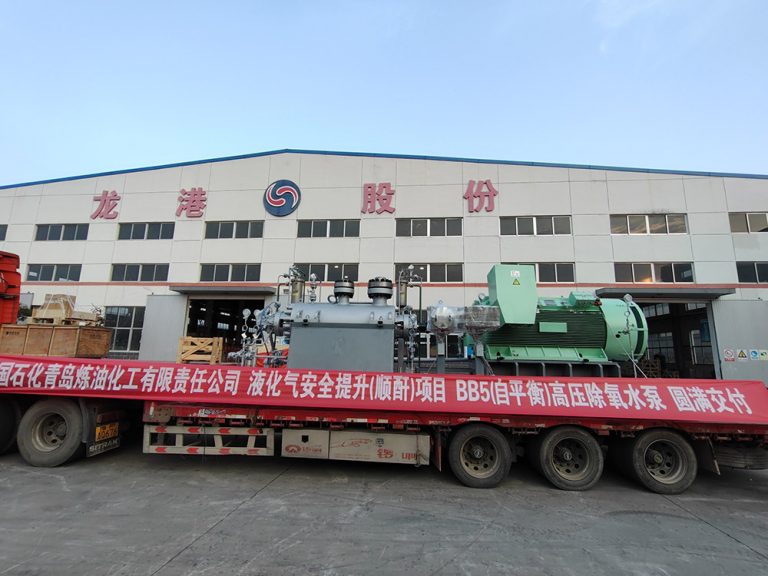

In the intricate world of oil transport and petrochemical handling, a reliable centrifugal pump separates smooth running from huge financial setbacks. Industrial brand owners and project leaders face obvious troubles: too much axial thrust that causes bearing breakdowns, cavitation problems from weak suction, and steep expenses from upkeep downtime. These issues frequently arise from picking the wrong single-suction vs. double-suction pump setup. At Longgang Pump, we tackle these key hurdles with careful design. Since 2001, we have acted as a trusted provider to major energy firms like CNPC, Sinopec, and CNOOC. We deliver proven fixes that focus on steady fluid flow and power savings.
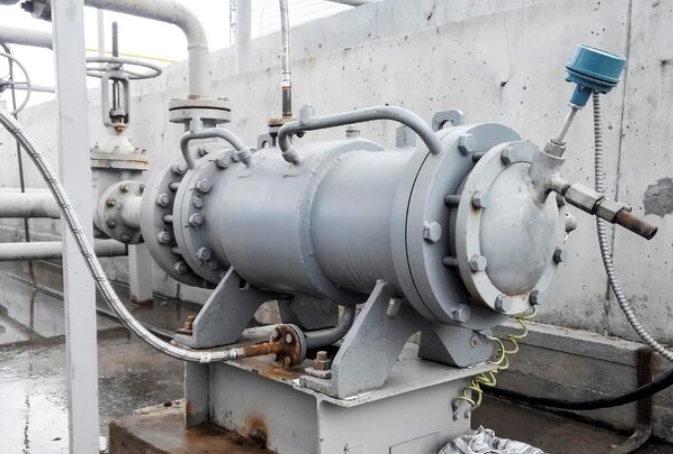
The Centrifugal Principle in Oil Transportation
To improve fluid movement, you need to grasp the centrifugal principle. This process turns spinning energy from a motor into fluid energy via an impeller. Fluid flows into the impeller’s center and speeds outward to the volute housing. Yet, the success of this energy shift relies a lot on how fluid reaches the system. In big oil lines, knowing the details of the centrifugal principle helps engineers cut down on rough flows and shakes. Longgang Pump applies modern CFD three-way fluid modeling to polish these paths. As a result, our centrifugal pump setups hit top fluid efficiency levels up to 90.5%.
How to Differentiate Between Single Suction and Double Suction Pump
For business buying and design work, it’s vital to differentiate between single suction and double suction pump builds so they fit the exact Net Positive Suction Head (NPSH) and volume needs.
Structural Configuration and Fluid Entry
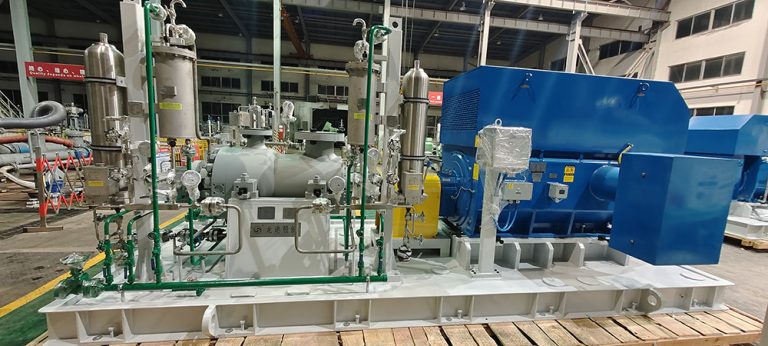
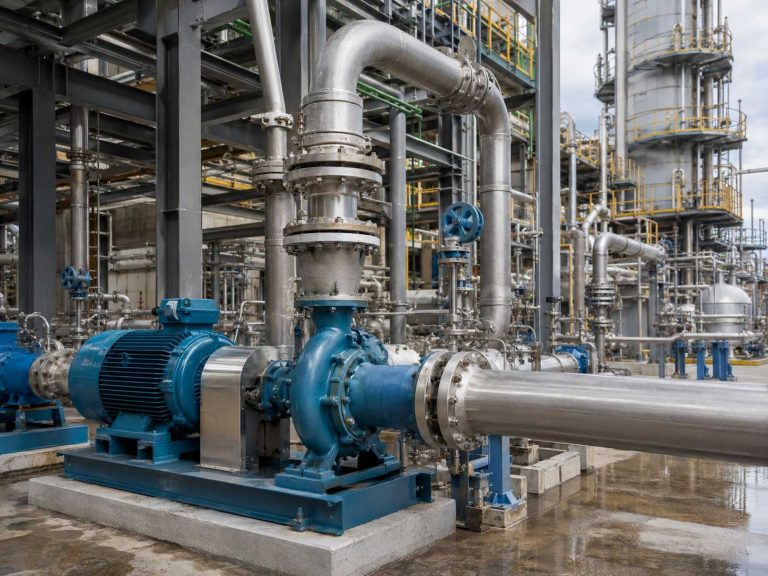
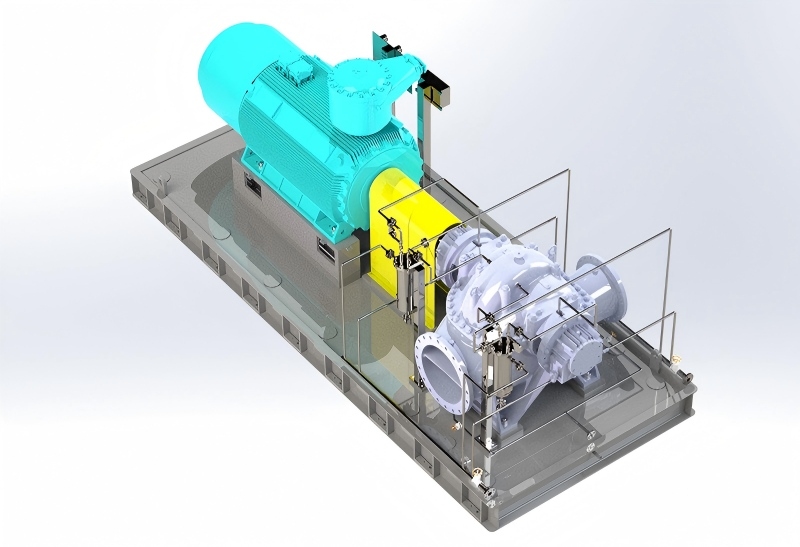
The simplest method to differentiate between single-suction and double-suction pump devices is by looking at the impeller layout. A single suction pump, like our LZE(OH2) Single Stage Cantilever Centrifugal Pump, lets fluid come in from just one side. On the other hand, a double suction pump, such as the LAD(BB1) Axial Split Double Suction Centrifugal Pump, has an impeller that takes fluid from both sides at once. This two-way entry boosts the intake space, which matters greatly for heavy crude oil lines.
Axial Force Management
Workers also differentiate between single-suction and double-suction pump kinds by how they handle side forces. In a single-suction centrifugal pump, pressure differences create a thrust toward the intake side. At Longgang Pump, we fix this in our LZE(OH2) and LZV(OH3) types with balance holes and seal rings. This keeps the spinning part steady even under strong pressure. By contrast, the double suction style in the LAD(BB1) balances itself naturally. Since fluid arrives evenly from both sides, the side forces offset each other. Thus, it greatly lengthens the life of tough bearings.
Single Suction vs Double Suction Pump: Strategic Application Scenarios
Choosing a single suction vs. a double suction pump goes beyond liking one over the other. Instead, it involves smart choices based on the oil pipe’s work setting.
When to Utilize Single Suction Solutions
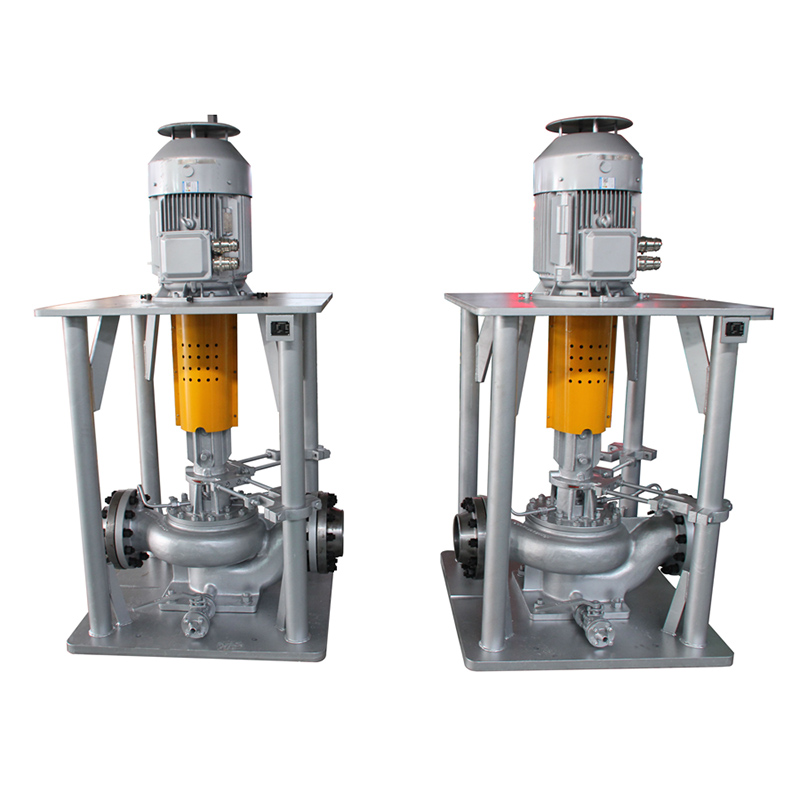
For tasks needing strong pressure with smaller volumes or tight spaces, single suction pumps work best. Our LZV(OH3) Single Stage Vertical Pipeline Centrifugal Pump suits pressurized pipe delivery and chemical uses where a small size is key. These pumps follow API 610 11th edition rules. They offer solid work in a side-split, middle-held setup that deals with heat growth well.
The Role of Double Suction in Large-Scale Logistics
In the single suction vs double suction pump choice for big crude oil pipes, the double suction LAD(BB1) usually stands out as better. Its side-split housing lets you lift off the top part for checks without touching the intake or outlet pipes. This simple upkeep, along with low shakes and a broad work range, makes it perfect for far-reaching oil moves and factory water systems. There, nonstop running is a must.
Technical Highlights: Engineering for Harsh Conditions
Longgang Pump sets itself apart as a top maker by blending fine materials and fresh builds into each centrifugal pump.
- Self-Balancing Technology:Our LAD(BB1) line uses a twin volute body to balance side forces on its own. This cuts pressure waves and shakes.
- API Compliance:All tough models, including the LBD(BB2) and LCD(BB3), meet API 610 and API 682 rules. They manage wide heat ranges (-80 to +450℃) and harsh fluids like hydrochloric and sulfuric acid.
- Precision Manufacturing:We employ CNC bridge mills and exact round grinders. This ensures every spinning part fits tight measures for fast factory tasks.
Application Studies: Proving Reliability
Our drive to fix tech issues shows up in big global and local jobs.
Case Study 1: High-Temperature Hot Oil Circulation
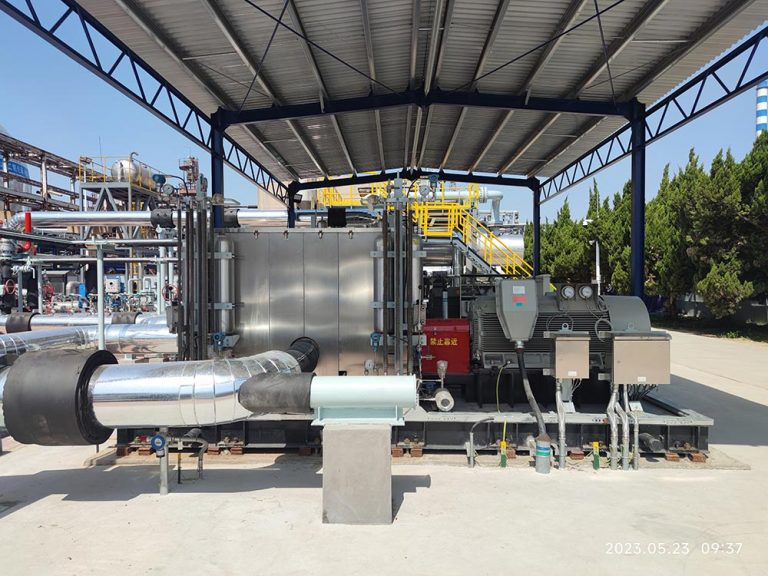
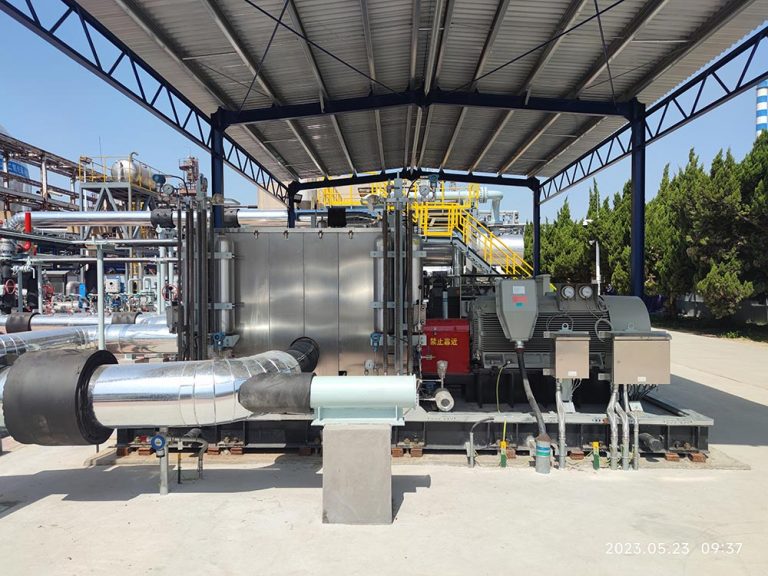
In the 2023 Yulong Island Refining and Chemical Integration Project, we supplied the feed oil loop pump with a BB5-lined BB3 form (the LCD(BB3) series). This side-split multi-step centrifugal pump was made to carry hot oil at high temperatures. It kept the pump core and motor core lined up, even with big heat swelling.
Case Study 2: CO2 Booster for CCUS Industrialization
Longgang Pump handled the Qilu Petrochemical – Shengli Oilfield Million Tons CCUS Project. We gave key CO2 booster pumps. Moving liquid CO2 brings risks of turning to gas and poor slip. Through a self-balanced build and mixed flow-smooth tech, we reached full local making. This swapped out costly foreign goods and secured steady carry at pressures up to 10.0 MPa.
Partner with Longgang Pump
Selecting Longgang Pump means picking a teammate who takes the risks in business factory jobs. We offer round-the-clock fixes, a 12-to-18-month promise, and lifelong help for all items. Our top-level check stand, which tests up to 4000 kW and 30 MPa, makes sure every centrifugal pump ships out fit for the toughest oil move spots.
Contact our skilled design group now to improve your fluid carry setups.
FAQ
Q: Why is the LAD(BB1) preferred for large oil pipelines?
A: The LAD(BB1) is an axial split double suction pump that automatically balances axial forces and allows for maintenance without disconnecting piping, making it highly efficient for continuous, large-volume transport.
Q: How does Longgang Pump differentiate between single-suction and double-suction pump needs for a project?
A: We analyze flow rates, NPSH availability, and space constraints. Single suction is ideal for compact, high-pressure boosting, while double suction is chosen for high-flow stability and low cavitation.
Q: Are your centrifugal pump products compliant with API standards?
A: Yes, our BB and OH series are designed according to API 610 11th edition and API 682 standards for the petroleum and petrochemical industries.
Q: Can your pumps handle corrosive water treatment chemicals?
A: Absolutely. We develop special alloy material pumps, including super-low carbon duplex stainless steel, to handle highly corrosive media like concentrated sulfuric acid and caustic soda.
Q: What is the benefit of an axial split casing?
A: It allows for the disassembly and installation of rotor parts without disconnecting inlet/outlet piping, reducing repair times and maintenance costs.