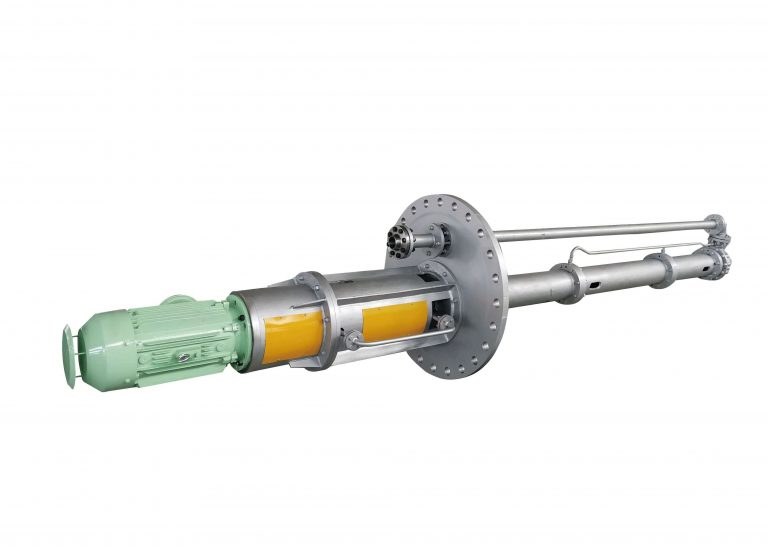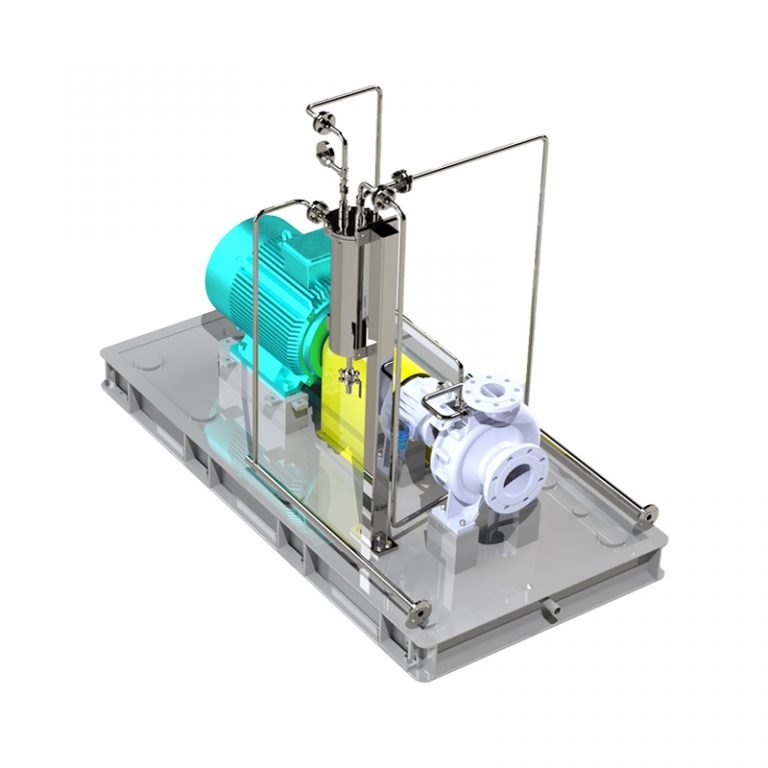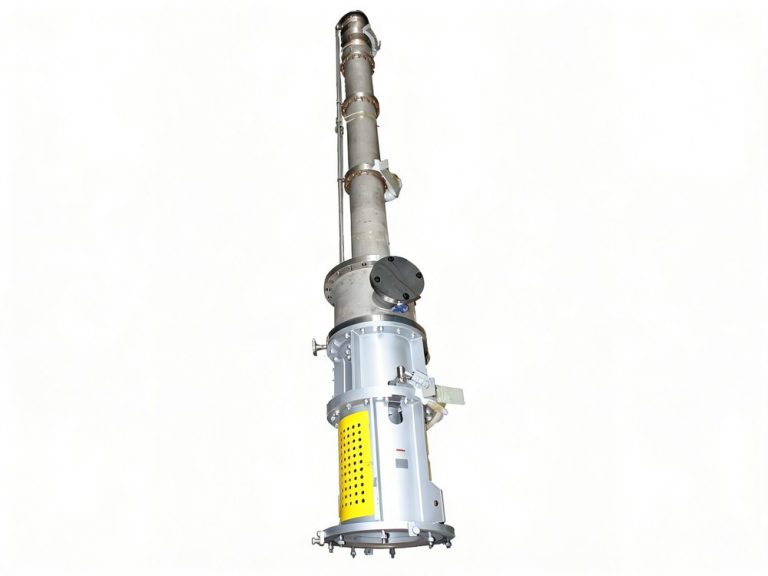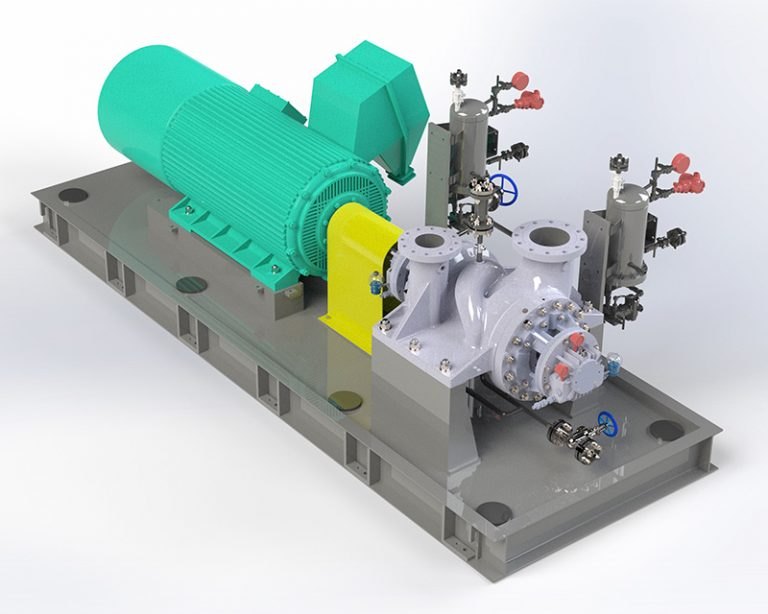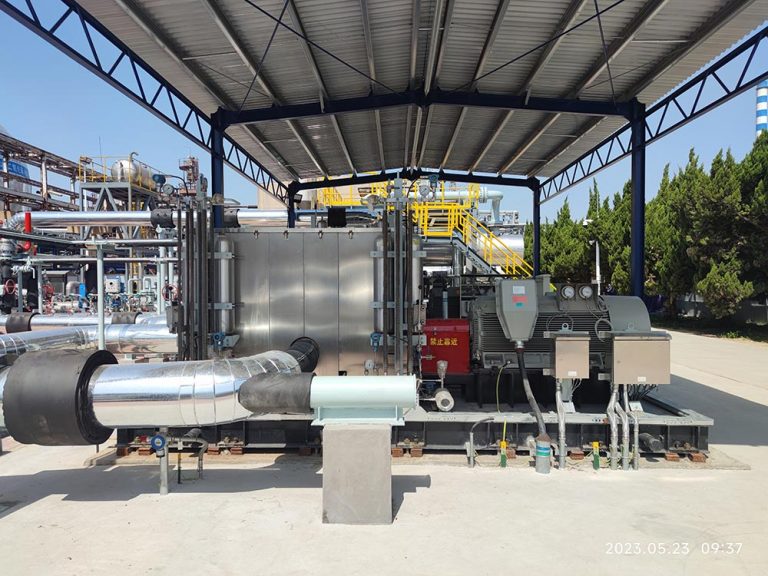
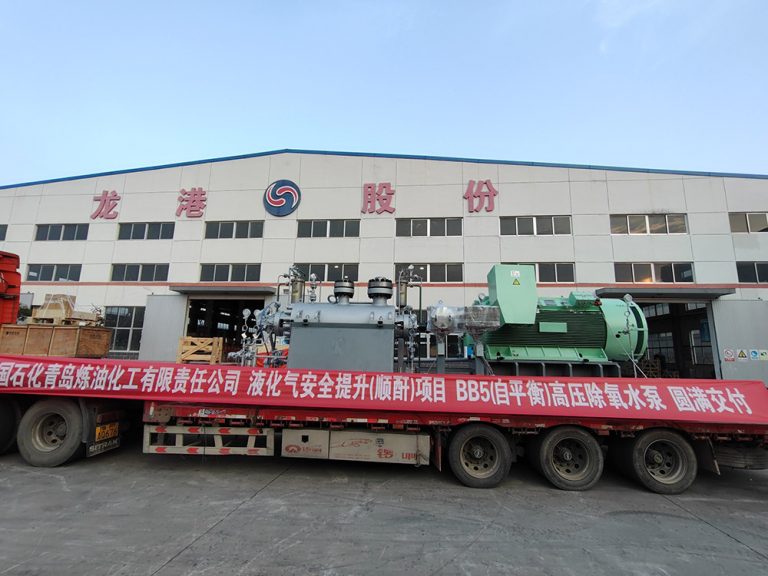

A vertical inline pump is the right answer when you need a compact single-stage pump that bolts straight into an existing pipeline and stays out of the way. It is a motor-over design with the suction and discharge flanges on the same centerline, which makes it a natural fit for utility water, condensate, wash water, and circulation duties in tight pump rooms. The selection comes down to two checks: the duty sits in the low-to-moderate head range a single stage can cover, and the liquid is workable for a single impeller once you weigh the solids content, viscosity, and corrosiveness. Push the head beyond single-stage and a multistage or between-bearing pump is the better tool.
Longgang Pump manufactures the LZV(OH3) single-stage vertical pipeline centrifugal pump in this family, designed in accordance with API 610 and tested on a rig that reaches class-1 accuracy. What follows is how to match a vertical inline pump to a real duty, and when to step away from it.
What a Vertical Inline Pump Actually Is
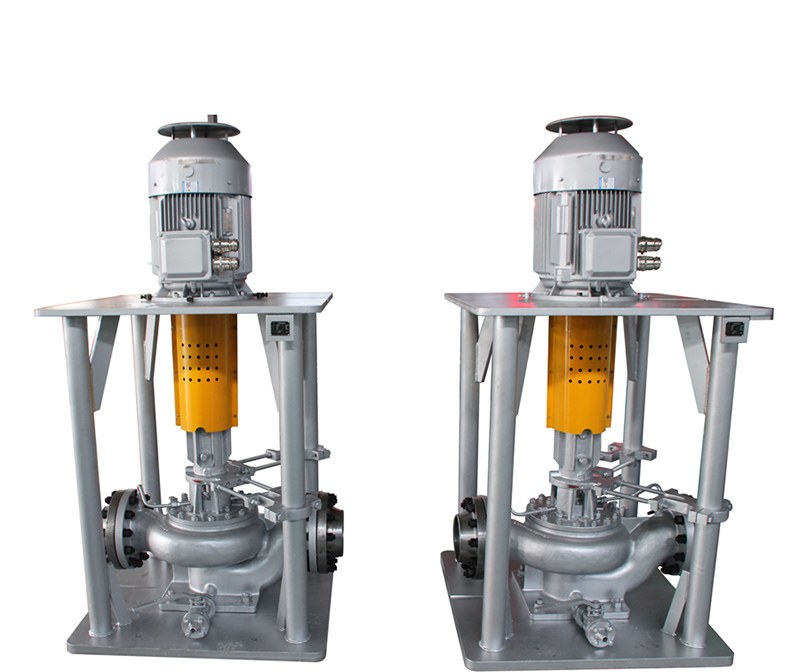
A vertical inline pump puts the driver on top and the hydraulic end below, with the inlet and outlet flanges in the same straight run of pipe. The pump takes the place of a length of pipe, so it simplifies the run and cuts the installation footprint; proper flange alignment and independent pipe support are still required, though. That reduced footprint is the core reason plants pick it over a horizontal pump.
Why the In-Line Layout Saves Space and Service Time
Because the pump sits inline, the suction and discharge nozzles are already on the piping centerline. You do not add elbow runs or a pedestal to land the driver. In a pump room where every meter is counted, that is the difference between a pump that fits and one that needs a re-layout. The single-stage design keeps service short as well: one impeller, a short shaft path, and a seal you can reach without pulling a long column.
Longgang Pump balances the axial force on the LZV(OH3) with a balanced-hole and throat-bushing arrangement. The balanced impeller and throat bushings help control hydraulic axial thrust and internal leakage; together with the bearing system and controlled running clearances, they contribute to stable rotor operation across the specified operating range.
Match the Duty to the Pump First
A vertical inline pump earns its place on low-to-moderate head, single-stage work. In our OH3 deliveries that spans steam condensate, deionized water boost, wash-water circulation, styrene, and fire-water make-up. The common thread is a duty where the head stays in the single-stage range and the liquid is workable for a single impeller once you weigh the solids content, viscosity, and temperature.
Low-Head Utility and Condensate
Deionized water boost and fire-water make-up are typical low-head inline duties, running at high flow and modest head. A vertical inline pump sized into that range holds steady flow without the extra pressure drop a too-large impeller adds. Condensate return is the same story: clean, often hot, and on a head a single stage can cover.
When the Head Climbs, Move Up
The honest limit is head. When a duty needs several times the head a single impeller gives, the right move is a multistage vertical or a between-bearing pump, not a larger inline pump forcing more head than it should. Sizing a vertical inline pump past its comfort range trades the very stability it exists for into vibration and short seal life.
When an Overhung or Centerline Pump Beats a Vertical Inline Pump
A selection is a comparison, not a single product. The closest alternatives to an inline pump are the horizontal single-stage overhung and centerline designs, and each wins on its own ground.
Foot-Mounted Overhung for Clean, Moderate Duties
La LZA(OH1) single-stage cantilever centrifugal pump puts the impeller on a cantilever shaft over a foot-mounted bearing. It is a strong fit for clean or lightly contaminated liquids where the floor space is horizontal rather than vertical, and its pull-out structure lets you inspect the rotor without moving the line. Where a vertical inline pump wants to bolt into pipe, an overhung pump wants to sit on a skid beside it.
Centerline for Hot, Thermally Growing Service
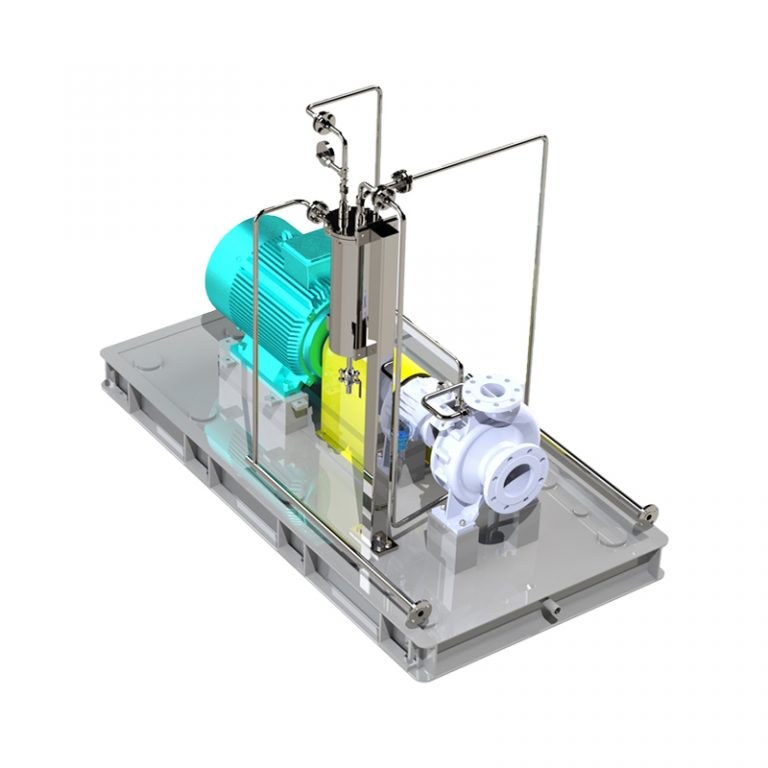
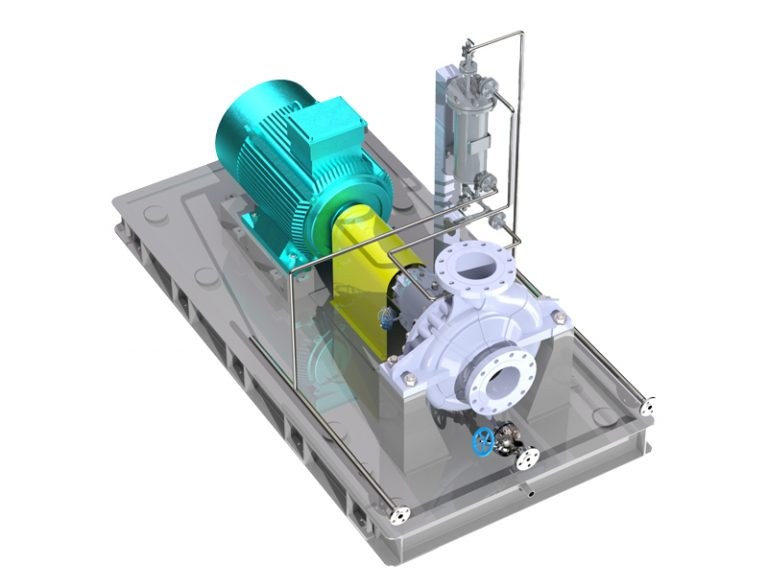
When the liquid is hot, the casing grows. In a centerline-mounted design, the casing is supported near the shaft centerline, so thermal growth can occur more symmetrically and alignment changes in high-temperature service are reduced. That can make a centerline-mounted pump preferable to an inline or foot-mounted design in demanding high-temperature services, and it is why hot utility and some process lines favor the centerline layout.
Pick Materials and Seals for the Liquid You Actually Handle
Material choice follows the liquid, not the pump family. A stainless that holds up in water can be the wrong call in hot organic or acidic service. On our OH3 work, casings and trims run from cast steel with a stainless impeller up to A-8 (316L) and stainless options, with special alloys where the chemistry demands them. The right alloy still depends on the chemistry, temperature, and concentration of each stream.
Sealing follows the same logic. A clean utility liquid can run a simple plan, while a more volatile, toxic, or higher-vapor-pressure medium calls for a flushed or barrier arrangement reviewed against API 682. The seal is part of the thermal and containment strategy, not just a wearing part, so it is chosen after the liquid is defined, not before.
Size the Vertical Inline Pump to the Operating Point
A pump only behaves the way it is designed to at its operating point. Aim to run the impeller near its best efficiency point so the flow sits where the hydraulic end is happiest, and keep the minimum-flow protection in place for the low-flow end of the range. Suction condition matters too: a vertical inline pump takes its NPSH from the line, so confirm the suction pressure and vapor margin before you lock the size.
Speed is a second dial. The same frame can run at 1480 or 2980 rpm to shift the head and flow, so the speed you pick is part of the sizing, not an afterthought. Get the operating point, the material, and the seal right and these choices help improve reliability, efficiency, and seal life.
Choose a Manufacturer You Can Hold to the Duty
A vertical inline pump is only as good as the engineering behind it. Longgang Pump designs its API 610 centrifugal pumps and builds them under an ISO 9001 and API Q1 system, supplying major refiners and chemical producers. The test rig reaches class-1 accuracy, so it verifies pump performance against the specified acceptance criteria, helping confirm that the tested pump meets the agreed duty point.
Conclusión
A well-chosen vertical inline pump is a quiet piece of equipment: it bolts into the line and holds its operating point. The discipline is in the choosing. Confirm the duty is low-to-moderate head and clean, match the material and seal to the liquid, size to the operating point, and reach for a centerline or overhung design instead when the thermal or layout conditions call for it.
For hot or thermally growing service, the centerline LZE(OH2) single-stage cantilever centrifugal pump supports the casing near the shaft centerline so thermal growth is more symmetric. Contact Longgang Pump with your flow, head, temperature, and liquid, and we will confirm the right vertical inline pump configuration for your plant.
Preguntas frecuentes
Q: What is the maximum head a vertical inline pump can handle?
A: There is no single universal figure. Maximum head depends on pump size, impeller diameter, speed, and the hydraulic selection, so refer to the performance range for the specific LZV model rather than applying one universal head limit. As a rule, a single-stage inline pump covers the low-to-moderate head range, which is where it is most efficient and stable; when a duty needs well beyond that, a multistage vertical or a between-bearing pump is the better tool.
Q: Can a vertical inline pump handle hot condensate or steam service?
A: Yes, in the single-stage head range. Our OH3 deliveries include condensate and deionized water boost service, with materials and seals chosen for the temperature. For hotter, thermally growing lines where alignment matters more, a centerline-mounted design is often the safer call.
Q: How does a vertical inline pump differ from an OH1 or OH2 pump?
A: The difference is mounting and thermal behavior. A vertical inline pump (OH3) sits in the pipeline with the driver above. An OH1 is foot-mounted overhung and an OH2 is centerline-mounted, so the OH2 resists alignment changes as a hot casing grows. Match the mounting to the layout and the temperature.
Q: What materials and seals should I specify for a vertical inline pump?
A: Match both to the liquid. Our OH3 work ranges from cast-steel bodies with stainless impellers to A-8 (316L) and special alloys for more corrosive service, with seal plans reviewed against API 682. The chemistry, temperature, and concentration of your stream decide the final call, not the pump family.