
The Demands of Modern Petrochemical Cracking
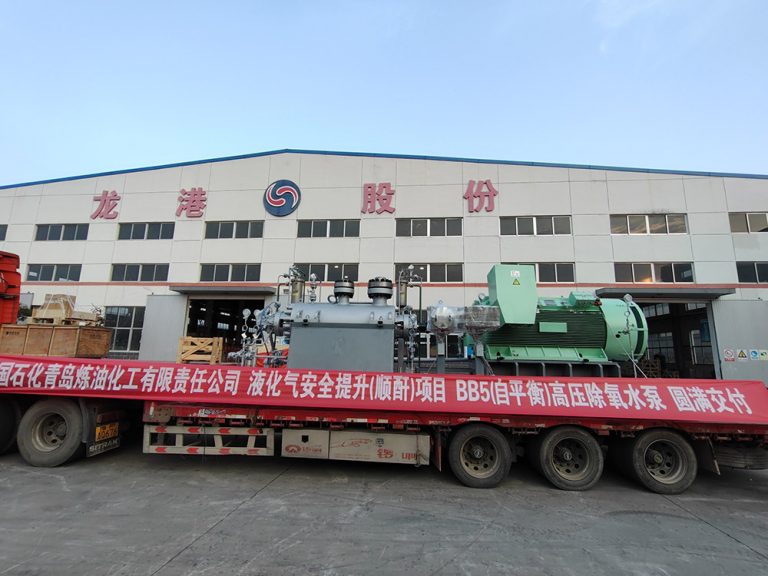
Petrochemical cracking processes form the core of today’s chemical manufacturing. They change hydrocarbon raw materials into useful items like ethylene. These tasks require strong dependability and accuracy in handling fluids. This holds especially for ethylene feed lines that work at very cold temperatures and strong pressures. The ethylene feed pump plays a critical role in maintaining stable operations. Any failure could lead to operational disruptions, safety risks, and significant financial losses.
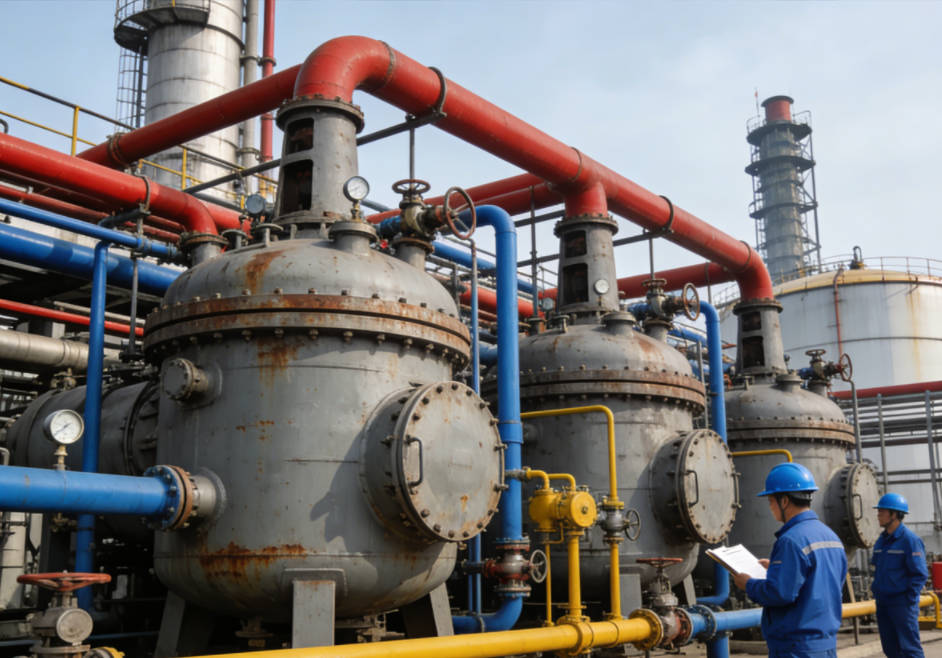
A main part in this setup is the low-temperature, high-pressure ethylene feed pump. It delivers cold ethylene steadily to the cracking furnace. The quality of this flow directly influences the heat balance within the furnace and the overall efficiency of the cracking process. If these pumps fail, it can lead to unplanned shutdowns and operational losses.
Importance of Low-Temperature High-Pressure Pumps
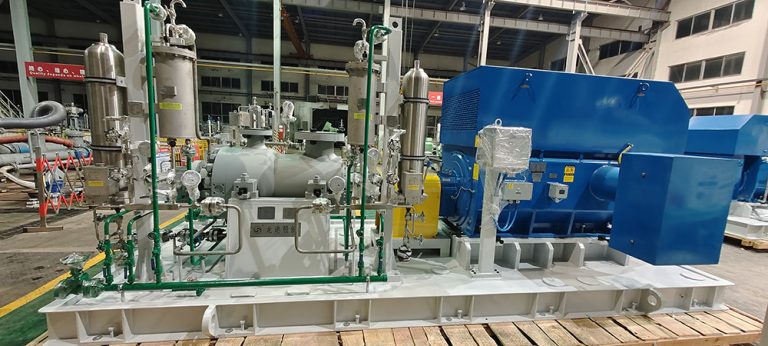
Engineers design low-temperature, high-pressure centrifugal pumps, specifically engineered to withstand the extreme thermal stress and pressure fluctuations often encountered in cryogenic applications, such as ethylene feed systems. In making ethylene, feed lines can drop to -104°C. They run at about 5 MPa pressure. Picking the correct pump type matters for both output and safety. Longgang Pump provides reliable and engineered solutions for these challenging conditions. Our company draws on years of design know-how. It has supplied pumps for big national efforts, such as Sinopec Tianjin’s 1.2 million tons/year ethylene plant.
Key Challenges in Ethylene Feed Systems
Extreme Temperature Differentials
Very cold temperatures create real design problems. Pumps must handle the thermal stress caused by temperature differentials between the cryogenic ethylene and warmer system components. This can lead to thermal expansion issues, potentially causing seal failure or misalignment of internal parts. If the design lacks proper steps, these differences can cause parts to expand unevenly. That leads to seal problems or parts shifting out of place.
Material Cold Brittleness
Regular materials get fragile in cold settings. This raises the chance of sudden breaks. So, only materials that stay flexible and strong in the cold should go into these pumps. To tackle this, we created pumps from special alloys. Examples include pumps that resist dilute sulfuric acid, hydrochloric acid, concentrated sulfuric acid, and caustic soda. We also make them from super-low-carbon duplex stainless steel for highly corrosive jobs. This shows our skill in pushing past standard designs.
High-Pressure Sealing Requirements
In ethylene feed jobs, keeping a tight seal at 5 MPa or more is a must. Pressure changes can harm mechanical seals. Leaks from this bring safety dangers and harm to the environment. Strong sealing methods are key. These include multi-layer mechanical seals with backup fluid systems. They hold in the cold fluids and keep the pump running with little upkeep.
Stable Flow Under Harsh Conditions
For cracking to work well, the feed flow must stay even. Any uneven flow or air bubbles in the liquid cut down on how much gets converted. They can also hurt the inside parts of the furnace. Flow controls need to react fast to changes in the process. At the same time, they must measure the flow exactly, even in rough settings.
Engineering Solutions by Longgang Pump
Material Selection Strategy: Cryogenic-Compatible Alloys and Coatings
We pick austenitic stainless steels that hold up well in very cold conditions for parts that touch the low temperatures. We add surface layers too. These cut down on rubbing wear and fight rust from cold hydrocarbons. Such choices give lasting strength. They keep the parts solid at temperatures down to -163°C. This fits perfectly for handling ethylene feeds.
Structural Design Optimization: Impeller and Casing Reinforcement Techniques
With ANSYS Finite Element Analysis software, we improve the pump body and wheel designs. This spreads out the stress evenly. We strengthen the bearing areas to keep the shaft straight during heat changes. As a result, shakes decrease, and the pump lasts longer. The stiff shaft setup works well in tough spots. It runs smoothly up to the first key speed without issues.
Advanced Sealing Systems: Multi-Layer Mechanical Seal Configurations
Our seal setups use double or triple mechanical seals. They include built-in fluid buffer areas. These match API 682 rules. They handle sudden pressure jumps without losing the seal’s strength. We use advanced materials like silicon carbide and tungsten carbide for seal surfaces. These materials are highly resistant to wear and corrosion in extreme temperatures, ensuring reliable performance in cryogenic and high-pressure environments. This cuts down on grinding and boosts how long they last.
Flow Control Mechanisms: Variable Frequency Drive (VFD) Integration
Variable Frequency Drives (VFDs) allow for real-time adjustment of pump speed, ensuring consistent flow even during fluctuating load conditions. By optimizing motor speed, VFDs reduce energy consumption and enhance system stability. It also saves power by avoiding extra running at full speed. Sensors built into watches measure things like pressure and heat. They help make changes ahead of time.
Application in National-Level Projects
Operational Overview and System Integration
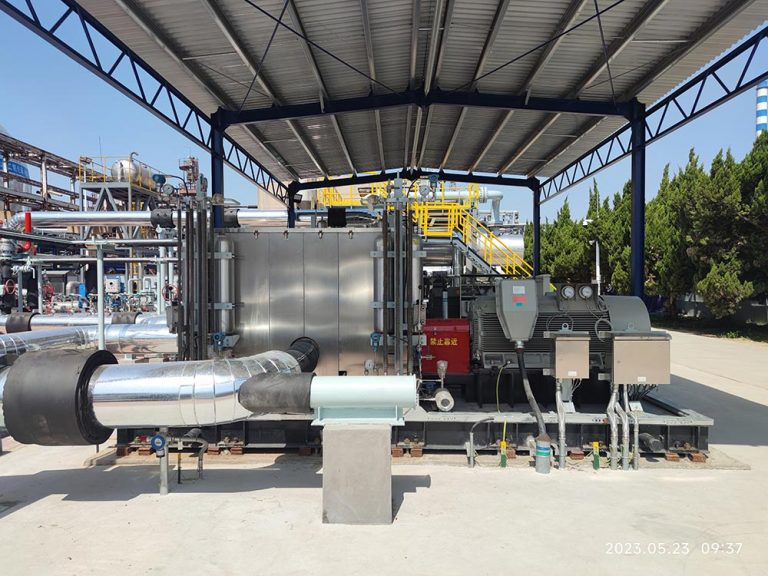
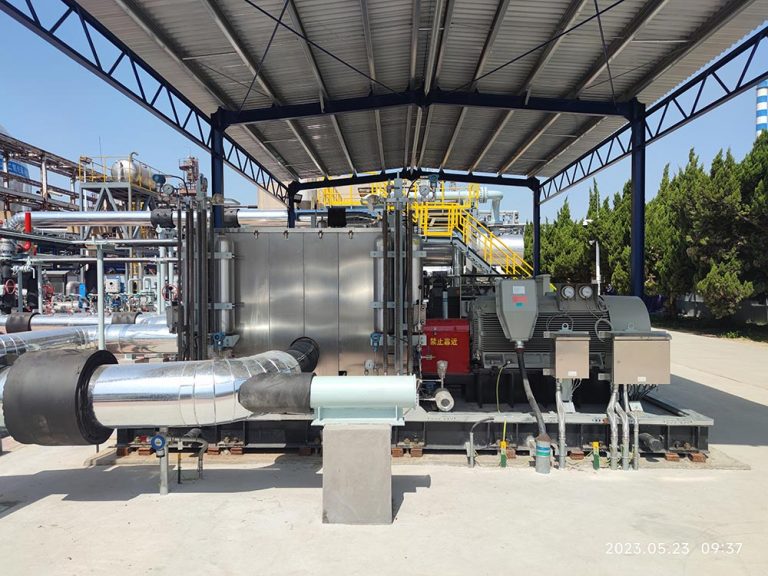
Longgang Pump provided centrifugal pump setups for ethylene feed lines at -104°C and 5 MPa. This was for Sinopec Tianjin Branch’s 1.2 million tons/year ethylene project. The pumps took the place of those from abroad. They proved that home-grown tech can match top global standards. Workers linked the pumps to a DCS (Distributed Control System). This setup allows watching, checking, and controlling from afar in real time. It helps the team respond quickly to what the plant needs.
Performance Metrics Achieved
Over a 12-month period of continuous full-load operation, Longgang Pumps achieved a 99.8% availability rate, supported by real-time monitoring systems and predictive maintenance technologies, demonstrating exceptional reliability in extreme conditions. Thanks to rust-proof materials and strong builds, upkeep periods stretched by 30%. This result highlights how we supply dependable systems for some of the toughest tasks in chemical processing.
Reliability Assurance Strategies
Predictive Maintenance Tools
For ongoing trust in the system, we add sensors. They track shakes, seal wear, bearing heat, and shaft position. These let teams plan fixes based on real wear, not just set times.
Scheduled Inspection Protocols
We suggest checks based on how long the pump has run, not the date. This covers looking at wheels for bubble damage, bearings for heat strain, and seals for drips or wear signs.
Common Issues in Harsh Environments
Ethylene feed pumps deal with special dangers, such as:
- Cavitation from vapor formation due to sudden pressure drops.
- Thermal shock from rapid startup/shutdown
- Seal failures from abrasive particles or fluctuating pressures.
- Shaft misalignment due to unbalanced thermal expansion.
Our builds tackle each of these from the start. We use smart designs and tough materials.
Industry Applications Beyond Ethylene Cracking
Broader Use Cases for Longgang Pump
Our pumps are engineered to meet rigorous industry standards, including ISO 9001 for quality management and API 610 for centrifugal pumps, ensuring reliable performance under extreme conditions such as LNG transportation systems. There, handling very cold liquids is key. It also fits the exact dosing of harsh chemicals in making fertilizers or special compounds. Our know-how in materials and building matches these needs well.
Relevance of Design Principles
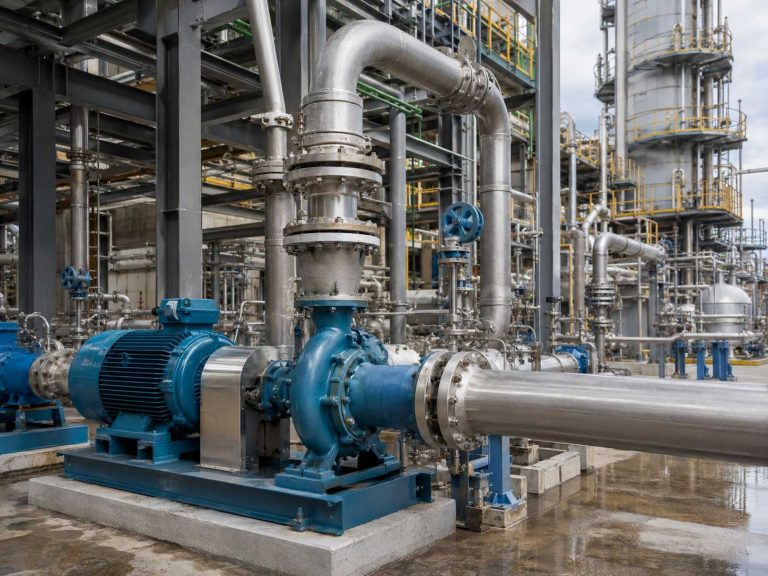
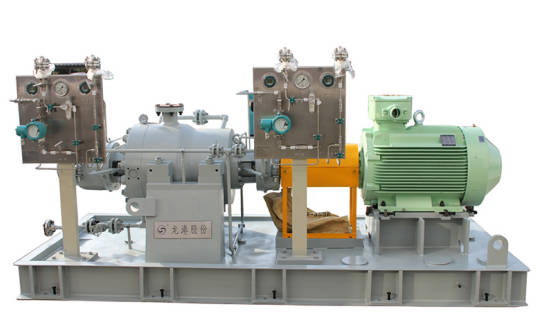
Longgang Pump’s LBD (BB2) and LTD (BB5) models show how cold-service ideas apply to oil field work. The BB2 efficient centrifugal pump serves mainly in moving crude oil, coal, chemical work, natural gas handling, and offshore drilling gear. It gives high power use (up to 90.5%) and stands up to rust and pressure wear.
Conclusion
Longgang Pump shows strong skills in fixing the main problems of cold, high-pressure ethylene feed systems. It does this with fresh material ideas, build improvements, strong sealing methods, and clever linking strategies. The win in big projects like Sinopec Tianjin proves its steadiness in hard conditions. This gives chemical plant teams a reliable choice. It supports nonstop output, safety rules, and lower costs over time. To learn more about our low-temperature, high-pressure pumps and how they can enhance your petrochemical operations, please contact us today.
FAQ
Q: What makes Longgang Pump suitable for cryogenic applications?
A: Longgang Pump uses specially selected materials like austenitic stainless steel that maintain ductility at extremely low temperatures, along with reinforced structural components designed through finite element analysis to withstand both thermal stress and pressure fluctuations.
Q: How does Longgang Pump prevent seal failure under high pressure?
A: It employs multi-layer mechanical seals with buffer systems that maintain sealing integrity even during pressure surges, minimizing the risk of leakage or contamination in ethylene feed lines.
Q: What are common causes of centrifugal pump failure in petrochemical plants?
A: Typical causes include cavitation from vaporizing fluids at low-pressure points, thermal shock due to rapid temperature changes, seal wear from abrasive particles, and misalignment from thermal expansion.
Q: Can Longgang Pump be used outside ethylene cracking units?
A: Yes, its robust design makes it suitable for other industrial applications such as LNG handling, chemical raw material transport, and crude oil transfer, where similar extreme conditions exist.
Q: How often should maintenance be performed on a centrifugal pump in these environments?
A: With predictive monitoring tools installed by Longgang Pump, maintenance schedules can be optimized based on real-time data rather than fixed intervals—typically extending service cycles by up to 30%.